
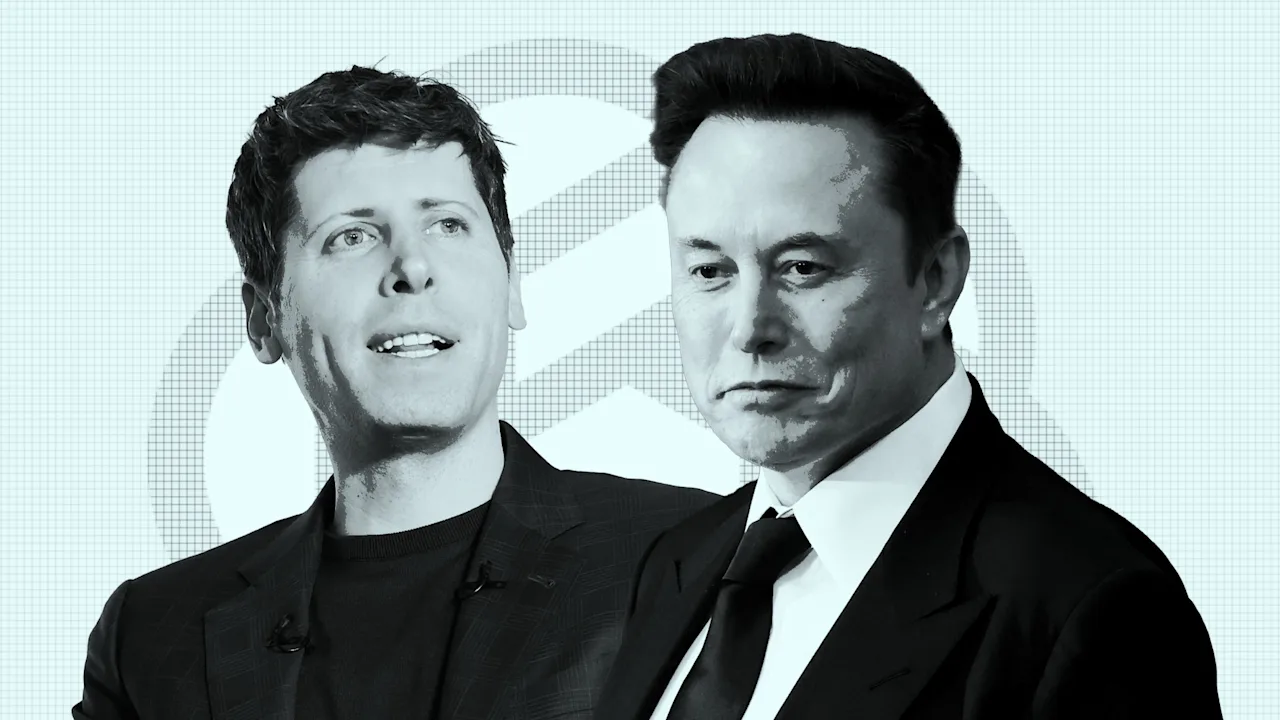
OpenAI has prevailed in its fight against Elon Musk.
A jury on Monday found that Musk did not file his lawsuit against the AI giant within the statute of limitations. The judge quickly agreed with the jury, making the ruling final.
The win for OpenAI came after less than two hours of jury deliberation. Within 20 minutes, the judge, who could have taken up to a month to issue a final ruling in the case, agreed with the advisory jury and issues the final say. Musk had alleged that OpenAI “stole a charity” when it converted into a for-profit company.
With the case now behind it, a major obstacle in OpenAI’s path toward becoming a publicly traded company has been cleared. “We’re in and out in under a month and now OpenAI has a road to IPO,” Alex Kantrowitz, host of the Big Technology podcast told CNBC.
OpenAI has been working behind the scenes for some time to plan for a public offering that would likely be among the largest in Wall Street history. The company is currently valued at $500 billion following a $6.6 billion secondary share sale last October. (OpenAI had authorized the sale of up to $10.3 billion in shares, though many investors and employees chose to hold onto their stakes.) For comparison, the largest IPO in U.S. history remains Chinese e-commerce giant Alibaba, which debuted at a valuation of $169.4 billion.
That record could soon face another challenger. Musk’s SpaceX is expected to launch its IPO next month. SpaceX recently acquired Musk’s xAI, making it a major player in the AI sector and a direct rival to OpenAI.
Whenever OpenAI pursues an IPO, interest from major tech players already appears strong. Microsoft’s 27% ownership stake would give a significant boost to the company. Nvidia CEO Jensen Huang has also signaled confidence that an IPO is coming soon, saying in April that he would not be surprised if OpenAI went public next year and describing it as potentially “one of the most successful public offerings in history.”
Silencing a critic
Musk and his attorneys said they are reserving the right to appeal the ruling, though the judge said she was prepared to dismiss an appeal immediately. Regardless of whether that happens, OpenAI secured more than a courtroom victory with Monday’s verdict. Any accusations Musk levels at the company moving forward are likely to carry less weight with investors after Musk and his legal team spent the trial attempting to portray Altman as untrustworthy and duplicitous.
The ruling also means OpenAI no longer faces the possibility of paying the more than $100 billion in damages Musk sought, and Altman will remain CEO.
More broadly, the decision removes a distracting sideshow that had drawn attention away from the company’s business fundamentals. It could also shift greater scrutiny toward SpaceX’s forthcoming S-1 filing, expected in the coming days, which will detail xAI’s financials and could could compare unfavorably to what’s known about OpenAI’s finances.
OpenAI has not filed any paperwork for an IPO, but last October, Reuters reported the company could file its S9 with the SEC by the second half of 2026. That same month, Altman said of a public offering “I think it’s fair to say it is the most likely path for us, given the capital needs that we’ll have.”
The big question is whether OpenAI or Anthropic will be the first major AI company to list. There’s plenty of jockeying behind the scenes by each company to lead the way—and with this case now behind it, OpenAI can focus once again on securing a market-leading role.