
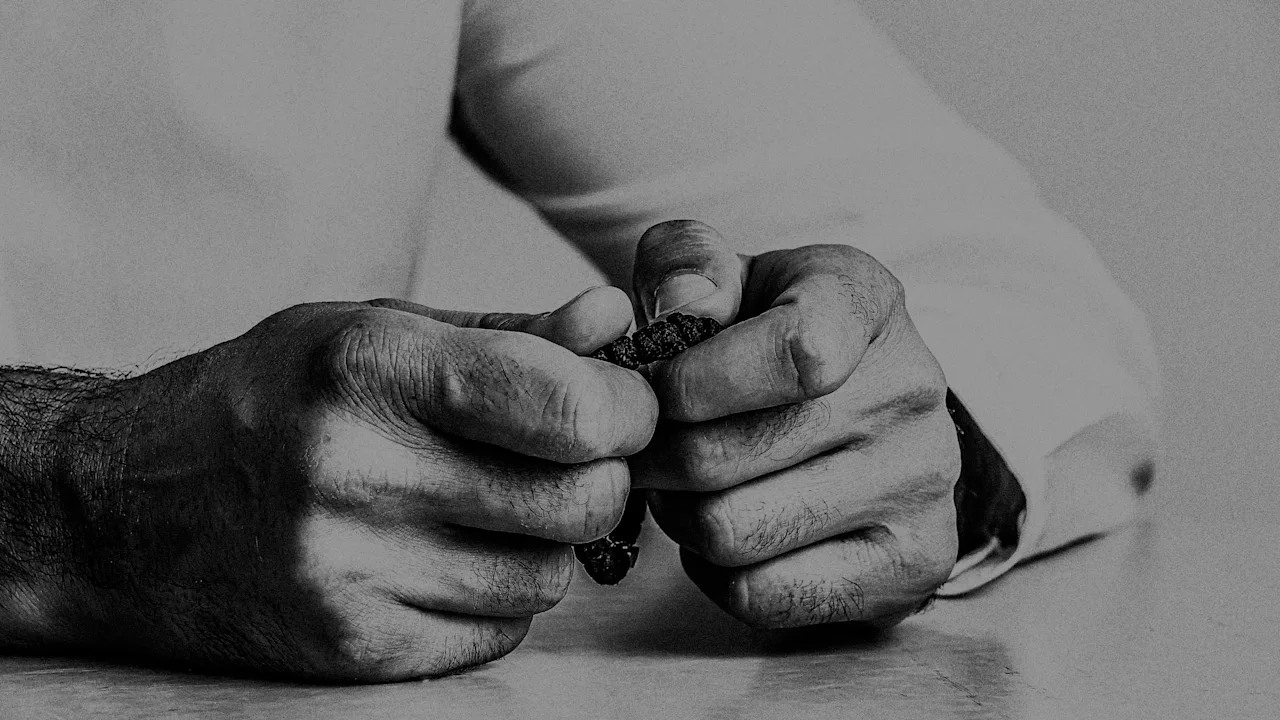
In the United States, we recognize a separation between church and state, but does that delineation apply to work, too? That’s an earnest question from a self-identifying choirboy—literally, I grew up in church and I direct the choir—who has been asked throughout my career to leave religion out of my work. Do we need the Jesus reference in the deck? Do I have to use Bible scripture in that essay? Is the religious example in the class lecture necessary? It’s almost always polite but definitely unambiguous: ease up on the religious stuff because it likely doesn’t have a place here because the workplace is neutral. But is that really so?
The entire global workweek structure stems from Judeo-Christian theology. Saturdays and Sundays are considered “days of rest,” so many institutions suspend organized work to observe the Sabbath. The country shuts down for Christmas. We hand out candy in October because of All Hallows’ Eve, a pagan tradition with a Christian association. And once we’re in the office, we use words like evangelist, convert, mission, believers, devotion—religious vocabulary is so embedded in the discourse of marketing and management that we’ve stopped hearing it as religious at all. In fact, the source material for much of social living is founded on religious imaginations that have been secularized, even in the workplace; we have just agreed to pretend otherwise.
That’s why we invited Julie Wenah onto the latest episode of the FROM THE CULTURE podcast to sit with this contradiction. Wenah is the chairwoman of the Digital Civil Rights Coalition and a global product leader who’s done AI equity work at Meta and Airbnb, shaped policy in the Obama White House, and trained as a civil rights attorney along the way at Georgetown Law. She’s also a filmmaker, an Alvin Ailey-trained dancer, and a woman who will, without flinching, tell you what God said to her last Thursday. Wenah is what the no-Jesus-at-work crowd insists is impossible: a senior operator at the leading edge of technology and policy whose faith isn’t the side dish to her career but the main ingredient.
{“blockType”:”mv-promo-block”,”data”:{“imageDesktopUrl”:”https://images.fastcompany.com/image/upload/f_webp,q_auto,c_fit/wp-cms-2/2026/01/studio_16-9.jpg”,”imageMobileUrl”:”https://images.fastcompany.com/image/upload/f_webp,q_auto,c_fit/wp-cms-2/2026/01/studio_square_thumbnail.jpg”,”eyebrow”:””,”headline”:”FROM THE CULTURE”,”dek”:”u003Cemu003EFrom the Cultureu003C/emu003E is a podcast that explores the inner workings of organizational culture that enable companies to thrive, teams to win, and brands to succeed. If culture eats strategy for breakfast, then this is the most important conversation in business that you aren’t having.”,”subhed”:””,”description”:””,”ctaText”:”Listen”,”ctaUrl”:”https://www.youtube.com/playlist?list=PLvojPSJ6Iy0T4VojdtGsZ8Q4eAJ6mzr2h”,”theme”:{“bg”:”#2b2d30″,”text”:”#ffffff”,”eyebrow”:”#9aa2aa”,”subhed”:”#ffffff”,”buttonBg”:”#3b3f46″,”buttonHoverBg”:”#3b3f46″,”buttonText”:”#ffffff”},”imageDesktopId”:91470870,”imageMobileId”:91470866,”shareable”:false,”slug”:””,”wpCssClasses”:””}}
There’s so much talk in management and organizations discourse about bringing your “whole self” to work, so why is it assumed that we’d leave our faith at the door? The default frame says bringing your faith to work is a risk to your professionalism, but that violates all the lauded benefits that are said to come from being our authentic selves in the workplace. In our conversation, Wenah offers a powerful reframe that addresses this contradiction: The album and the mixtape.
Your album, Wenah posits, is the contractual work—what you owe the label, the deliverable on the job description, the thing that pays. Your mixtape, on the other hand, is everything else you make: the side project, the dance class, the documentary you create, the choir you direct, the faith you carry. The album is what the company hired you to do. The mixtape is what makes you, you. And the artists who endure are the ones whose body of work includes both. You don’t know Lil Wayne, Kendrick Lamar, J. Cole, Big Sean, The Weeknd, or Drake alone because of their studio albums; the mixtape is a part of their body of work. Even Jay-Z’s “S.Carter” mixtape is considered canon. That’s because to know an artist by their album only is to know only half of them. The same is true of the people you employ.
Wenah traces her framework back to a single moment in her Washington, D.C. apartment in 2016. Chance the Rapper’s Blessings came on, and she heard the line, “I speak to God in public.” She’d spent her career being told her two halves were incongruous—the lawyer and the believer, the technologist and the church girl, the album and the mixtape. Chance gave her permission, in three words, to stop separating them. I had my own version of this feeling stuck writing my best-selling debut book For The Culture. I had nothing for months until I remembered that the early sociologists—Durkheim, Weber, Marx—all observed religion to understand culture, and here I was a choirboy writing a book about culture. The angle was an unlock that sitting in the part of myself I’d been told to leave outside the office.
I’m not saying that we ought to run Bible study out of the conference room or hold prayer with your direct reports. I’m not asking the workplace to become religious. The workplace already is religious; my argument is that we should stop pretending otherwise so that we might benefit from the promise of our full selves—the album and the mixtape. Not because it’s nice, but because it’s where the depth lives. The leader who can say here’s what I believe and here’s why I serve—without proselytizing, without flattening the source, and while tolerating other points of view—is the leader who can ask the people in their building to do the same. And the company that gets the album and the mixtape from each of its employees gets their full body of work, their full potential. Who wouldn’t want that?
Check out our full conversation with Julie Wenah on the latest episode of FROM THE CULTURE here.
{“blockType”:”mv-promo-block”,”data”:{“imageDesktopUrl”:”https://images.fastcompany.com/image/upload/f_webp,q_auto,c_fit/wp-cms-2/2026/01/studio_16-9.jpg”,”imageMobileUrl”:”https://images.fastcompany.com/image/upload/f_webp,q_auto,c_fit/wp-cms-2/2026/01/studio_square_thumbnail.jpg”,”eyebrow”:””,”headline”:”FROM THE CULTURE”,”dek”:”u003Cemu003EFrom the Cultureu003C/emu003E is a podcast that explores the inner workings of organizational culture that enable companies to thrive, teams to win, and brands to succeed. If culture eats strategy for breakfast, then this is the most important conversation in business that you aren’t having.”,”subhed”:””,”description”:””,”ctaText”:”Listen”,”ctaUrl”:”https://www.youtube.com/playlist?list=PLvojPSJ6Iy0T4VojdtGsZ8Q4eAJ6mzr2h”,”theme”:{“bg”:”#2b2d30″,”text”:”#ffffff”,”eyebrow”:”#9aa2aa”,”subhed”:”#ffffff”,”buttonBg”:”#3b3f46″,”buttonHoverBg”:”#3b3f46″,”buttonText”:”#ffffff”},”imageDesktopId”:91470870,”imageMobileId”:91470866,”shareable”:false,”slug”:””,”wpCssClasses”:””}}
Source link