
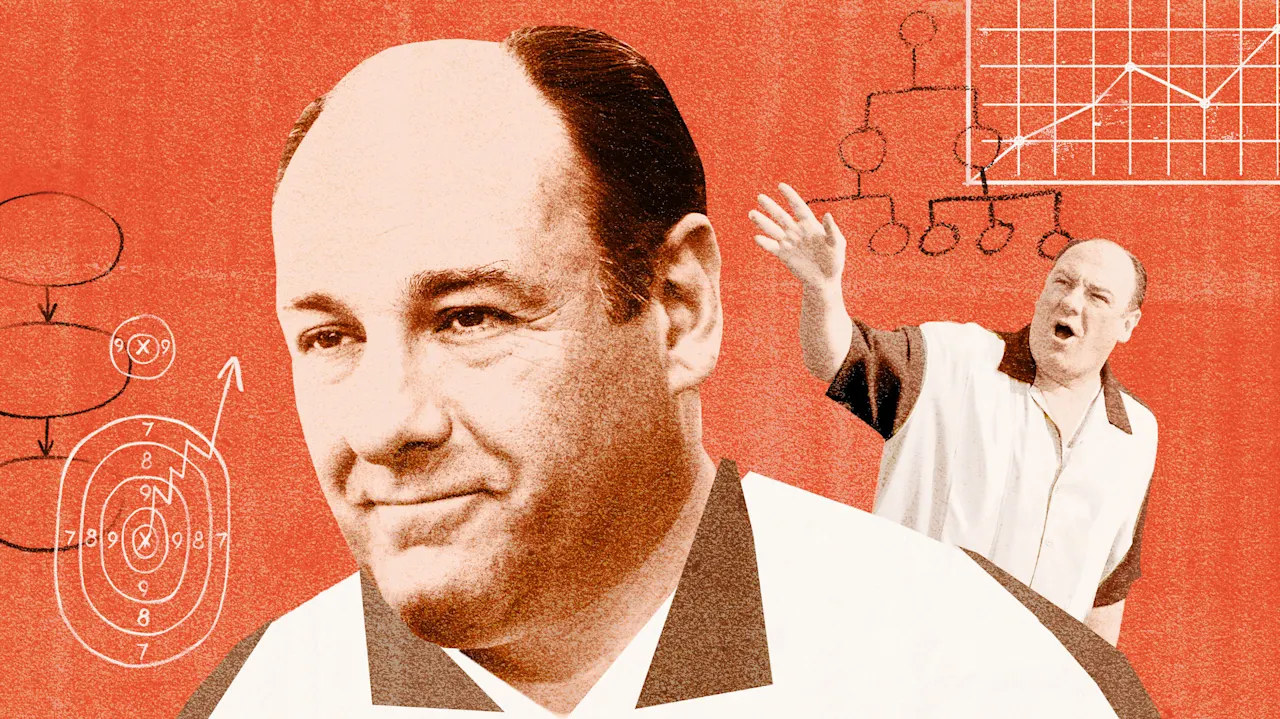
Tony Soprano was a master of coercion. Through violence, extortion, and bribery, he rose to the top of his industry, crushing competitors and delivering strong margins, despite some unfortunate employee turnover along the way. But even Soprano began to suspect there might be another way.
His psychiatrist, Dr. Jennifer Melfi, encouraged him to try a more collaborative approach, to become a better listener, and to engage with subordinates more thoughtfully. Soprano paused, thought about it, and, after considering the implications, asked, “Then how do I get people to do what I want?”
That’s the Tony Soprano Problem. And today, every leader feels it. We want to be thoughtful managers, to motivate our teams, and to be effective collaborators. But we also want—and need—people to do what we want. We want customers to buy our products, stakeholders to buy into our vision, and our team to execute our plans. Good leaders learn to square that circle.
How Strong Leaders Lead
Years ago, one of my best managers left to take a job at another company. At our company, she was responsible for a single brand and could always check in with me on any decision. But in her new role, she was leading the entire digital effort and, despite her talent and experience, she found herself struggling.
She called me one day and asked me how I was so confident in all the decisions I made. I was a bit taken aback because I was rarely confident in my decisions. Managing an organization of more than 800 people, every decision I had to make was one that 799 others couldn’t. I didn’t get to make easy calls, only uncertain ones.
Being in a position of responsibility means you have to make decisions without all the facts, in a rapidly changing context. You do so in the full knowledge that if you’re wrong, you will bear the blame and no one else will. You can never be certain of your decision, only that it’s you who has to make one.
That’s what made Soprano a formidable leader. It’s why so many successful managers are able to thrive, even though they lack the softer qualities that management books say we’re supposed to have. The primary role of a leader is to make decisions, make sure they’re executed, and take accountability for them.
That’s what my former protégé was struggling with. She was smart, energetic, and capable, but wasn’t able to cross that Rubicon. It’s not hard to see why so many leaders make the mistake of surrounding themselves with people who agree with them.
The Loyalty Trap
In his book On the Grand Trunk Road, Pulitzer Prize-winning reporter Steve Coll chronicled his two decades of reporting from Central Asia. One of the things he noted is that powerful leaders in autocratic regimes, like Rajiv Gandhi in India or Benazir Bhutto in Pakistan, built a “culture of insularity” that blinded them to dangers to their regime.
Every leader needs loyal people around them, those who will faithfully carry out their will. But if you only have loyalists, you cut yourself off from important sources of information. When you blind yourself to alternative views and perspectives, you slant your decision-making to the data sources that are most accessible—those that already reflect your own views—creating a circular reasoning environment.
Cognitive scientists call this availability bias and, when combined with confirmation bias, it can create the illusion of alignment. Leaders make their views known and their cadre of loyalists reflect those same views. Dissenting perspectives, to the extent they are given any space at all, are quickly rejected in favor of the perceived majority consensus.
Yet that consensus exists only in the leader’s domain, which is why autocrats often don’t see trouble coming. It was relatively easy for Gandhi and Bhutto to dismiss domestic unrest as some isolated opposition; after all, everyone in their immediate environment showed nothing but adoration. Both failed to see the danger until it was too late.
Gandhi was assassinated in 1991, Bhutto in 2007.
Learning to Listen
Much like Soprano, Kevin Sharer was a strong-minded leader, rising through the ranks to become CEO of biotech firm Amgen. He would later write:
“My approach was: ‘I’m the smartest guy in the room. Just let me prove that here, in the first five minutes.’ I would even interrupt people and tell them what they were going to tell me, to save us time so that we could get to the really important stuff, which was me telling them what to do. And I got away with it. It worked.”
But then a near-disaster moment hit. The Food and Drug Administration noticed problems with Epogen, which accounted for a third of Amgen’s profits, leading to restrictions on its use and a significant blow to the company. For the first time in its history, the Amgen announced layoffs; 2,600 employees, or 14% of its workforce, would have to go.
Sharer realized that his leadership style was a big part of the problem and vowed to do better. Every semester in my class at Wharton, we play a video of him explaining how he changed. He said he learned to listen for comprehension, not to critique, object, or convince, but to understand the information being put in front of him.
That not only increased his access to information, it also showed respect for the people who worked for him. They, in turn, felt empowered to go out and find new perspectives and new insights, compounding the positive effects of those conversations. It also allowed him to relax. Without having to control and dominate every exchange, he had more energy to devote to more productive endeavors.
Empowering the Edges
In thinking about social justice, philosopher John Rawls proposed a thought experiment known as the veil of ignorance. What kind of society would you design if you didn’t know what position you’d occupy in the social order—rich or poor, powerful or powerless, advantaged or marginalized? Rawls was focused on justice, not management, but the veil of ignorance offers a useful way to think about how access and influence are structured within organizations.
When coaching business leaders, I often pose a similar question: If a junior employee had a game-changing idea, how would they get it implemented and scaled throughout the organization? How would a transformational idea make its way to the top? For most, the exercise is an eye-opening experience.
In other words, how do you know you’re not being disrupted this very minute?
The answer is that you don’t know. As Tony Soprano would tell you, it’s the dangers you don’t see that get you in the end. That’s why strong leaders learn to listen and empower people across their enterprise. That’s how you get access to the information you need to spot trouble ahead, identify viable strategies to overcome them, and make good decisions.
You don’t learn to listen and empower others just to be “nice.” You do it because it’s a survival skill. Or, as Andy Grove famously put it, only the paranoid survive.