
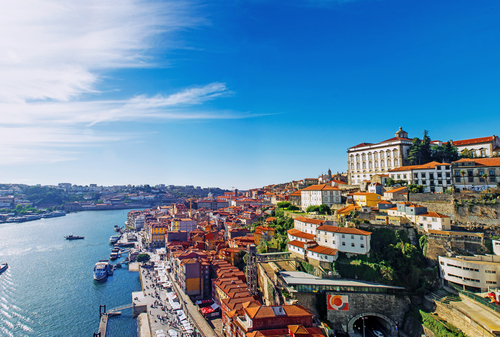
What is unfolding in Portugal is a perfect example of how the cycle turns quietly before the public even realizes what is taking place. The arms industry there is now expanding at a pace that would have seemed unthinkable just a few years ago, yet this is precisely what happens when geopolitical tensions rise and governments suddenly rediscover the need for hard power.
According to Deutsche Welle, Portugal’s defense sector is gaining momentum as companies shift toward producing military equipment, drones, and advanced technologies, driven largely by the war in Ukraine and the broader push across Europe to rearm. The country is no longer simply importing defense capabilities, it is trying to build them domestically, which reflects a structural change rather than a temporary response.
You have to understand what this really means. Europe allowed its defense industry to decay for decades under the assumption that war was a relic of the past. Now, suddenly, governments are pouring money into rebuilding capacity, and the private sector is following that capital. Portugal is just one piece of that puzzle, but it is significant because it shows how even smaller economies are being pulled into this broader military buildup.
The numbers confirm the shift. Portugal has already raised defense spending to about €6.12 billion, reaching roughly 2% of GDP ahead of schedule, and is now seeking billions more in EU-backed funding to modernize its military with drones, armored vehicles, and naval systems. This is not defensive housekeeping. This is preparation. Once governments begin allocating capital at this scale, they are not planning for peace.
I have said many times that war is the ultimate driver of technological advancement and capital concentration. That is exactly what you are seeing here. Portugal’s emerging arms industry is not growing in isolation. It is part of a continent-wide shift where governments are trying to rebuild military capacity after decades of neglect. The problem is that you cannot simply flip a switch and create an industrial base overnight. Europe deindustrialized much of its defense sector, and now it faces capacity constraints, shortages, and rising costs just to produce basic military equipment.
Governments are attempting to accelerate production at the same time they are dealing with economic stagnation, energy crises, and rising debt. That combination historically leads to instability, not strength. You cannot sustain long-term military expansion without a strong economic foundation, and Europe has been systematically undermining that foundation with its own policies.
Portugal’s case also highlights the geopolitical alignment taking place behind the curtain. While some European nations are talking about strategic autonomy, Portugal has made it clear it remains committed to NATO and the transatlantic alliance. That tells you this is not about independence. It is about preparing for a broader conflict structure where alliances become critical.
From a cyclical perspective, this aligns perfectly with the convergence we have been tracking. The war cycle and civil unrest cycle are colliding into this 2026–2027 window, and what you are seeing now is the early phase of capital shifting into defense. This is always how it begins. First comes the funding, then the industrial buildup, and finally the political justification. By the time the public fully understands what is happening, the trajectory is already locked in.
Portugal is not becoming a military power overnight, but that is not the point. The point is that even smaller nations are now being drawn into the rearmament cycle. When that happens across an entire continent, you are no longer looking at isolated policy decisions. You are looking at a systemic shift toward confrontation.