
Close Menu
    Facebook X (Twitter) Instagram
    TRENDING :
    • A Cape Verde soccer player got all the way to the World Cup, thanks to a LinkedIn message
    • Market Talk – June 16, 2026
    • Infant botulism outbreak: Baby formula sold at Target recalled as potentially deadly infection spreads to 3 states
    • SpaceX buys AI coding startup Cursor for $60 billion
    • The Bari Weiss Problem at CBS
    • Evan Spiegel says Snap can’t fulfill its mission without its new AR glasses
    • AI’s impact on cognitive ability: MIT study reveals more troubling data
    • 6 things consumers should know about prices on goods now that the Iran war may be ending
    Populist Bulletin
    • Home
    • US Politics
    • World Politics
    • Economy
    • Business
    • Headline News
    Populist Bulletin
    Home»Business»Google, TikTok, and Meta could be taxed by Australia to fund its newsrooms
    Business 3 Mins Read

    Google, TikTok, and Meta could be taxed by Australia to fund its newsrooms

    Business 3 Mins Read
    Share Facebook Twitter Pinterest LinkedIn Tumblr Telegram Email Copy Link
    Follow Us
    Google News Flipboard
    Share
    Facebook Twitter LinkedIn Pinterest Email

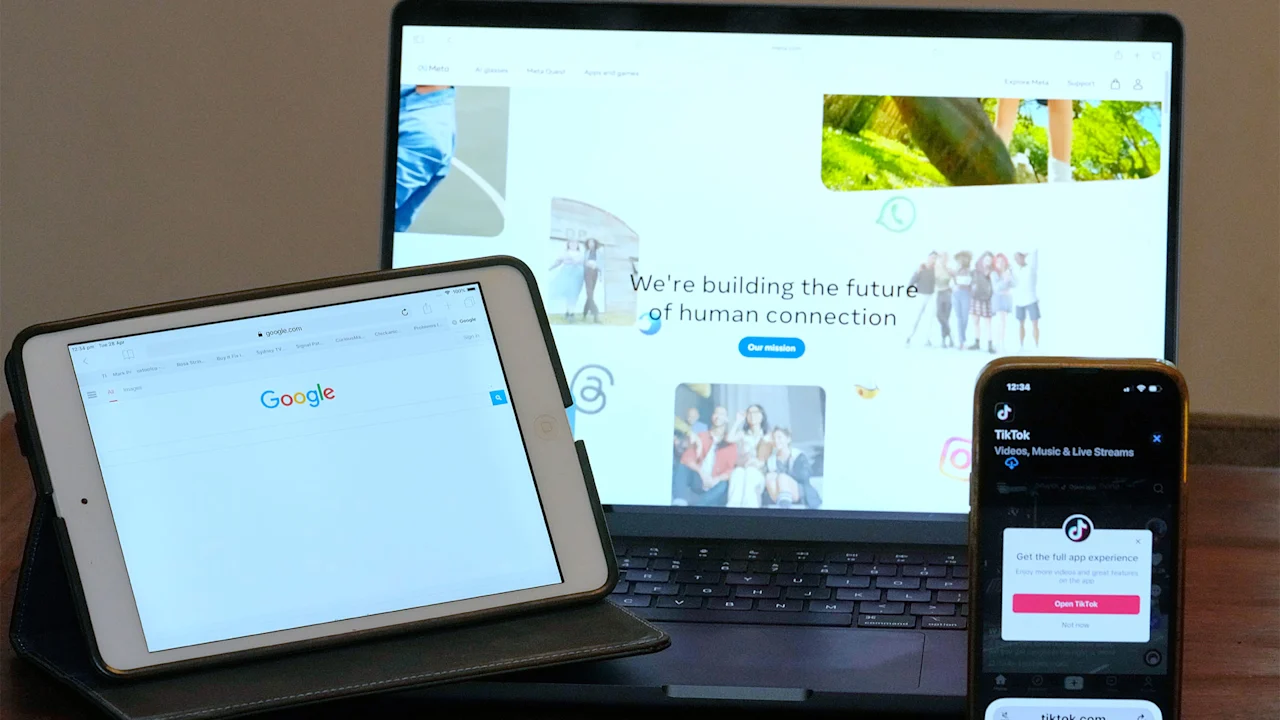
    Australia has proposed taxing digital giants Meta, Google and TikTok on a part of their revenue to pay for news reporters.
    The government released draft legislation Tuesday it intends to introduce to Parliament by July 2 that would create a financial incentive for the social media companies to strike deals with news organizations to pay for journalism.
    The platforms’ criticisms included that the proposal was a “digital services tax” that misunderstood the evolving advertising industry and would fail to deliver a sustainable news sector.
    Australian Prime Minister Anthony Albanese said a monetary value needed to be attached to journalists’ work.
    “It shouldn’t just be able to be taken by a large multinational corporation and used to generate profits for that organisation with no compensation appropriate for the people who produce that creative content,” Albanese told reporters.
    “We think that investment in journalism is critical to a healthy democracy,” he added.
    It’s Australia’s second legislative attempt to make the platforms pay for the Australian news text and images that their users view.
    Digital platforms had been pressured to strike deals with Australian news publishers to pay for journalism by legislation passed in 2021 that created the country’s News Media Bargaining Code.
    The platforms chose to reach commercial deals with news creators rather than be forced into arbitration and have a judge set the price.
    But they have since avoided renewing those deals by removing news from their services.
    The proposed News Bargaining Incentive would charge major platforms that choose not to strike commercial deals with news publishers a 2.25% tax on their Australian revenue.
    The platforms would be given offsets and their overall costs would be lowered if they agree to pay publishers for journalism, the government said.
    The government expects the incentive would raise between 200 to 250 million Australian dollars ($144 million-$179 million) a year. That was about as much as the platforms paid news outlets when the News Media Bargaining Code was working at its peak.
    The government would distribute that income among news organizations based on how many journalists each organization employed, Communication Minister Anika Wells said.
    The tax would apply to Meta Platforms, which owns Facebook and Instagram, Google, which is owned by Alphabet Inc., and TikTok, which is majority-owned by U.S.-backed investors.
    Opposing the proposed legislation, Meta said news organizations “voluntarily post content on our platforms because they receive value from doing so.”
    “The idea that we take their news content is simply wrong. This proposed legislation, which would apply to platforms regardless of whether news content even appears on our services, is nothing more than a digital services tax,” Meta said in a statement.
    “A government-mandated transfer of wealth from one industry to another, with no connection to the value exchanged, will not deliver a sustainable or innovative news sector. Instead, it will create a news industry dependent on a government-administered subsidy scheme,” Meta added.
    Google said “we reject the need for this tax.”
    “It ignores the fact that Google already has commercial agreements with the news industry, misunderstands how the ad market changed and mandates payments from some companies while arbitrarily excluding platforms like Microsoft, Snapchat and OpenAI — despite the major shift in how people consume news,” a Google statement said.
    TikTok did not immediately respond to a request for comment.
    All the targeted platforms are American. U.S. critics have argued that Australia’s News Media Bargaining Code had disproportionately cost American corporations.
    Albanese was not concerned by potential pushback from the United States.
    “We’re a sovereign nation and my government will make decisions based upon the Australian national interest,” Albanese said.

    —Rod McGuirk, Associated Press


    Source link

    Share. Facebook Twitter Pinterest LinkedIn Tumblr Email

    Related Posts

    A Cape Verde soccer player got all the way to the World Cup, thanks to a LinkedIn message

    June 16, 2026

    Infant botulism outbreak: Baby formula sold at Target recalled as potentially deadly infection spreads to 3 states

    June 16, 2026

    SpaceX buys AI coding startup Cursor for $60 billion

    June 16, 2026
    Top News
    Business 1 Min Read

    2026 FIFA World Cup: Here’s how the biggest brands are spending millions

    Business 1 Min Read

    The 2026 FIFA World Cup will be the largest in history, and it’s meeting a…

    Aging Hippies in Portland Perform CRINGE-TASTIC Musical Protest – Get Absolutely Dragged on Twitter/X | The Gateway Pundit

    October 7, 2025

    After the FDA crackdown, here’s how some companies are still selling GLP-1s

    November 4, 2025

    Costco’s beloved $5 rotisserie chickens are ruffling feathers—here’s why

    January 29, 2026
    Top Trending
    Business 3 Mins Read

    A Cape Verde soccer player got all the way to the World Cup, thanks to a LinkedIn message

    Business 3 Mins Read

    On LinkedIn, users may find thinkfluencers offering life lessons from mundane events…

    Economy 2 Mins Read

    Market Talk – June 16, 2026

    Economy 2 Mins Read

    ASIA: The major Asian stock markets had a mixed day today: •…

    Business 4 Mins Read

    Infant botulism outbreak: Baby formula sold at Target recalled as potentially deadly infection spreads to 3 states

    Business 4 Mins Read

    If you’re a parent with an infant, you should be aware that…

    Categories
    • Business
    • Economy
    • Headline News
    • Top News
    • US Politics
    • World Politics
    About us

    The Populist Bulletin was founded with a fervent commitment to inform, inspire, empower and spark meaningful conversations about the economy, business, politics, government accountability, globalization, and the preservation of American cultural heritage.

    We are devoted to delivering straightforward, unfiltered, compelling, relatable stories that resonate with the majority of the American public, while boldly challenging false mainstream narratives that seem to only serve entrenched elitists, and foreign interests.

    Top Picks

    A Cape Verde soccer player got all the way to the World Cup, thanks to a LinkedIn message

    June 16, 2026

    Market Talk – June 16, 2026

    June 16, 2026

    Infant botulism outbreak: Baby formula sold at Target recalled as potentially deadly infection spreads to 3 states

    June 16, 2026
    Categories
    • Business
    • Economy
    • Headline News
    • Top News
    • US Politics
    • World Politics
    Copyright © 2025 Populist Bulletin. All Rights Reserved.

    Type above and press Enter to search. Press Esc to cancel.