
Close Menu
    Facebook X (Twitter) Instagram
    TRENDING :
    • Elon Musk and ChatGPT’s Sam Altman head to an AI trial that promises clashing testimony
    • Pizza Hut is closing hundreds of restaurants: See an updated list of doomed locations for 2026
    • Qualcomm stock is soaring today as rumblings of an OpenAI smartphone deal emerge. Here’s what’s happening
    • How one of the world’s top AI voices uses Claude Code to run her day
    • Rome’s Colosseum got a revamp to reveal a long-hidden history
    • KitKat’s newest product is . . . a Faraday cage?
    • 7 Top Multiple Business Accounting Software Solutions
    • What Are Key Components of Finances in Business?
    Populist Bulletin
    • Home
    • US Politics
    • World Politics
    • Economy
    • Business
    • Headline News
    Populist Bulletin
    Home»Business»Rome’s Colosseum got a revamp to reveal a long-hidden history
    Business 4 Mins Read

    Rome’s Colosseum got a revamp to reveal a long-hidden history

    Business 4 Mins Read
    Share Facebook Twitter Pinterest LinkedIn Tumblr Telegram Email Copy Link
    Follow Us
    Google News Flipboard
    Share
    Facebook Twitter LinkedIn Pinterest Email


    The southern side of the Colosseum in Rome has just undergone a subtle but much-needed facelift. This side of the world-famous monument is where the empire’s elite once entered the grand amphitheater to watch gladiators fight to the death, and where a series of earthquakes over its nearly 2,000-year lifespan have chewed away at the structure. Through deep archaeological research and a clever architectural intervention, the ancient monument’s original layout has been restored after centuries of decay. It’s giving modern day visitors a more accurate sense of how the space was originally used.

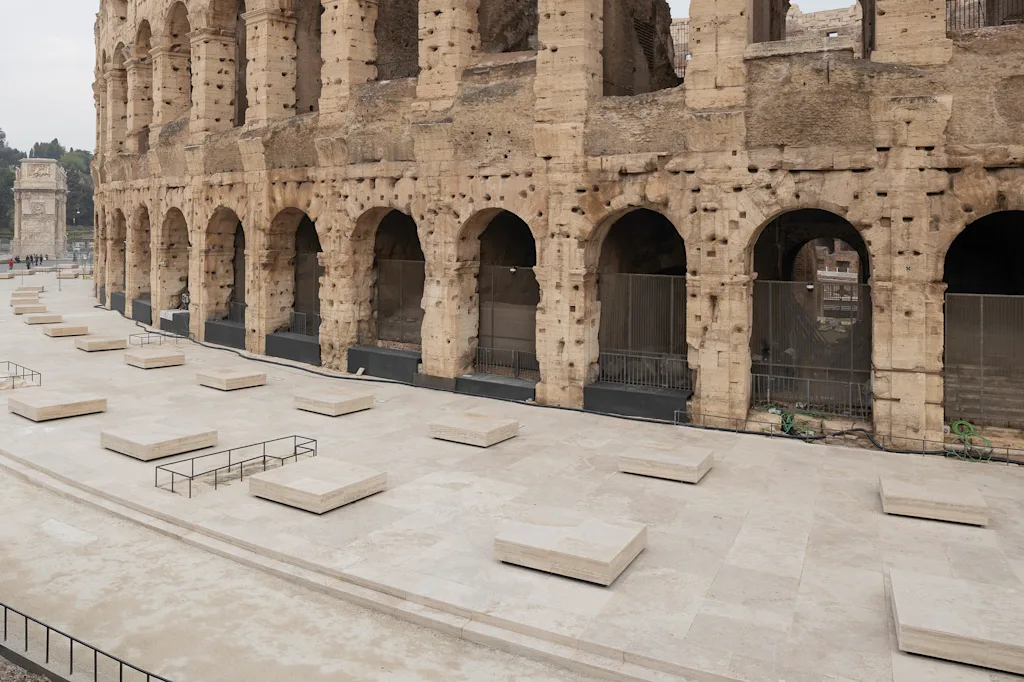
    The project focuses on the southern perimeter of the Colosseum, restoring of the original ground levels of the outer arcades and rebuilding the plaza-like crepidine, a two-step base wrapping around the edge of the building. New paving at this end of the monument offers visitors a more accurate understanding of the Colosseum’s layout when it was completed in the year 96, recreating the physical experience of approaching the entrance to the amphitheater just as Roman emperors would have many centuries ago.

    The work was led by Stefano Boeri Interiors in conjunction with the Parco Archeologico del Colosseo. It’s based on decades worth of archeological research into the original extent of the Colosseum, which has been carved away over time by the development of Rome and the slow decay of the monument itself.

    [Photo: Simona Murrone]

    “The perimeter of Colosseum was not clear,” says architect Stefano Boeri, known for his tree-covered Bosco Verticale towers in Milan. “The emperor used to enter from that side. So it’s very important.”

    Building on previous work he has done designing a new access point to another part of the Colosseum’s campus, Boeri was sensitive to the historic importance of the site, and of not overshadowing it with new elements.

    “When you step on the crepidine, you have the feeling of being inside the monument, because what you are walking on, the ground is exactly the same as what we had 2,000 years ago,” Boeri says. “We wanted to create for every visitor the real perception of the dimension of the monument, the true perception of its proportions.”

    A lot of that work required hinting at what has been missing from the monument for centuries. Earthquakes and erosion have badly damaged the Colosseum over time, wiping out the two outermost arcade rings on its southern side. Boeri’s design for the crepidine reveals the ghosts of that long-long side of the building. “We decided to superimpose in the new pavement a system of very abstract rectangular white marble blocks that were located exactly in the position of the pre-existent pillars that were sustaining the arcs for the corridors,” he says. “This is to give the idea to the people that they are entering, in a way, the monument.”
    [Photo: Simona Murrone]

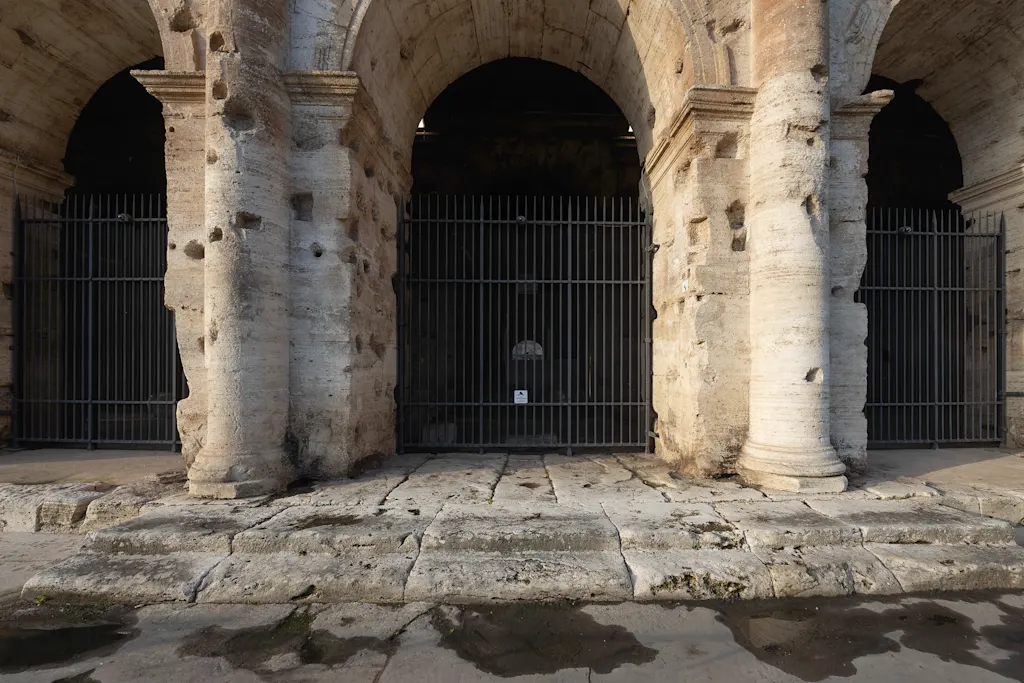
    The shape of the paving stones used in this area is also a reflection of the monument’s form, with trapezoidal slabs of marble aligned exactly with the arched entries that ring the amphitheater. Though the restoration was guided by historical accuracy, it’s also looking to the future. Restoring the monument’s original levels offered the opportunity to rework its stormwater drainage system, routing water through the site and preventing further erosion.

    The project expands the public space that surrounds the monument by about 33,000 square feet—adding freely accessible space in a part of the monument that was long blocked off from use and filled with ruins. “We have introduced a different border. People can enter without having to buy a ticket,” Boeri says. “So the public can come closer to the monument. They can stay, they can rest.”

    He argues the restoration is more than just an exercise in historic accuracy, but a way for people to sense a greater connection to what has long been one of the most important buildings in the world. “I think what people will feel is the power of the stones,” he says.


    Source link

    Share. Facebook Twitter Pinterest LinkedIn Tumblr Email

    Related Posts

    Elon Musk and ChatGPT’s Sam Altman head to an AI trial that promises clashing testimony

    April 27, 2026

    Pizza Hut is closing hundreds of restaurants: See an updated list of doomed locations for 2026

    April 27, 2026

    Qualcomm stock is soaring today as rumblings of an OpenAI smartphone deal emerge. Here’s what’s happening

    April 27, 2026
    Top News
    Economy 2 Mins Read

    Fentanyl Classified As Weapon Of Mass Destruction

    Economy 2 Mins Read

    Fentanyl has been classified as a Weapon of Mass Destruction (WMD) after it claimed the…

    Demand for AI-related skills is up 109% since last year. What that means for you

    February 16, 2026

    Adapting to change is the most critical professional skill today

    March 3, 2026

    Gas prices are going up. What will it mean for electric vehicles?

    March 4, 2026
    Top Trending
    Business 5 Mins Read

    Elon Musk and ChatGPT’s Sam Altman head to an AI trial that promises clashing testimony

    Business 5 Mins Read

    Technology tycoons Elon Musk and Sam Altman are poised to face off…

    Business 5 Mins Read

    Pizza Hut is closing hundreds of restaurants: See an updated list of doomed locations for 2026

    Business 5 Mins Read

    Yum Brands is delivering on its promise to shutter hundreds of Pizza…

    Business 4 Mins Read

    Qualcomm stock is soaring today as rumblings of an OpenAI smartphone deal emerge. Here’s what’s happening

    Business 4 Mins Read

    Shares in Qualcomm Incorporated (Nasdaq: QCOM) are surging in premarket trading this…

    Categories
    • Business
    • Economy
    • Headline News
    • Top News
    • US Politics
    • World Politics
    About us

    The Populist Bulletin was founded with a fervent commitment to inform, inspire, empower and spark meaningful conversations about the economy, business, politics, government accountability, globalization, and the preservation of American cultural heritage.

    We are devoted to delivering straightforward, unfiltered, compelling, relatable stories that resonate with the majority of the American public, while boldly challenging false mainstream narratives that seem to only serve entrenched elitists, and foreign interests.

    Top Picks

    Elon Musk and ChatGPT’s Sam Altman head to an AI trial that promises clashing testimony

    April 27, 2026

    Pizza Hut is closing hundreds of restaurants: See an updated list of doomed locations for 2026

    April 27, 2026

    Qualcomm stock is soaring today as rumblings of an OpenAI smartphone deal emerge. Here’s what’s happening

    April 27, 2026
    Categories
    • Business
    • Economy
    • Headline News
    • Top News
    • US Politics
    • World Politics
    Copyright © 2025 Populist Bulletin. All Rights Reserved.

    Type above and press Enter to search. Press Esc to cancel.