
The U.S. Forest Service is closing three quarters of its research facilities as part of a reorganization that has experts worried about how many scientists could leave the agency, and how the disruption could affect crucial wildfire and climate change data.
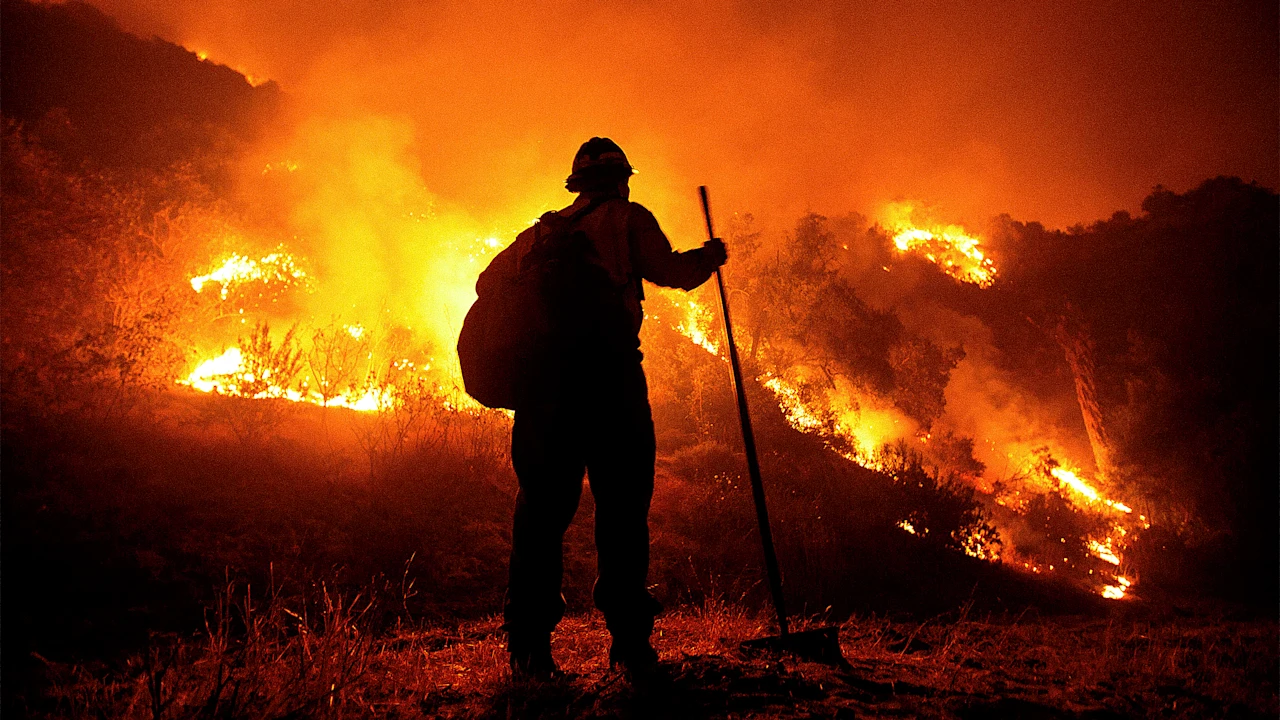
The change comes as the parts of the U.S. face what is expected to be a catastrophic wildfire season. The most recent wildland fire outlook shows that wildfire activity is already “well above average,” with more than 16,000 wildfires reported this year.
Under the reorganization plan, the Forest Service will close 57 of 77 research facilities, as well as move its headquarters from Washington, DC to Salt Lake City, Utah.
It will also close all nine of its regional offices; some states will then get their own offices, but others will be consolidated.
Changes will affect firefighting capabilities
The Forest Service oversees 193 million acres of forests and grasslands across the country. It manages timber harvesting, researches how forests can provide clean air and water to communities, monitors climate impacts over time, and works on wildfire prediction and risk management, among other tasks.
Julian Reyes, chief of staff at the Union of Concerned Scientists and previously a federal government civil servant who worked directly with Forest Service R&D scientists on climate research, says the move doesn’t make any sense given the wildfire season we’re going into.
He also fears that some research tools will disappear with this reorganization, like one that maps which seeds should be planted where, based on if they’ll survive future climate impacts like precipitation and temperature. Another is “essentially a menu of options” for decision makers to look at how to adapt to climate change and new wildfire patterns.
State agencies and even utility companies also use Forest Service data to mitigate, prepare for, and respond to wildfires.
“There are a lot of tools and data that underlie what firefighters are using when they battle wildfires,” Reyes says. “The dismantling of that [research and development] part of the Forest Service will affect firefighting capabilities.”
Mishal Thadani, CEO of Rhizome, a wildfire intelligence company that works with utilities, is particularly concerned about Forest Service research stations in California and Oregon closing, since those states lead in terms of the number of fires and acreage burned.
“When those data sources go stale or disappear, it gets harder for utilities to make informed decisions about grid resilience planning,” he says via email.
It’s also not data that private companies like Rhizome can easily replace. Though Thadani says they’re working on internal modeling capabilities, that still depends on metrics that typically come from federal agencies.
“Over time, as existing data layers go stale and aren’t replaced, the barrier gets meaningfully higher for any private-sector company trying to build useful products in this space,” he says.
A feeling of dread
In a press release, the agency said that the headquarters relocation will “move leadership closer to the forests and communities it serves,” and that the larger restructuring is a “common-sense approach” to its mission.
But many of the headquarters staff are likely already out west, “out in the forest that they are supposed to manage,” says Reyes says.
Others at headquarters help communicate policies coming out of the White House so state employees can understand them.
“If you remove those people, then who helps produce a consistent set of policies or helps people interpret [them]?” he says. “I don’t know if the states have that capacity.”
Reyes says he’s heard people in the agency say both that no one wants this reorganization, and that they feel “dread” about the changes. During President Trump’s first term, a similar relocation plan for the Bureau of Land Management spurred more than 87% of employees to quit or retire.
Another assault on science
The Trump administration has already taken steps to dismantle the National Oceanic and Atmospheric Administration; the Environmental Protection Agency, and called to dismantle the National Center for Atmospheric Research.
“This is just another pattern in this administration’s assault on science,” Reyes says.
He’s concerned about the potential loss of institutional knowledge, because people may leave the agency. The U.S. government has already lost more than 10,000 STEM PhDs since Donald Trump took office. The Forest Service itself already lost nearly 6,000 employees because of Elon Musk’s Department of Government Efficiency cuts and early retirement offers.
The Fire Service is considered the world’s leading wildfire research and management agency. That’s now under threat.
“There is no other organization who could fill that gap, at least in the next decade,” Reyes says. And it would take decades, he adds, to replace what the government is doing now.
“The Forest Service will essentially no longer be the world’s leading wildfire research agency,” he adds. “They will be hamstrung forever, because they won’t have the right people, the right research capability at the right research stations, and so we’ll always be feeling these effects, probably for multiple generations. That’s what’s really sad about this.”