
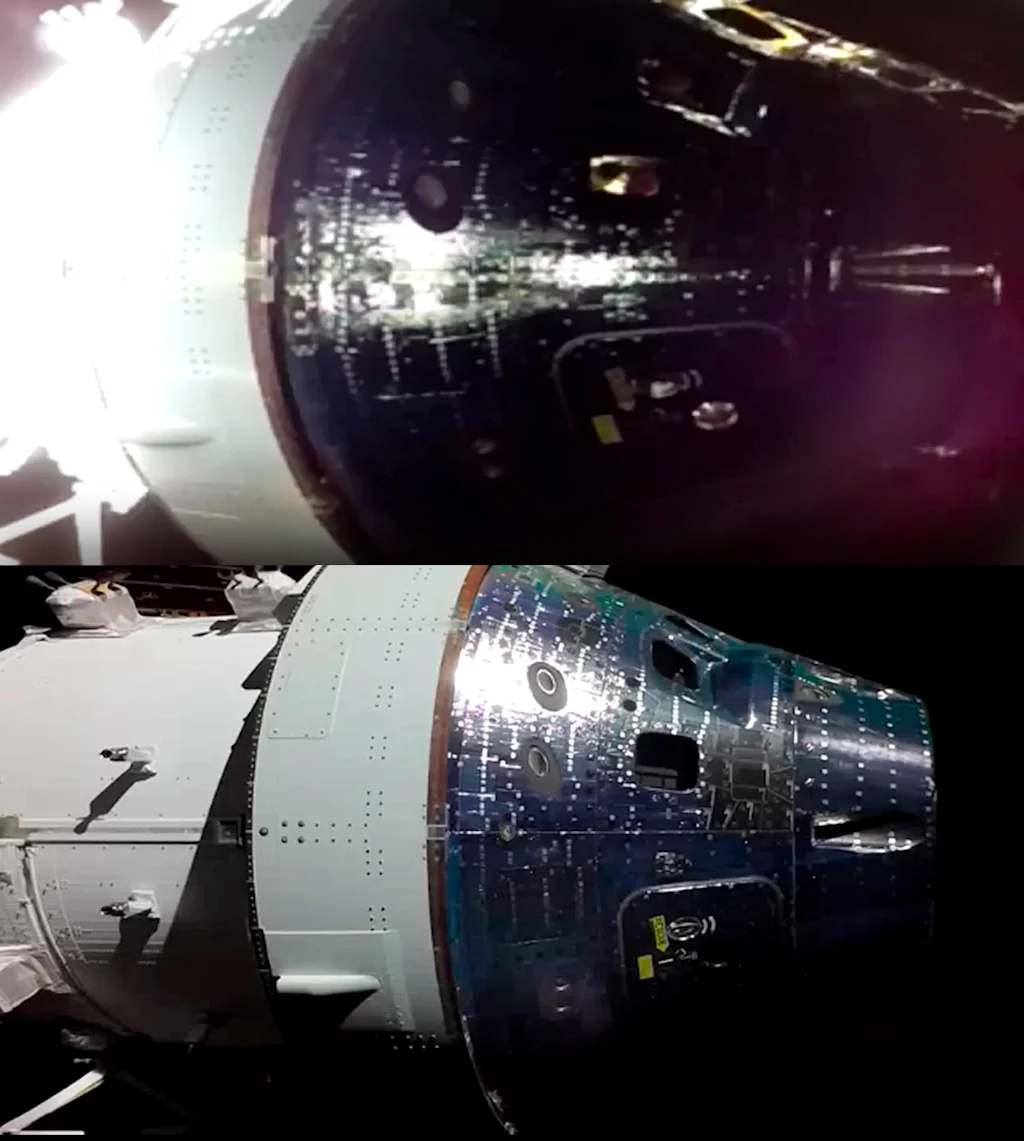
Given its $24 billion price tag and two decades in development, one would think that the Artemis II mission’s Orion spaceship would be flawless. Alas, that’s not how things work in the space program. These machines’ designs are so complex and so many things can go wrong that there is always going to be a breaking point somewhere.
Sometimes this involves comical but potentially dangerous consequences—like Artemis II’s toilet malfunction or its Microsoft Outlook glitches—while other times there are tragic endings, like the losses of the space shuttles Challenger and Columbia and their crews. Still, I wasn’t expecting a “use a T-shirt or something to block the sunlight rather than the spaceship’s built-in window shades” in my 2026 NASA bingo card.
That’s exactly what happened on Day 4 of the ongoing lunar flyby. I was listening to the highlights when this exchange—which I’ll explain below—between Mission Control and the Artemis II crew happened:
Houston: We have a small request for you guys. Um, with this attitude that we’re using for the bakeout, we’re getting the sun on the window shades and we’re a little worried about them heating up too much. We would like to request that you please remove the window shades. We understand that will make it awfully bright for you guys, and we want to encourage you to use a T-shirt in the cabin or something similar, if needed, to block out that sunlight. But the shades will help us with the temperature constraint on the windows.
Maybe in space, nobody can hear you scream. But after that, I swear I heard four astronauts rolling their eyes all the way from 240,000 miles up.
Orion: Okay. Uh, so we have our makeshift T-shirt on Window 1. Is that one okay to stay up then, based on what you said? And we’ll take off the Window 2 shade. The other ones are already off.
You may be wondering why in the name of Lyndon B. Johnson the crew of Artemis II was forced to use some old Taylor Swift concert T-shirts to block the sunlight. And yes, “What the rocket nozzle?!” is exactly the exclamation that came to my mind, too. Flying to the moon is not like going from Houston to Dallas in a Greyhound bus in the middle of August. Why couldn’t they use the built-in shades, which probably cost several million dollars to develop along with the Orion windows? After all, aren’t those windows supposed to sustain the heat of the reentry? How can they get damaged by a shade?
The explanation
Let’s go through what we know: On April 4, Orion was turned into a “bakeout” position. In spacecraft operations, this specific orientation intentionally exposes parts of the spacecraft to prolonged, direct solar radiation, often to outgas materials or manage ice buildup. In this case, that sunlight was shining directly on the windows and hit the inside window shades. Sunlight in deep space, unfiltered by Earth’s atmosphere, is blindingly bright, so astronauts use the shades to block it in order to manage their sleep cycle and to avoid excessive sunlight in the cabin.
Since the opaque shades absorb solar energy, they also absorb heat. So Mission Control became concerned that the shades were getting too hot. But the problem was not the temperature of the shades. It was the windows.
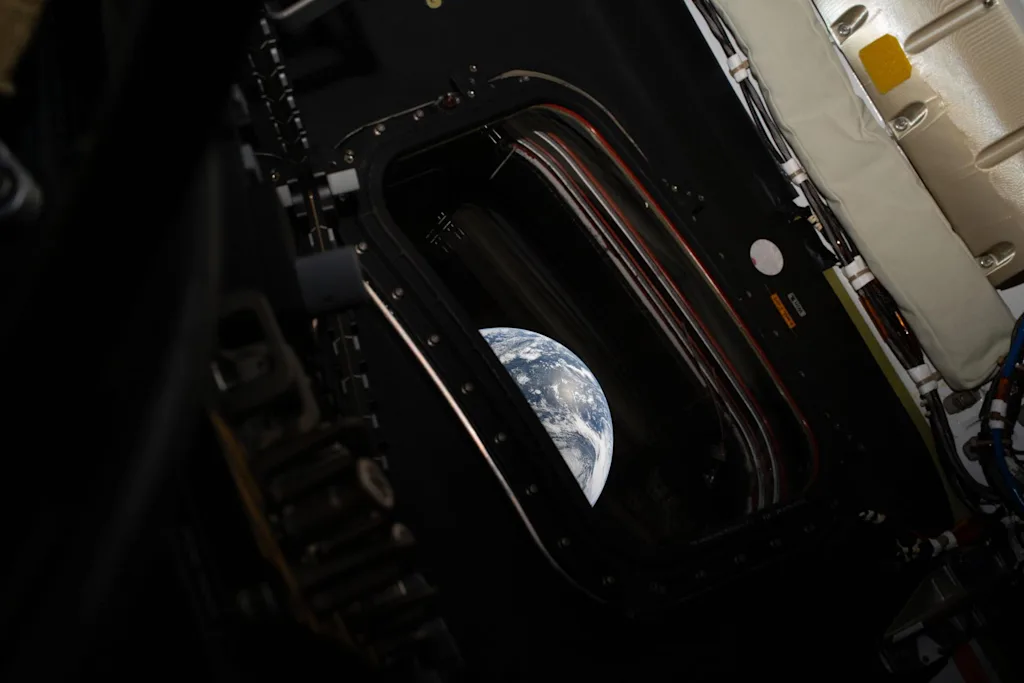
Orion has four windows on its cone, plus windows on the docking and side hatches. Each cone window utilizes a three-pane hybrid structure. The outer part is a fused silica thermal pane, which can handle 5,000 degrees Fahrenheit. That would never be affected by the interior temperature buildup.
The inner layers are made of acrylic, however. This was one of the many innovations for Orion in comparison to the Apollo command modules. Transitioning from traditional all-glass panes to an acrylic interior “reduced the windowing subsystem’s weight by more than 200 pounds,” according to US Glass magazine. Now, acrylic doesn’t have the same heat resistance as glass. That means that, if the shades stayed in place during the bakeout operation, they could trap heat against the window and push the acrylic closer to its temperature limit.
Because the acrylic pane is the primary structural barrier holding the cabin’s atmospheric pressure against the vacuum of space, perhaps allowing trapped heat to push the acrylic toward its 212 degrees Fahrenheit softening point is not a wise decision. Reaching anywhere near that point would be hazardous, since softening the acrylic would compromise its load-bearing capacity, risking a catastrophic depressurization event. Logically, that’s something that NASA wants to avoid at all costs.
So it all came down to a “better T-shirt than sorry,” and Mission Control asked the crew to take the shades down, even though that made the cabin much brighter. The astronauts followed the new makeshift procedure and put T-shirts as temporary sun blockers because it let more air circulate and reduced the heat buildup.
It all makes sense. What doesn’t make sense is that, after years of expensive development and testing, NASA and Lockheed Martin didn’t think about something that obviously was going to happen. That bakeout operation was not an unforeseen, sudden decision, but part of regular spacecraft operations. And if they included shades in the spaceship, I guess they intended them to be used when the sun is hitting the windows, right? It’s a logic that doesn’t seem to require a rocket scientist to figure out.
The fix actually reminds me of Apollo 13, when astronauts Jim Lovell, Jack Swigert, and Fred Haise had to use plastic storage bags, cardboard torn from the covers of their flight manuals, lunar space suit hoses, and duct tape to make square CO2 filters from the command module to fit into the circular holes of the lunar module. In a deep space DIY world where Buck Rogers meets MacGyver … someone has some explaining to do.
I asked NASA and Lockheed Martin about why this is happening and how they were planning to solve this for Artemis III, but I haven’t heard back from them yet. (We’ll update this story if and when I do). I just hope the answer is not to put a “T-shirt system ready” checkpoint on their flight checklists. If that’s the case, perhaps I can talk to my grandma and ask her if she can send NASA some of her crocheted curtains.