
Close Menu
    Facebook X (Twitter) Instagram
    TRENDING :
    • Claude is becoming more agentic. Amanda Askell is thinking through what that means
    • The Battle for Black Brooklyn
    • The marketing funnel is dead. Here’s what replaced it
    • How a New York Primary Wound Up at the Center of the AI Storm
    • World Cup or not, high performers get these 3 things wrong about pressure
    • Adobe is rolling out agents for its Creative Cloud apps. It will be a lifesaver for creatives
    • The Obamas are celebrating their presidential museum with this star-studded guest list
    • Hollister is making a comeback in an unexpected place: Target
    Populist Bulletin
    • Home
    • US Politics
    • World Politics
    • Economy
    • Business
    • Headline News
    Populist Bulletin
    Home»Business»Artemis II astronauts are racing to set this historic record on the upcoming lunar flyby 
    Business 4 Mins Read

    Artemis II astronauts are racing to set this historic record on the upcoming lunar flyby 

    Business 4 Mins Read
    Share Facebook Twitter Pinterest LinkedIn Tumblr Telegram Email Copy Link
    Follow Us
    Google News Flipboard
    Share
    Facebook Twitter LinkedIn Pinterest Email

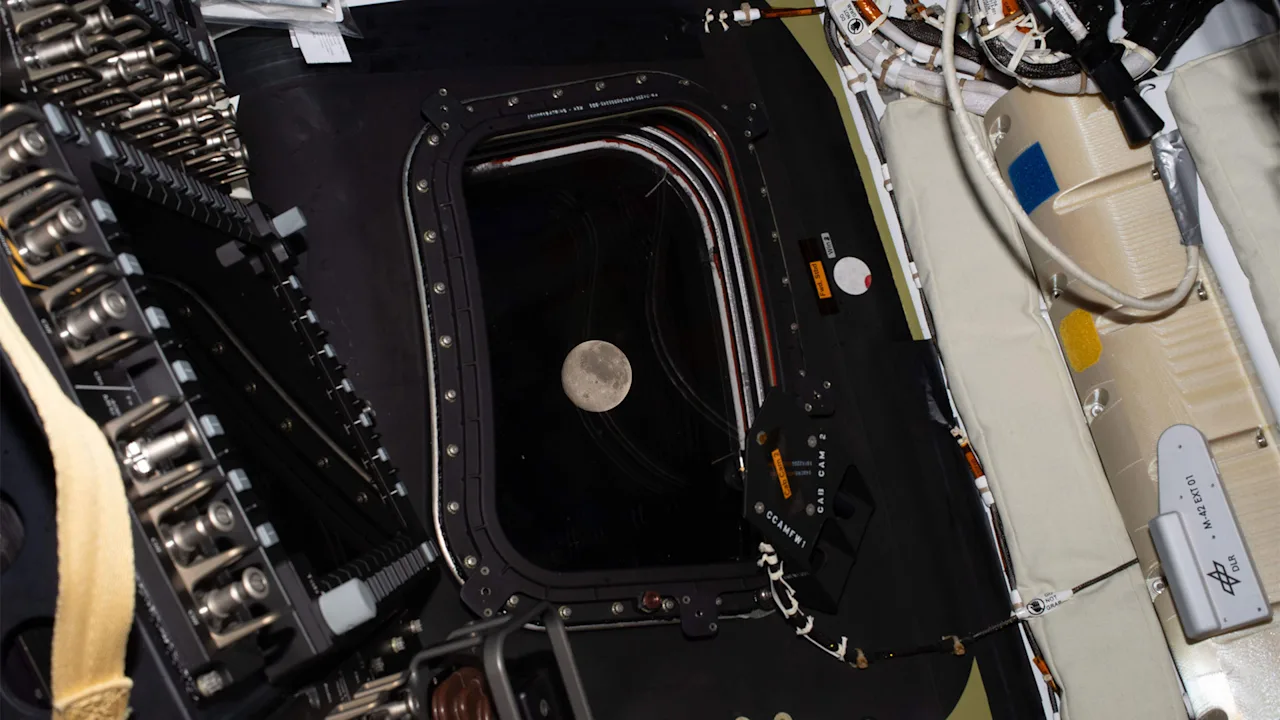
    With the moon looming ever larger, the Artemis II astronauts raced to set a new distance record Monday from Earth on a lunar fly-around promising magnificent views of the far side never seen before by eye.
    The six-hour flyby is the highlight of NASA’s first return to the moon since the Apollo era with three Americans and one Canadian — a step toward landing boot prints near the moon’s south pole in just two years.
    A prize — and bragging rights — awaits Artemis II.
    Less than an hour before kicking off the fly-around and intense lunar observations, the four astronauts were set to become the most distant humans in history, surpassing the distance record of 248,655 miles (400,171 kilometers) set by Apollo 13 in April 1970.
    Mission Control expected Artemis II to surpass that record by more than 4,100 miles (6,600 kilometers).
    Artemis II is using the same maneuver that Apollo 13 did after its “Houston, we’ve had a problem” oxygen tank explosion wiped out any hope of a moon landing.
    Known as a free-return lunar trajectory, this no-stopping-to-land route takes advantage of Earth and the moon’s gravity, reducing the need for fuel. It’s a celestial figure-eight that will put the astronauts on course for home, once they emerge from behind the moon Monday evening.
    Commander Reid Wiseman, pilot Victor Glover, Christina Koch and Canada’s Jeremy Hansen were on track to pass as close as 4,070 miles (6,550 kilometers) to the moon, as their Orion capsule whips past it, hangs a U-turn and then heads back toward Earth. It will take them four days to get back, with a splashdown in the Pacific concluding their test flight on Friday.
    Wiseman and his crew spent years studying lunar geography to prepare for the big event, adding solar eclipses to their repertoire during the past few weeks. By launching last Wednesday, they ensured themselves of a total solar eclipse from their vantage point behind the moon, courtesy of the cosmos.
    Topping their science target list: Orientale Basin, a sprawling impact basin with three concentric rings, the outermost of which stretches nearly 600 miles (950 kilometers) across.
    Other sightseeing goals: the Apollo 12 and 14 landing sites from 1969 and 1971, respectively, as well as fringes of the south polar region, the preferred locale for future touchdowns. Farther afield, Mercury, Venus, Mars and Saturn — not to mention Earth — will be visible.
    Their moon mentor, NASA geologist Kelsey Young, expects thousands of pictures.
    “People all over the world connect with the moon. This is something that every single person on this planet can understand and connect with,” she said on the eve of the flyby, wearing eclipse earrings.
    Artemis II is NASA’s first astronaut moonshot since Apollo 17 in 1972. It sets the stage for next year’s Artemis III, which will see another Orion crew practice docking with lunar landers in orbit around Earth. The culminating moon landing by two astronauts near the moon’s south pole will follow on Artemis IV in 2028.
    While Artemis II may be taking Apollo 13’s path, it’s most reminiscent of Apollo 8 and humanity’s first lunar visitors who orbited the moon on Christmas Eve 1968 and read from the Book of Genesis.
    Glover said flying to the moon during Christianity’s Holy Week brought home for him “the beauty of creation.” Earth is an oasis amid “a whole bunch of nothing, this thing we call the universe” where humanity exists as one, he observed over the weekend.
    “This is an opportunity for us to remember where we are, who we are, and that we are the same thing and that we’ve got to get through this together,” Glover said, clasping hands with his crewmates.


    The Associated Press Health and Science Department receives support from the Howard Hughes Medical Institute’s Department of Science Education and the Robert Wood Johnson Foundation. The AP is solely responsible for all content.

    —Marcia Dunn, AP Aerospace Writer


    Source link

    Share. Facebook Twitter Pinterest LinkedIn Tumblr Email

    Related Posts

    Claude is becoming more agentic. Amanda Askell is thinking through what that means

    June 19, 2026

    The marketing funnel is dead. Here’s what replaced it

    June 19, 2026

    World Cup or not, high performers get these 3 things wrong about pressure

    June 19, 2026
    Top News
    Business 2 Mins Read

    AI could transform the physical world. To do so, it will need human expertise

    Business 2 Mins Read

    The robots won’t be replacing us, but we will increasingly be working side-by-side with artificial…

    AI weather forecasting has reached a turning point that could prove valuable for farmers

    September 7, 2025

    Vance Says Trump in ‘Incredibly Good Health,’ but Is Prepared to Step Up If Needed

    September 1, 2025

    What Are Essential Customer Service Standards for Success?

    March 15, 2026
    Top Trending
    Business 8 Mins Read

    Claude is becoming more agentic. Amanda Askell is thinking through what that means

    Business 8 Mins Read

    Amanda Askell spends her days thinking about how to ensure Claude, Anthropic’s…

    US Politics 21 Mins Read

    The Battle for Black Brooklyn

    US Politics 21 Mins Read

    It was a mild June day in 2020 when the tensions simmering…

    Business 4 Mins Read

    The marketing funnel is dead. Here’s what replaced it

    Business 4 Mins Read

    The funnel is dead. Not evolving. Not disrupted. Dead. For decades, the…

    Categories
    • Business
    • Economy
    • Headline News
    • Top News
    • US Politics
    • World Politics
    About us

    The Populist Bulletin was founded with a fervent commitment to inform, inspire, empower and spark meaningful conversations about the economy, business, politics, government accountability, globalization, and the preservation of American cultural heritage.

    We are devoted to delivering straightforward, unfiltered, compelling, relatable stories that resonate with the majority of the American public, while boldly challenging false mainstream narratives that seem to only serve entrenched elitists, and foreign interests.

    Top Picks

    Claude is becoming more agentic. Amanda Askell is thinking through what that means

    June 19, 2026

    The Battle for Black Brooklyn

    June 19, 2026

    The marketing funnel is dead. Here’s what replaced it

    June 19, 2026
    Categories
    • Business
    • Economy
    • Headline News
    • Top News
    • US Politics
    • World Politics
    Copyright © 2025 Populist Bulletin. All Rights Reserved.

    Type above and press Enter to search. Press Esc to cancel.