
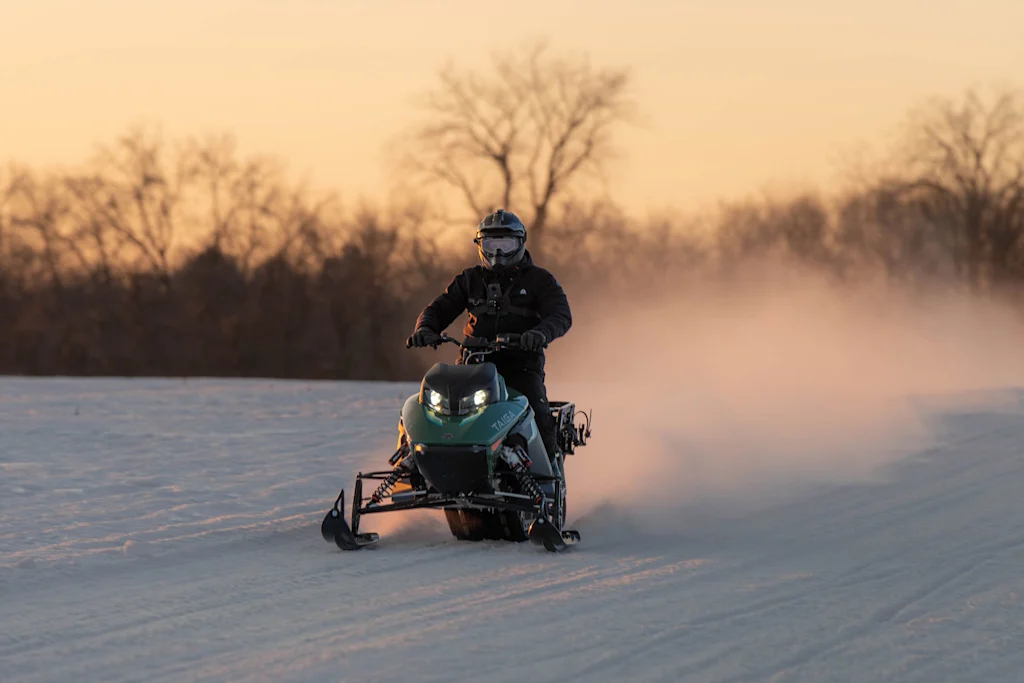
The automotive industry is driving toward an electric future, and one Montreal-based company is determined to tow the recreational vehicle market along with it.
Taiga Motors has spent the last decade building out production capacity to deliver fully electric snowmobiles and Jet Ski-like personal watercraft that they believe can go toe-to-toe with gas-powered alternatives. As with electric cars, the ride is designed to feel smoother, faster, and whisper-quiet, filling an unaddressed niche in the motor sports vehicle category.
“If you’re on the water, all you hear is the wind and the waves. And if you’re on the snow, you hardly hear anything—just that track spinning through the snow at incredible speeds,” says Taiga Motors cofounder and CEO Sam Bruneau.
The company itself, however, has had anything but a smooth journey.
After riding the wave of the SPAC boom in 2021—when hundreds of companies went public by merging with publicly listed shell companies, bypassing the traditional IPO process—which put its value into the hundreds of millions of dollars, pandemic-related manufacturing delays pushed it to the cliff’s edge.
Taiga has been only able to traverse the many economic and technical rough patches it’s faced, according to Bruneau, because the market is so eager for a smoother, quieter, and cleaner alternative to the noisy, polluting, gas-guzzling recreational vehicles on the snow and water today.
Silent Engine, Invisible Barriers
By designing their snowmobiles and watercraft from scratch, the company is able to introduce a few game-changing features that make the ride not only smoother, but also safer and more accessible.
For example, they can be monitored by a mobile app that allows owners and fleet operators to manage battery life, set speed limits, and map out precise geographical boundaries. If riders venture beyond those invisible borders, the vehicle automatically slows to a crawl until it’s back in the designated zone.
As a result, fleet operators and resort owners from the Caribbean Sea to the Italian Alps are reversing existing bans on recreational vehicles in areas that were previously too close to ecologically protected zones and heavily populated areas.
“If you think of beachfronts and keeping safe distances from swimmers, or just at home, if you have a teenager that’s going out in the watercraft, [owners] can create speed-limiting zones and keep them away from dangerous areas,” Bruneau says. “If you’re a tour operator, you can do the same with your customers to prevent, for example, collisions between snowmobilers and skiers at mountain resorts.”
Saving Money by Saving the Environment
Taiga’s Nomad Sport edition snowmobile offers 90 horsepower, starting at about $19,000, while its Nomad Performance model offers 120 horsepower, starting at about $22,000. Both offer 62 miles of range and can be recharged using conventional home or public EV-charging stations. Gas-powered alternatives, by comparison, typically range from about $12,000 to $22,000, putting Taiga’s electric offering on par with other premium products in the category.
“There’s also major cost savings in these vehicles on fuel and maintenance,” Bruneau says. “We work with over 100 ski resorts around the world, and they’ll break even compared to lower-cost gas models within two years—so they’re saving several thousands of dollars by switching to electric.”
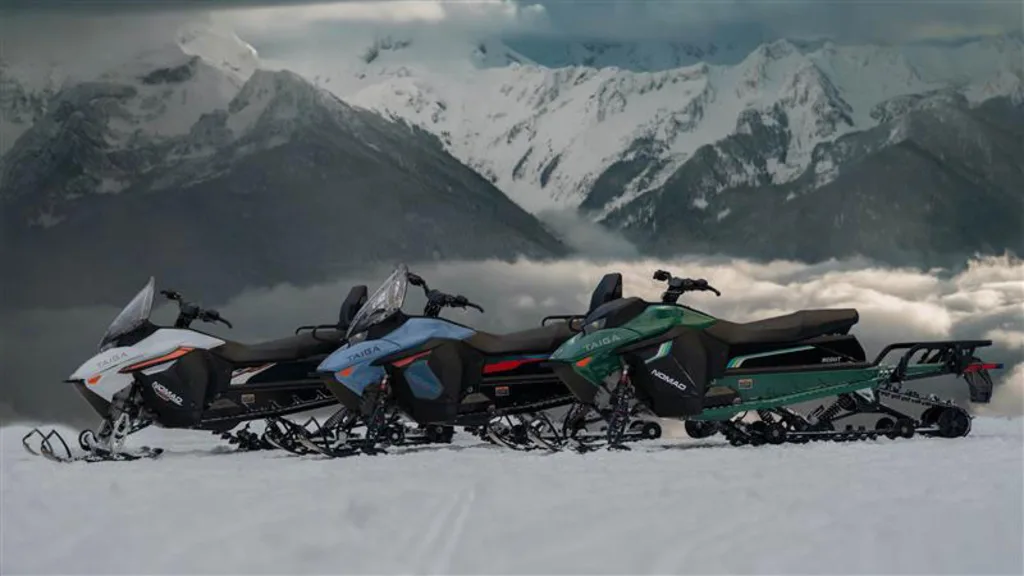
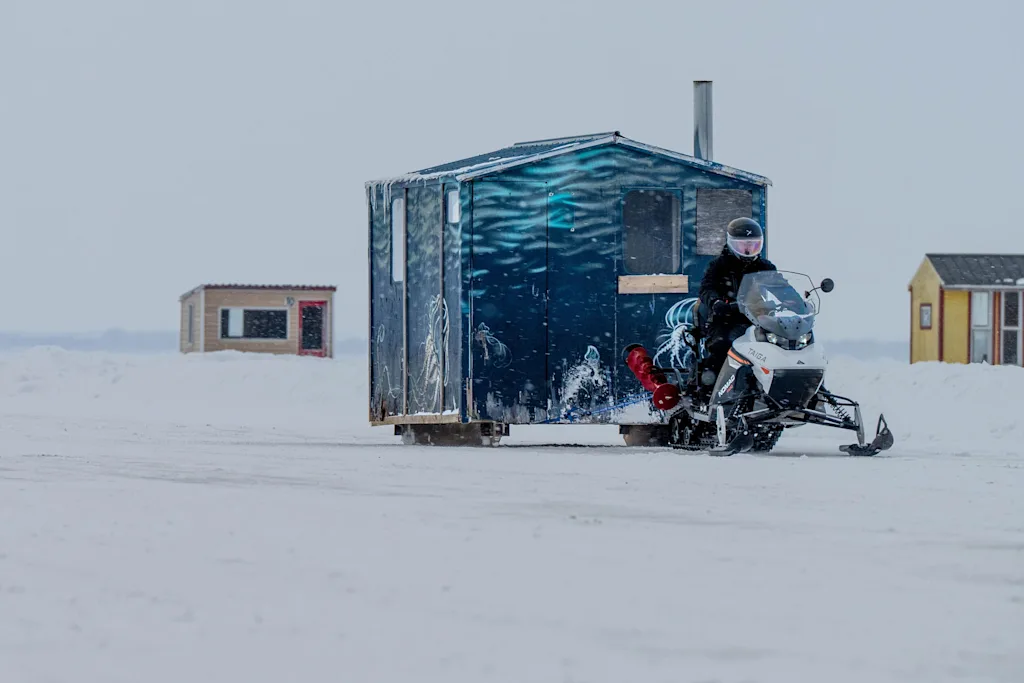
Given the long-term cost savings potential for vehicles that are in heavy use, the company has unsurprisingly found a bigger market among resorts and tour operators than individual customers. One of those tour operators, based in the Italian Alps, recently partnered with Uber to offer snowmobile rides between venues during the recent Olympic Games in Cortina, including an electric snowmobile option that features Taiga’s products.
“It’s pretty cool, and something that we want to explore and maybe replicate in other areas, because part of our mission is to make snowmobiles more accessible,” Bruneau says.
Small Vehicles, Large Footprint
Though recreational products represent a small fraction of the overall vehicle market, the smaller scale has allowed the industry to avoid many of the regulations that limit vehicle emissions. As a result, some snowmobiles and recreational watercraft engines spew up to 40 times more pollutants than the average gas-powered car, according to some estimates, and those pollutants often go directly into waterways and groundwater deposits.
“A big ski resort with a tour operation might have 200 snowmobiles operating all winter-round, which is [the same emissions as] 8,000 cars operating day in and day out,” Bruneau says. “To electrify 8,000 cars in one town is a pretty ambitious mandate. To electrify 200 snowmobiles that you’ll save money on and provide a better user and guest experience is a lot easier.”
Taiga has also introduced three electric watercraft, which start at about $21,000. Its highest-end model, the limited-edition Orca Carbon, features 160 horsepower, with two hours of run time on a single charge. Its price starts at about $26,000. All of the company’s products also feature bidirectional charging, meaning that its high-capacity battery packs can sell unused energy back to the grid.
“We’re going to soon have a standard outlet on the vehicle so you can plug in any appliance,” Bruneau says. “That’s a pretty big game changer, especially for the snowmobile, because you suddenly have this large mobile battery pack that you can drive into the mountains or a cottage—even [use for] backup power for your house—without needing a gas generator.”
Stalling Out
Bruneau and two McGill University classmates, Paul Achard and Gabriel Bernatchez, founded Taiga in 2015 and modeled it after Tesla—which didn’t just replace the combustion engine, but reinvented vehicle manufacturing from the ground up. “It’s a lot of extra front-end work,” Bruneau says. “But there’s a bigger payoff in the long term if you can vertically integrate, develop everything from a clean sheet to really offer the best performance at the best cost, and be built out efficiently at scale.”
After designing and building a prototype electric snowmobile from their shared Montreal apartment and hauling it to ski resorts around North America in a rented pickup truck, the cofounders secured their first orders and set up production in Quebec. As it gained momentum, Taiga was approached by a special purpose acquisition company (SPAC) that offered to take the company public in 2021, which put its market capitalization at more than $350 million.
“We hit some supply chain disruptions right after going public,” Bruneau says. “We were working with some big automotive suppliers for some of our key chips, and we just got a call one day saying: ‘Hey, Ford is taking these, because you can’t really compete with [their volume], and we had to adapt.’”
In the ensuing years, consumer spending on both electric vehicles and recreational vehicles went downhill: Brands like Yamaha exited the snowmobile market entirely, and automakers like GM and Ford have since watered down their prior EV commitments.
In early 2024, Taiga was forced to cut all but 70 of its staff—down from a peak of about 300—and file for creditor protection, leaving its early investors and deposit-paying customers in the lurch. In October of that year, the brand was pulled from the brink by British electric boat entrepreneur and investor Stewart Wilkinson.
“In the startup and EV hardware space, a lot of it is just about timing, persistence, and the perseverance to weather any storm,” Bruneau says. “If you can build the best product that people really want, you’ll be able to shift the market eventually.”