
Unless you spend your time in boardrooms and C-suites, there’s a decent chance you’ve never heard of the Future Today Strategy Group (FTSG). There’s also a better than decent chance you’ve encountered its influence. Every year the consulting firm publishes a massive tech trends report that maps emerging threats, white spaces, and opportunities early enough for companies to act on them. Past editions have flagged shifts around synthetic media, digital humans, and generative AI before they entered the mainstream conversation. And some major institutions are clearly paying attention: FTSG’s client list includes Mastercard, Ford, and NASA.
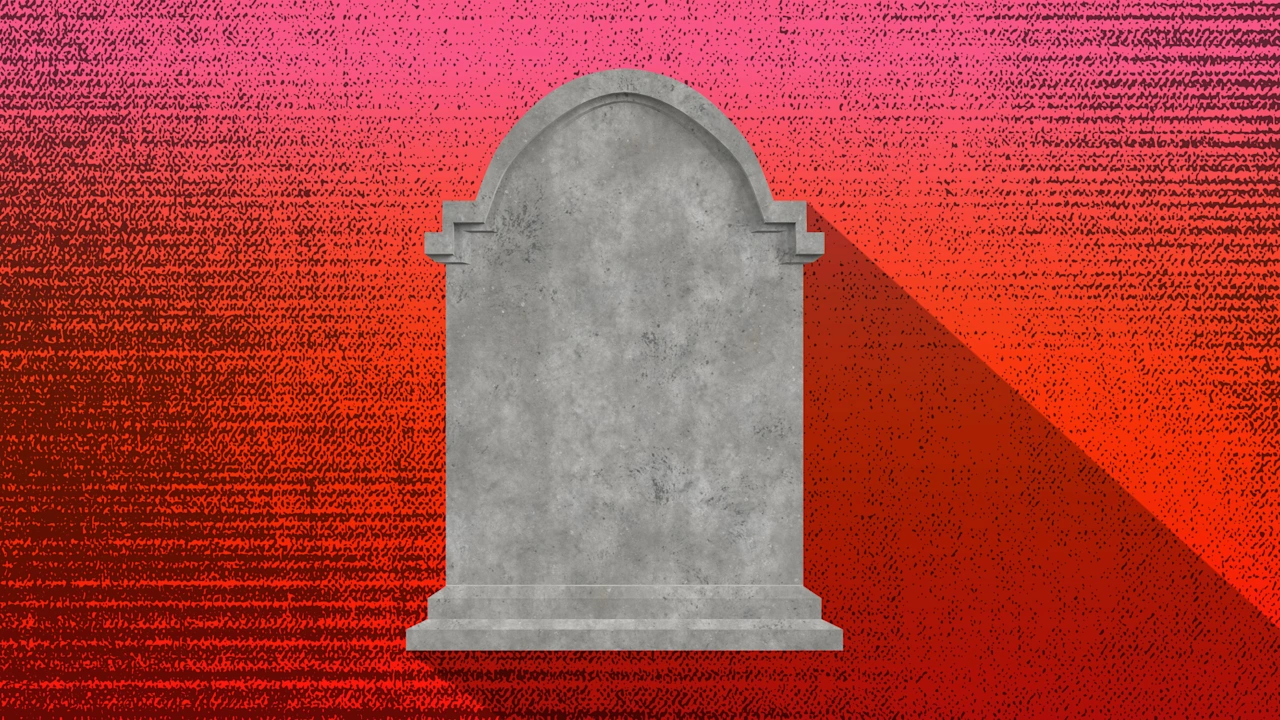
Which makes what’s happening onstage inside a Hilton hotel in downtown Austin quite jarring. Clad in a black cloak, FTSG founder and CEO Amy Webb opens her SXSW talk with a mock funeral for the trend report. Somber music fills the ballroom while a slideshow plays behind her.
“We are gathered here today to celebrate and remember the life of the trend report,” Webb told the rhapsodic crowd of roughly 1,500.
She wasn’t kidding: An anthropomorphic cartoon version of the report appeared first in a hospital delivery room, then at school, then sightseeing at the Eiffel Tower, before eventually arriving where it spent most of its life: the corporate boardroom.
In an interview with Fast Company ahead of the talk, Webb is characteristically blunt about the spectacle. “As long as we’re killing the thing we’re famous for, why don’t we have some fun with it?”
The issue, she says, is the format itself. An annual trend report captures only a fleeting moment in a landscape now shifting too quickly to summarize once a year. By the time a massive PDF lands in executives’ inboxes, parts of it are already outdated.
“The challenge with that static report is it’s a snapshot of a moment in time,” Webb says. “The bottom line is, things are changing incredibly fast.”
Instead of cataloging trends, Webb now wants companies to focus on what happens when several of them collide. In this year’s analysis, the most consequential shifts in technology arrive in clusters: AI, energy infrastructure, robotics, biotechnology, and geopolitical competition are smashing together in ways that reshape entire systems. These so-called “convergences,” the report argues, create structural changes businesses often recognize too late.
As Webb put it onstage at SXSW, trends are only the signals. “Trend tells you what’s changing,” she explained to the crowd. “A convergence tells you what’s going to become inevitable.”
Her framework borrows from meteorology. If trends are individual weather data points, Webb told the SXSW audience, convergences are the storm systems that form when those forces collide. Companies that want to prepare for the future, she argues, need something closer to a storm tracker than a static report.
The report outlines several areas where those convergences are already taking shape. One example is what Webb calls the “agentic economy.” AI systems are getting better at planning and carrying out tasks on their own, which could push the internet away from today’s model of search and browsing and toward one built on delegation. Instead of hunting for the best deal or managing subscriptions themselves, people might rely on digital agents to do it automatically. In that world, the companies running those agents—and the infrastructure behind them—could become the new gatekeepers of economic life.
Automation, Webb argues, may not arrive as a sudden wave of layoffs so much as a slow erosion of certain jobs, as hiring freezes, attrition, and software gradually absorb office tasks. At the same time, AI tools are increasingly being framed as companions, advisors, and sources of reassurance, raising questions about what happens when people begin turning to software first when they feel stressed or need guidance.
Onstage at SXSW, Webb warned that this shift could extend far beyond productivity software. AI systems, she suggested, could increasingly position themselves as, say, therapists and dating coaches. (Imagine smart glasses quietly whispering suggestions in your ear during a romantic dinner.) The risk, then, is that people could become deeply dependent on systems that are ultimately built and governed by profit-driven tech giants.
“As empowering as that may feel,” Webb tells Fast Company, the tradeoff is that “you are relinquishing a lot of the agency and decision making capabilities that you had to a system where you don’t know why the system is making those decisions.”
There’s plenty more packed into the report’s 157 pages, from “polycompute”—a future where classical, AI, quantum, and biological computing systems operate side by side—to the rise of human augmentation technologies that blur the line between health care and performance optimization. But many of Webb’s warnings revolve around a simpler problem: companies often see these shifts coming and still struggle to act.
“There are two guiding principles in just about every company right now,” Webb says. “Those two guiding principles are fear and FOMO.”
Back in the ballroom, the theatrical funeral quickly gave way to something closer to a rally. After the eulogy, Webb implored the audience to stand. Moments later, a University of Texas–Austin marching band snaked through the aisles, horns blaring as it marched toward the stage. The room erupted. Attendees laughed, cheered, and raised their phones as Webb pivoted from satire to sermon.
Her message, beneath the spectacle, was about so-called creative destruction. “Capitalism is like a perpetual storm,” Webb told the crowd. “To survive the storm you have to recognize that entirely new technologies can make you irrelevant overnight.”
Webb also used the stage to lob a few criticisms at the AI industry itself. She singled out OpenAI for what she described as inconsistent messaging around surveillance and its Pentagon partnership. “Pick a lane, Sam,” she said, referring to CEO Sam Altman.
But both onstage and in her conversation with Fast Company, Webb’s larger warning was about where the technology ecosystem itself is heading. “The next internet is being built not for people,” she says. “It’s being built for machines.”