
Never in human history has there been a greater concentration of wealth than in Silicon Valley. The three most valuable corporations in the world have their headquarters in the region, within a few miles of one another, in addition to many other unfathomably wealthy people and companies.
It would logically follow that such a place would have some of the world’s finest architecture, as we’ve seen in previous centers of economic power. Think: Beijing in the Ming Dynasty, Venice in the Renaissance, New York and Chicago in the early 20th century.
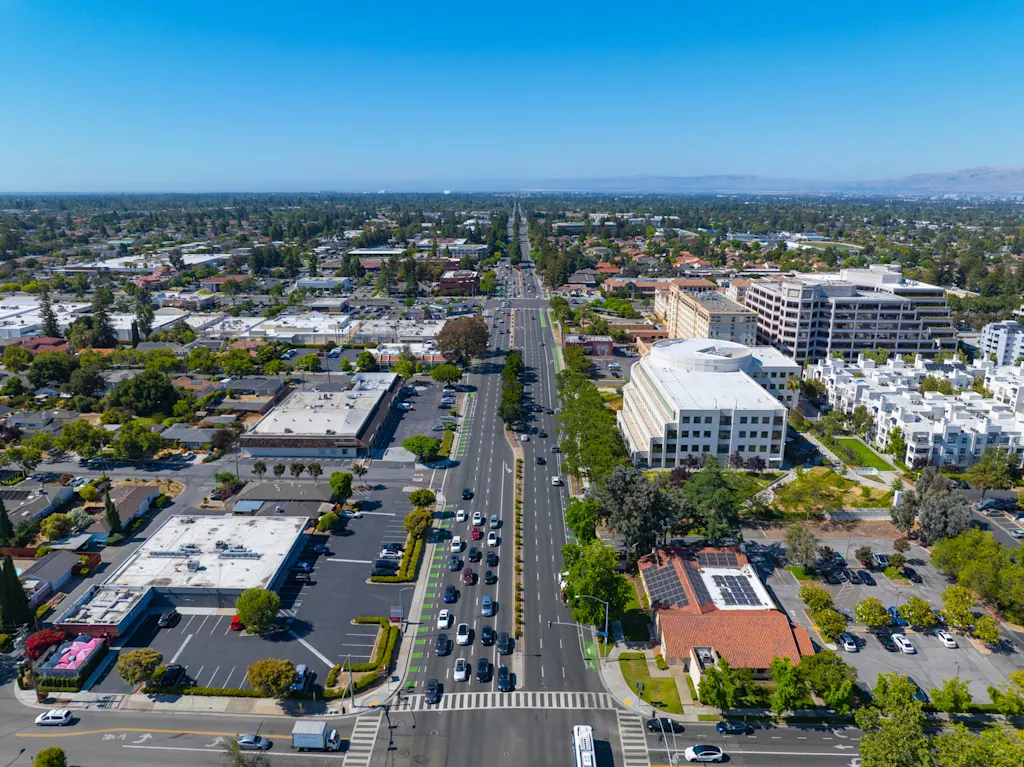
But no, Silicon Valley looks like just about any other American suburb (with a few notable exceptions). The future is invented in boxy office parks shielded from the street by hedges and parking lots. Tourists who come to see the global epicenter of innovation inevitably leave disappointed.
This disconnect periodically causes a stir on social media. Matthew Yglesias captured the mood of a recent round of X discourse, posting, “The tech industry would be so much cooler if it built iconic skyscraper headquarters instead of this lame office park bullshit.”
How did Silicon Valley end up like this? It’s partially the story of a place that came into its own in the mid-to-late 20th century, a time when sprawl was the overriding mandate of American urban planning. But there are actually more particular reasons for Silicon Valley’s architectural identity, rooted in the tech industry’s history and ideology.

Research Park inc.
In 1953, Stanford University and the city of Palo Alto opened a new joint development about a mile from campus called Stanford Industrial Park. The university marketed the complex as a hub for “smokeless” industry, where university affiliates could commercialize their cutting-edge research. It was immediately an enormous success, incubating Silicon Valley giants like Varian Associates and Hewlett-Packard, and later, Meta and Tesla.
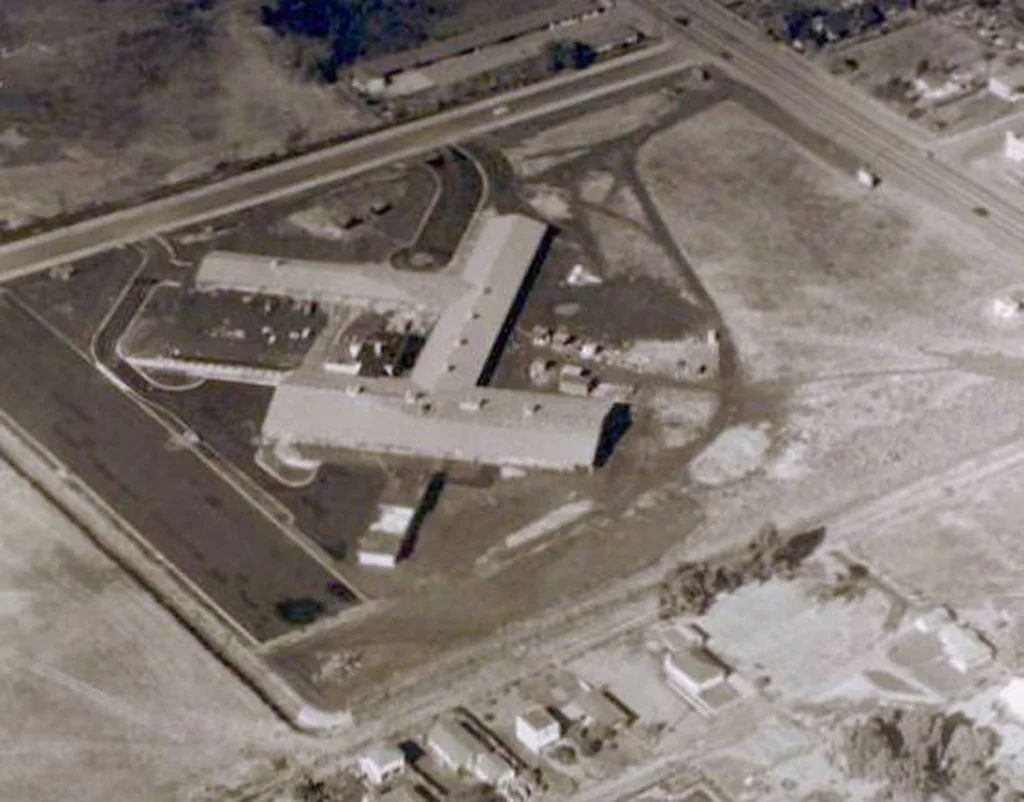
Stanford Research Park, as it’s now known, is a fairly ordinary-looking office park to contemporary eyes. But at the time of its construction, there was nothing like it in the world. Its design reflected its identity as a fusion of the university, the factory, and the corporate office, Louise Mozingo writes in the book Pastoral Capitalism: A History of Suburban Corporate Landscapes.
Stanford Research Park employed modernist architectural principles dictating the arrangement and spacing of buildings. The office park’s developers were required to leave more than half of the land area as open space, and to establish 90-foot landscaped buffers separating buildings from surrounding streets, much like the rules governing tower-in-the-green-style housing projects going up in central cities.
Stanford Research Park’s zoning rules were based on earlier policies enacted by the neighboring city of Menlo Park in its “Administrative, Professional, Executive, and Research” zone in 1948. This was the ur-code for office park zoning, mandating strictly limited lot coverage, large lot sizes, generous parking requirements, and banning noxious industrial processes. Silicon Valley may have pioneered the economic and regulatory frameworks for office park development across the U.S., but it did so with a local flavor.
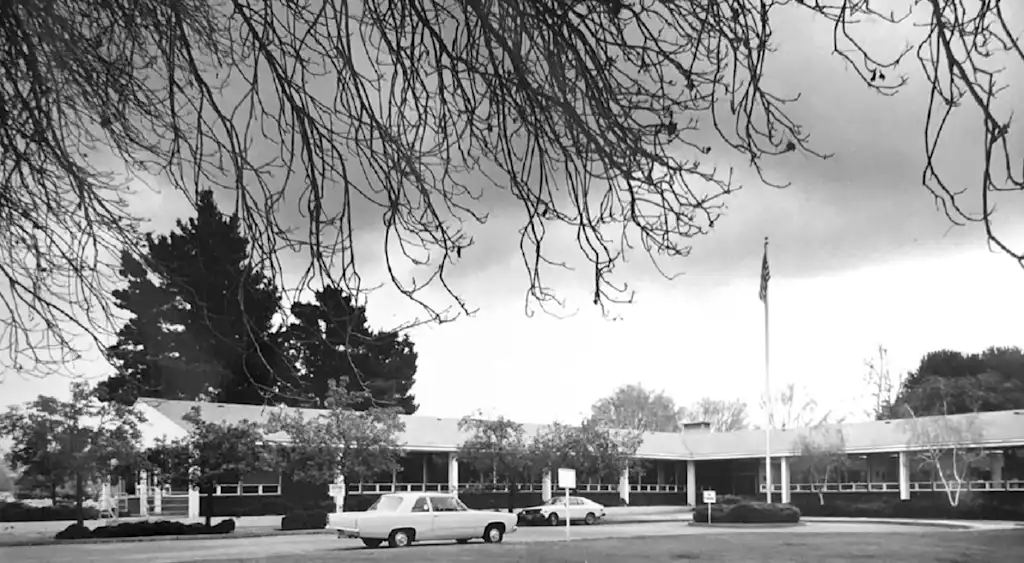
Unlike the “corporate estates” that companies like General Motors and Bell Labs were building concurrently east of the Mississippi, early Silicon Valley office campuses lacked fancy executive wings. At Hewlett-Packard’s Stanford Research Park offices, open, non-hierarchical floorplans enabled executives to practice “management by walking around.” Facebook (now Meta) would follow the same principles in its early years, situating C-suite brass among mid-level associates, as depicted in The Social Network. This layout is meant to stimulate creative thinking by creating chance encounters between workers from different departments.
Silicon Valley firms also had a special proclivity for utilitarian architecture. While blue chip industrial giants built palatial, starchitect-designed campuses—think of Bell Labs’ reflective obsidian block featured on Severance—to signal their power and permanence, rising Silicon Valley firms had more low-key taste. This has, at times, been ascribed to the poor design sensibilities of the nerdy engineers who ran these firms. Why waste money on expensive frills when the firm is ruthlessly focused on innovation and growth?
But a disinterest in architecture may have reflected deeper priorities. In an essay called, “The Virtual Architecture of Silicon Valley,” architectural historian Gwendolyn Wright notes that “the buildings of the area have remained resolutely bland, superficial, and ephemeral. This may in fact signal not mere cheapness but also an alternative aesthetic, as yet unarticulated: a self-conscious aversion to architectural representations of hierarchy, stability, and technological permanence.”
Working at the frontiers of technology and economic transformation, Silicon Valley companies needed highly adaptable workplaces. Venture capital infusions could necessitate rapid upscaling; market crashes meant rapid downscaling. Companies that had disrupted existing industries were wary of their own disruption, and made workplace decisions accordingly.
Silicon Valley is littered with “hermit crab” shells—old office parks that have housed multiple generations of next big things. Alphabet’s Mountain View headquarters was built for Silicon Graphics. Meta’s Menlo Park campus was once home to Sun Microsystems.
Future aesthetic
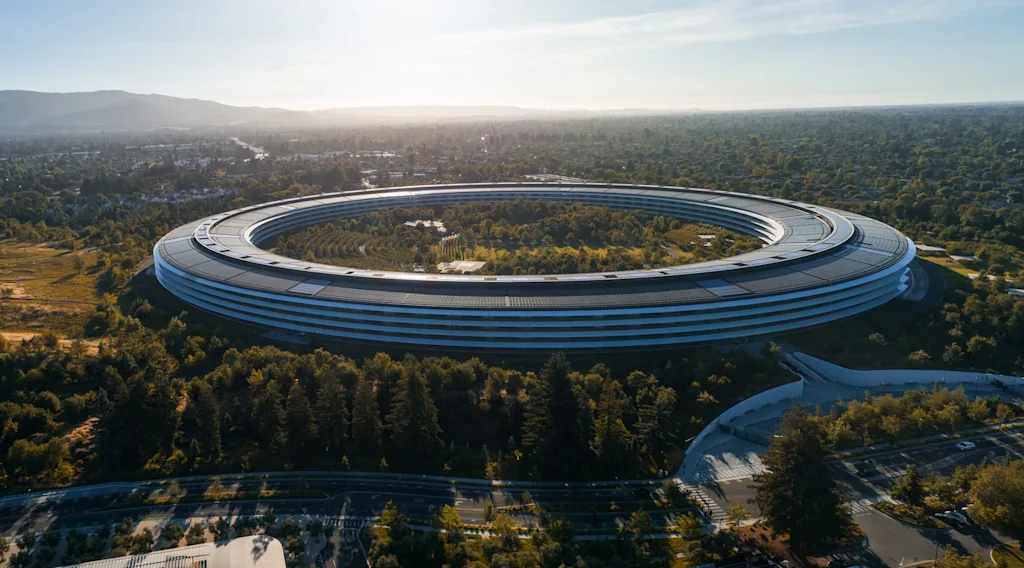
As the current crop of Silicon Valley titans have grown into trillion-dollar businesses, their corporate architecture has evolved to reflect their wealth, power, and, it’s hoped, permanence. Apple Park, a perfectly circular ring designed by Lord Norman Foster in consultation with Steve Jobs and Jony Ive, is a blast from the future, successfully delivering on its promise to translate Apple’s product design aesthetic into architecture.
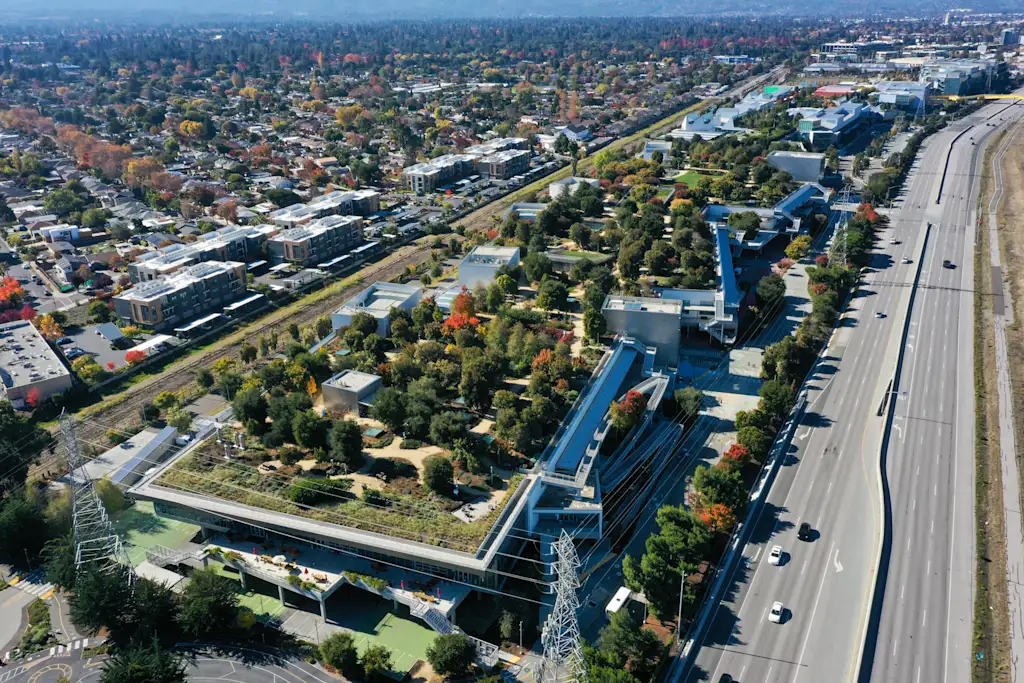
Not to be outdone, Meta and Alphabet subsequently brought on Frank Gehry and Bjarke Ingalls to design portions of their campuses. Next up is Nvidia, which hired Gensler to create a pair of canopied mega-structures sheltering multiple interior office blocks at its rapidly expanding Santa Clara campus.
Thanks to these projects, Silicon Valley is gaining an architectural identity. But it remains a private, primarily virtual architecture. Silicon Valley’s architectural achievements are canceled out by its urbanistic deficiencies. Besides the employees and business partners who are permitted on campus, few others will regularly see these buildings in person, and virtually none will regularly see them on foot. They are mainly designed to be viewed from the middle distance in photos and videos, offering a glitzy visual shorthand for the companies that call them home.
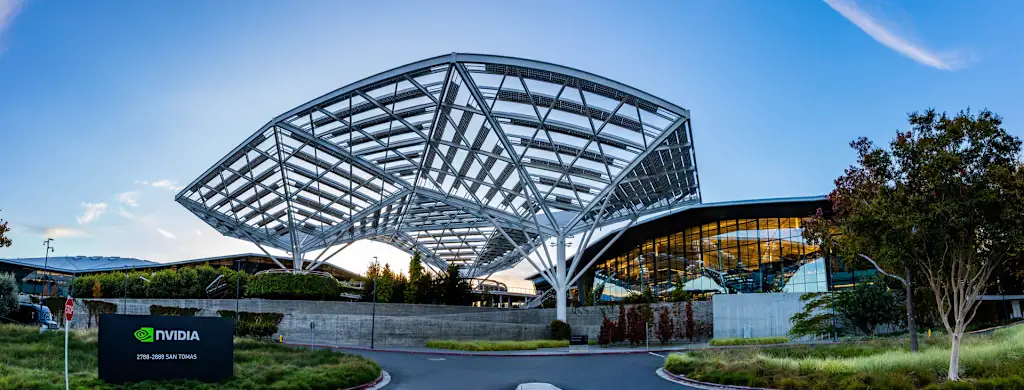
Unlike a downtown office tower, these campuses will never be experienced by masses of passerby. They will never be civic landmarks in the way of the Transamerica Pyramid or the Chrysler Building. They’re all on their own, not characters in a vibrant urban scene. If Apple ever goes the way of Chrysler, or Nvidia pulls a Transamerica, their campuses will become hermit crab shells themselves—big, weird hermit crab shells.