
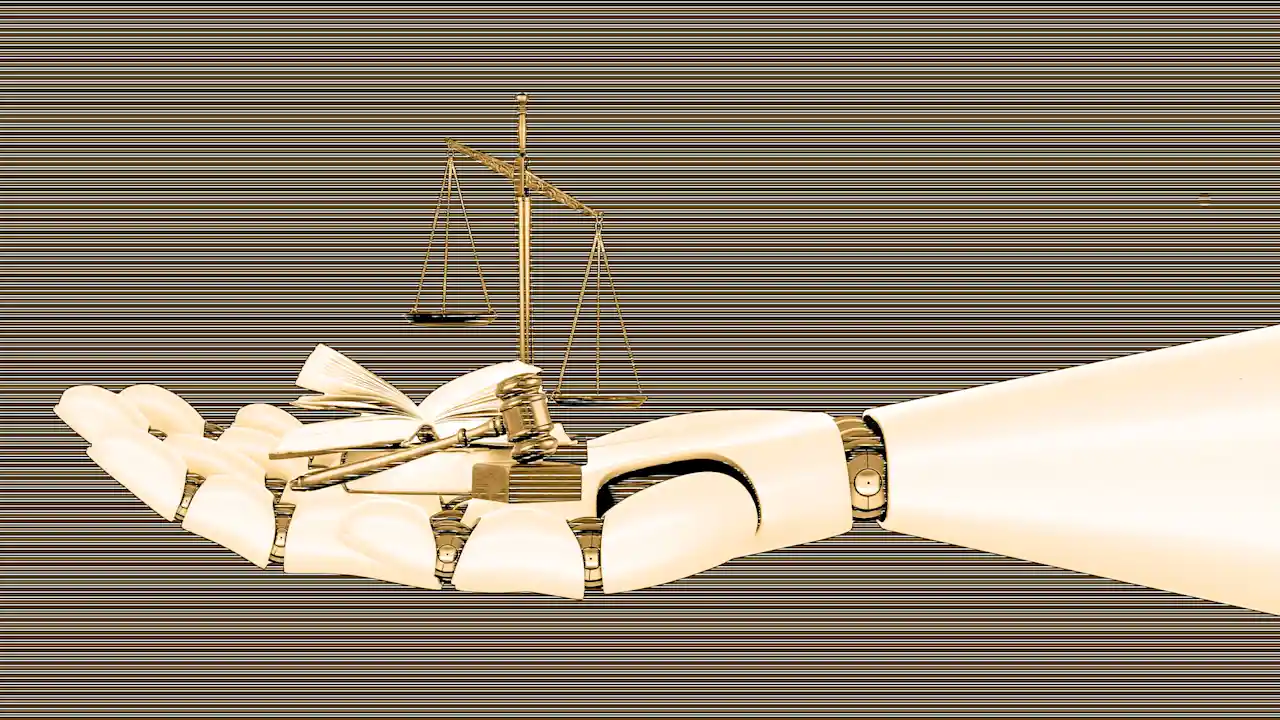
For decades, a legal degree felt like a golden ticket, a safe career choice because a robot could never take a lawyer’s job. Today consumers are increasingly turning to new technologies like generative artificial intelligence for answers to their legal questions without the assistance of a lawyer.
No wonder: The high cost of legal services places them beyond the reach of most Americans. Some outside the profession see this market failure as an opportunity. Legal technology startups armed with AI agents are securing billion-dollar evaluations, and after recent leaps in AI models and new features—including one from Anthropic that can help automate legal tasks—some legal and tech stocks went into shock. The sense that “something big is happening” also left at least some lawyers wondering whether the robots are finally coming for their jobs, and asking if this is the beginning of the end of the legal profession?
It doesn’t need to be. Lawyers could try to wage what will certainly be a losing campaign against the encroachment of new technologies on areas of American life typically dominated by lawyers. Instead, the American legal profession can learn to run with the machines and not against them, fulfilling their ethical duty to ensure all Americans have access to justice by harnessing these technologies to deliver affordable and accessible legal services at scale.
These two powerful phenomena—the emergence of new technologies and the fact that tens of millions of Americans face their legal problems without a lawyer—will certainly encourage Americans to rely on new and widely available tools regardless of whether the information and guidance these consumers receive is accurate. And it often isn’t. Indeed, according to one recent report, there are nearly 1,000 documented cases of lawyers and unrepresented litigants referencing fictitious court decisions and other legal authorities in court filings because of AI “hallucinations”: instances where the AI fabricated the legal sources upon which those litigants relied to their detriment, resulting in fines and other punishments from the courts.
The tragic reality driving many Americans to these imperfect alternatives to professional legal help is not that consumers are choosing between a lawyer and a bot; they are all too often facing their legal problem with no lawyer at all. This is especially true in areas where the fees available to lawyers are low, yet the stakes for the consumer high: where a tenant faces eviction, an immigrant is at risk of deportation, a homeowner might lose their home to foreclosure, or a victim of identity theft faces a mountain of debt they did not accumulate themselves. Roughly 93% of low-income and half of middle-income Americans go without adequate legal representation when confronted with legal problems like these.
This access-to-justice crisis, as bad as it is, leads to larger and even more troubling concerns. When lawyers are not available to vindicate important interests, that threatens other critical values all Americans should cherish: individual liberty and dignity, civil rights, equal justice, and the rule of law.
But this isn’t the first time that the legal profession has faced these sorts of challenges. At the turn of the 20th century, industrialization led to reorganization of the bar into larger and larger law firms to respond to the growing and more complex demands of their clients. Simple technologies like the telephone, telegraph, and typewriter made the practice of law more efficient, allowing lawyers to provide more comprehensive services to their corporate clients.
Ironically, many of the measures elites in the bar formulated to respond to these societal and technological changes led to the current market failure. Indeed, instead of welcoming more lawyers into the profession to meet the growing need for its services, elites in the bar erected barriers to entry where few existed before (at least if you were white and male). They built high walls and wide moats to prevent dilution of the legal services market, including requiring an expensive legal education and more challenging bar exams before an aspiring lawyer could begin to practice.
These requirements had the desired effect: limiting access to the profession and artificially inflating the cost of legal services. What is more, many of these barriers endure and continue to drive up the cost of legal services today.
This time is different though. Never before has it looked like technology could truly displace lawyers. Indeed, tools like CitizenshipWorks, an online portal that helps individuals apply for citizenship, and Depositron, which assists tenants in New York seeking a return of their security deposit from their former landlords, are meeting critical needs without the fees a lawyer might otherwise charge for these services. Think of it as the expansion of TurboTax-like products to other areas of the law.
There are certainly situations where there is no substitute for a living, breathing lawyer, like when a criminal defendant is facing a felony charge, or when a complex and novel business transaction requires unique legal skills. But when the alternative is no legal representation at all, as is the case with far too many American consumers with far simpler legal needs—needs that can be met through technological innovations—the profession has an obligation to find ways to address those needs, even when doing so will bring down the price of legal services or displace some traditional legal jobs. In the face of such threats to their position in society, however, lawyers must remember that the point of the legal system is not to serve as a full-employment plan for lawyers; it is to help people solve their legal problems.
This market opportunity is one that lawyers can actually seize. Instead of ignoring new technologies or erecting even higher walls to their adoption, the legal profession should embrace and shape these technologies, creating an array of options for individuals, families, and businesses to address their legal problems at lower cost, and at scale.
Big Law is already adopting many of these new tools to serve their well-heeled clients; the present cost of building effective systems may mean that the widespread adoption of such technologies at the high-end of the legal services market actually makes the access-to-justice gap worse, not better.
Instead of exacerbating legal access inequality, the profession should build bridges—aided by new technologies—that will span the chasm between those who require legal assistance and those who can afford it, even if the services that solve Americans’ legal problems in the not-so distant future are not always delivered by lawyers alone.
There’s plenty of legal work to go around. Lawyers should be the ones figuring out how to put new technologies to use to serve the legal needs of all Americans in creative, ethical, effective, affordable, and accessible ways. When they do that, they will serve the profession’s most important values and functions, and advance what should be its highest ideals.