
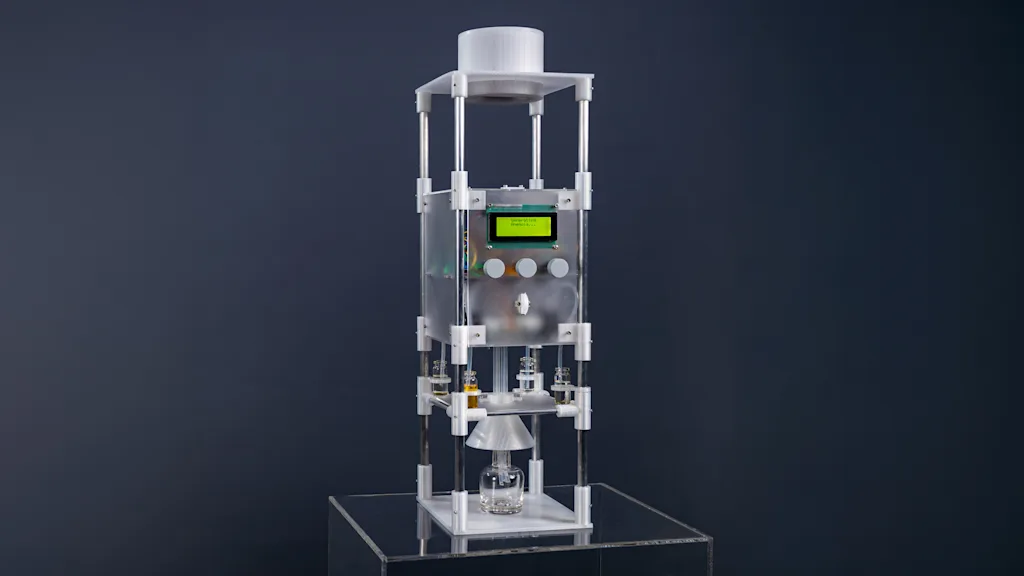
Picture a memory from childhood, one that feels real and nostalgic, but somehow just out of grasp: perhaps a family trip to the beach, or a moment mid-swing on the playset, or an afternoon spent hunting for four-leaf clovers. Now, imagine that you could bottle that golden moment into a fragrance.
One scientist at MIT, Cyrus Clarke, is working to do just that. Alongside a team of fellow researchers, Clarke has developed a physical machine called the Anemoia Device, which uses a generative AI model to analyze an archival photograph, describe it in a short sentence, and, following the user’s own inputs, convert that description into a unique fragrance.
The word “anemoia” was coined by author John Koenig and included in his 2021 book, The Dictionary of Obscure Sorrows. It refers to a specific feeling of nostalgia for a time or place that one never actually experienced themselves—and it’s exactly what Clarke’s team hopes to capture with the Anemoia Device.
According to a paper published by the team, the device explores the concept of “extended memory,” or the idea that, in the digital age, memory is increasingly stored and accessed through external media, like digital archives.
Studies have already shown that memory can be formed vicariously—like when a second-hand account, perhaps from a parent, shapes one’s own memories—but the Anemoia Device is a delightfully physical, interactive experiment into how AI might allow users to experience a memory of a past they never actually lived.
The Anemoia Device
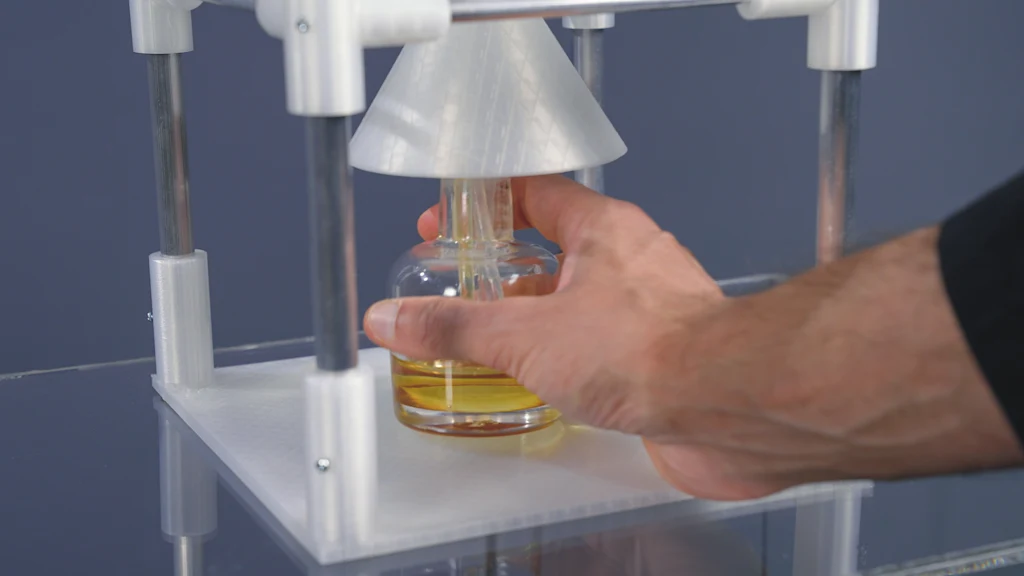
The Anemoia Device looks like something that one might find in the medical bay of a retro sci-fi spaceship. It’s a slim, metal-and-plastic contraption accented with a singular neon green screen and a simple array of three physical dials. At the bottom, a glass beaker waits to catch the final fragrance.
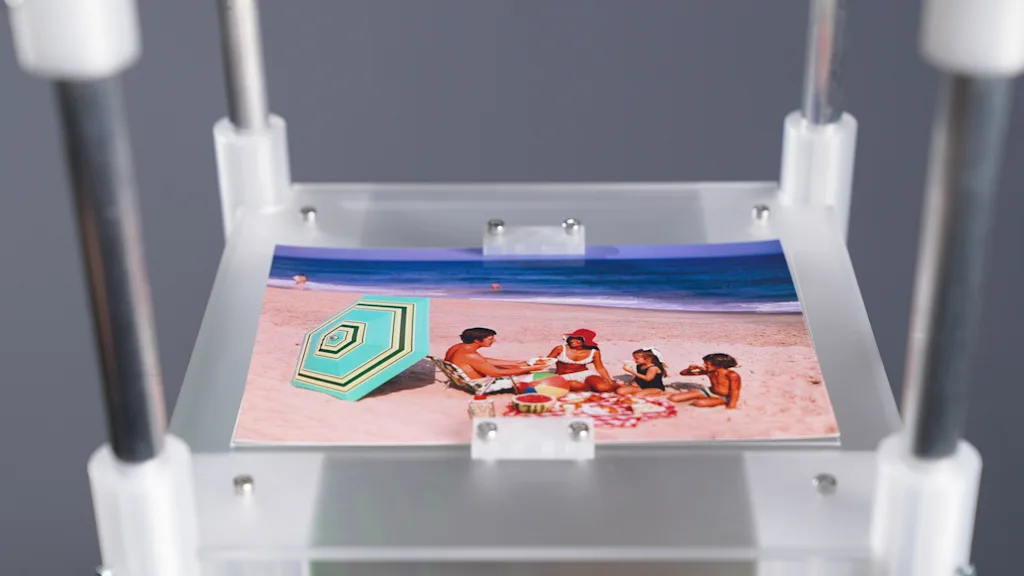
To start, a user inserts a photograph into the device. A built-in vision-language model (VLM) analyzes the image and generates an initial caption based on what it finds. For a picture of tourists in China, an example used in the paper, the device might write, “A tourist in black shorts and a child pose in the doorway along the Great Wall of China, with the iconic stone steps and mountainous landscape stretching up toward the sky.”
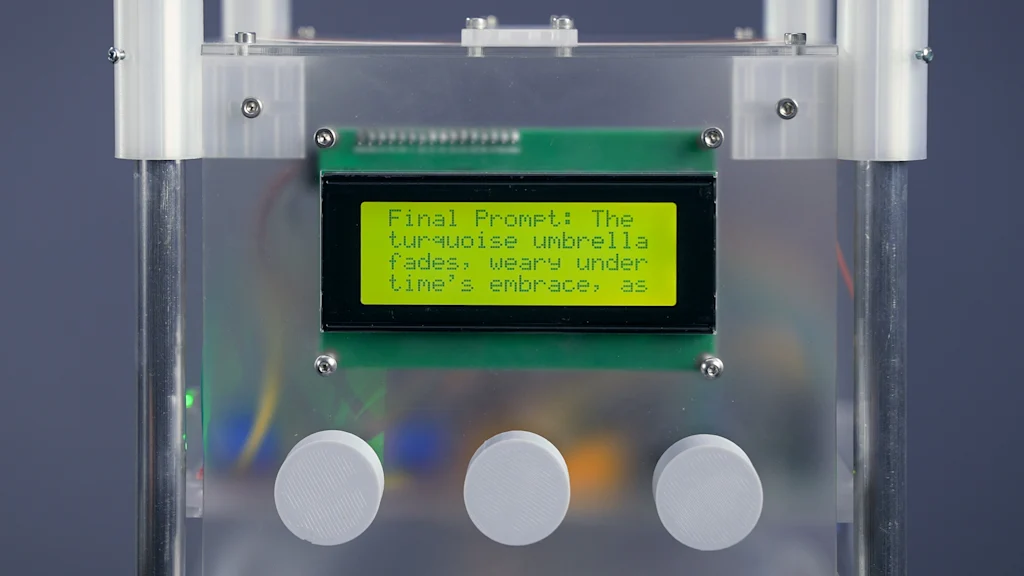
Users can then adjust the parameters of the caption with the three dials: one to decide which person or object in the image should be the subject; a second to describe the age of the subject; and a third to describe the mood of the scene.
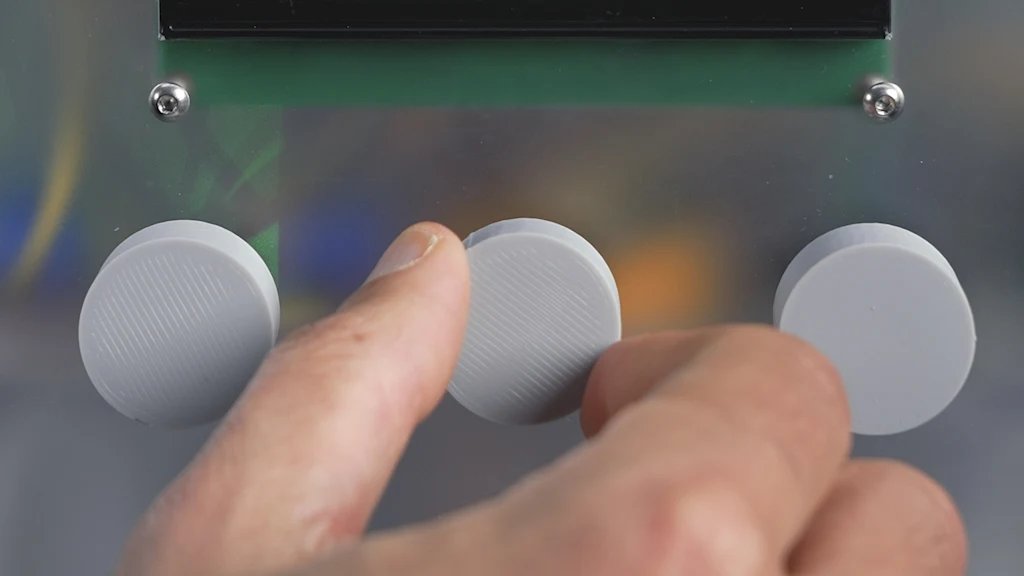
“I’m personally very interested in inventing new physical interfaces for generative AI,” Clarke says. “Generative AI usually starts with a blank prompt. The dials replace that with a physical, easy to understand grammar. You’re not trying to ‘say the right thing’ to an algorithm, it’s more akin to tuning an instrument.”
A language-learning model, built from ChatGPT-4o, aggregates the original caption and the user’s inputs into a short, poetic narrative. If one were to select the Great Wall of China itself as the subject of the aforementioned prompt, the result would be something like, “For centuries, from the Warring States to the Ming, I’ve joyfully observed time’s march and countless travelers along my path of stone, brick, and wood.”
Next comes the LLM’s most impressive task: converting this written poem into a tangible scent.
Smell as a memory portal
The scent-development process relies not just on identifying the appropriate olfactory notes, but also on evoking the right emotions.
Clarke’s team trained the model to select from a scent library of 39 different fragrances (since expanded to a broader portfolio of 50 scents), ranging from old books to leather and dirt. Each fragrance was coded with a set of descriptors, labeling them with details like their primary notes, associated concepts, and strongest emotions. The Large Language Model (LLM) uses its training to select the right fragrances and determine how much of each should be used in the final concoction.
All of that information is funneled to a custom olfactory display, which uses four pumps to draw the necessary liquid out of their vials and into the waiting beaker (the final formula for the Great Wall of China fragrance includes campfire, dirt, cedar, and bamboo). The Anemoia Device is capable of capturing an essentially infinite range of fragrances, from the smell of a sandy beach on a hot summer day in the ‘80s to the aroma of a couple enjoying a pear in a scenic garden.
Ultimately, the study concludes, the device is a provocation that asks “what it means to remember when memory itself can be generated, what it means to feel when that feeling is coauthored with a machine, and what it means to be human when we can craft beautiful, fragrant fictions of pasts we have never lived.”