
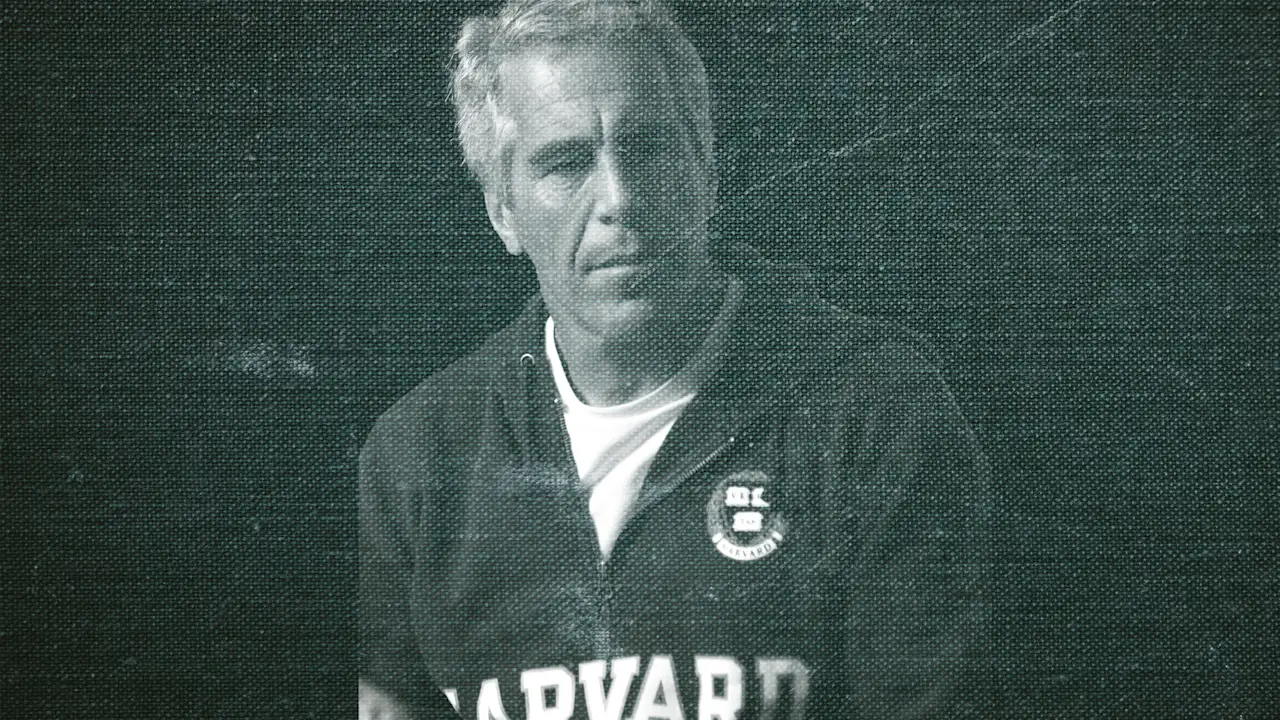
Jeffrey Epstein’s network of money and influence often intersected with scientific and academic communities. The disgraced financier spent years cultivating relationships with researchers at elite universities, frequently dangling the promise of funding. Some of the work he supported has had, and may still have, direct and indirect impacts on Silicon Valley’s most powerful technologies.
Epstein was first convicted in 2008 on charges of soliciting a minor for prostitution, yet he continued to maintain a web of relationships across the worlds of technology and academia until he was indicted on federal sex-trafficking charges in 2019. The Department of Justice’s latest release of the “Epstein files” includes emails that reveal new names and details about those connections that had not previously been made public.
Joscha Bach
One striking example is Epstein’s patronage of German AI scientist and executive Joscha Bach. Known in academic and AI circles for his work on cognitive architectures, computational models that aim to replicate aspects of human cognition, Bach received extensive financial support from Epstein while completing postdoctoral work at MIT.
According to emails reviewed by SFGate, Epstein covered Bach’s rent, flights, medical bills, and even private school tuition for his children in Menlo Park between 2013 and 2019.
Bach is now the executive director of the California Institute for Machine Consciousness, a small, independent research organization focused on whether machines could ever become conscious. According to SFGate, Epstein met Bach through other AI and psychology researchers and began financing his work at the MIT Media Lab and the Harvard Program for Evolutionary Dynamics in 2013.
The files show no indication of sexual impropriety on Bach’s part, and he has never been accused of such conduct. Bach told SFGate that MIT approved the funding and said many prominent scientists maintained relationships with Epstein. He added, “The prevailing view was that Epstein, having served his sentence, was complying with the law.”
Antonio Damasio
Epstein also corresponded with Antonio Damasio, the director of USC’s Brain and Creativity Institute. In 2013, Damasio asked Epstein to fund a new line of robotics and neuroscience research. Damasio, the Dornsife Chair in Neuroscience, and another USC researcher hoped to study the origins of emotion in the brain, and sought a nontraditional funding source so they could retain greater control over the direction of the work.
Damasio presented the proposal to Epstein in February 2013 at Epstein’s New York City home, but Epstein ultimately declined to fund the research. Damasio told Annenberg Media that he did not know Epstein was a convicted sex offender at the time, and said he would never have contacted him had he known. “I was looking for a prestigious philanthropist, not a criminal,” Damasio said.
Damasio’s primary field is neurobiology, though he also teaches psychology and philosophy, with a focus on the neural systems that underlie emotion, decision-making, memory, language, and consciousness. He is best known for an influential theory arguing that emotions and their biological foundations, not just reason, play a central role in decision-making, even when the decision-maker is not consciously aware of it. He also theorized that emotions provide the scaffolding for social cognition, shaping how people process, store, and apply information about others and social situations.
Damasio argues that current AI models that power robots lack a sense of biological “vulnerability” that drives survival instincts and intelligence in living organisms. He theorises that training a robot to be “concerned” about its own preservation might help the robot solve problems more creatively.
David Gelernter
The DOJ document release also revealed that Epstein corresponded between 2009 and 2015 with Yale computer science professor David Gelernter, an early pioneer of concepts now associated with digital twins and metaverse-style overlays, which he calls “computed worlds.” Gelernter is the author of the book Mirror Worlds, which outlines much of that research. In 2001, Gelernter helped found a company called Mirror Worlds Software based on those ideas, but the venture failed to gain traction and shut down in 2004.
In his correspondence with Epstein, Gelernter sought business advice rather than research funding, according to the New Haven Register. The files also revealed no evidence of wrongdoing by Gelernter. He has said he did not know Epstein was a convicted sex offender and was never aware of Epstein’s sex-trafficking operation.
In 1993, Gelernter was severely injured by a mail bomb sent by the “Unabomber,” Ted Kaczynski, which destroyed four of his fingers and permanently damaged one of his eyes. He is also known for controversial views, including claims that liberal academia has a destructive influence on American society, that women, especially mothers, should not work outside the home, and for rejecting the scientific consensus that humans are driving climate change.
Marvin Minsky
The most direct link between Epstein and the AI world ran through MIT professor and pioneer Marvin Minsky, who died in 2016. Minsky helped establish artificial intelligence as a formal research discipline in the 1950s and later co-founded the field at MIT with John McCarthy, training generations of AI scientists.
Epstein donated $100,000 to MIT to support Minsky’s research in 2002, before Epstein’s first criminal conviction. That gift was the first in a series of donations to MIT’s Media Lab that ultimately totaled $850,000 between 2002 and 2017. Minsky died in 2016.
In 2019, court documents from a deposition by victim Virginia Giuffre were unsealed, revealing her allegation that Ghislaine Maxwell directed her to have sex with Minsky during a visit to Epstein’s compound. Minsky’s wife said the allegation was impossible because she was with him the entire time they were on the island. Minsky never faced charges, but the revelations placed his name at the center of a reckoning at MIT’s Media Lab over the influence of Epstein’s money on the lab’s work.
A gray zone
In many ways, Jeffrey Epstein operated in a gray zone created by shifting funding models for AI research. Long before the current AI boom, private industry had already overtaken the federal government as the primary backer of foundational AI work. In recent years, government funding has become increasingly tied to defense and intelligence priorities, leaving researchers in less immediately applicable fields with few viable grant options. At the same time, AI research has grown extraordinarily expensive, requiring elite talent and vast computing resources.
As a result, universities and academic labs have become far more dependent on private philanthropy to sustain their work. Funding from wealthy donors often comes with fewer restrictions. It can arrive faster, offer greater flexibility, and require less public disclosure than government grants. This likely explains part of Epstein’s appeal to researchers. But the arrangement cuts both ways. Such donations also require little transparency from the donor, meaning beneficiaries may know very little about the source of their funding.
Epstein’s case is extreme, but it highlights a broader risk: when public research funding is scarce and the costs of advanced AI are high, private money becomes more attractive, along with the ethical and reputational dangers it can carry. And the problem is not easing. Microsoft chief scientist Eric Horvitz warned that U.S. cuts to National Science Foundation research grants during the Trump administration could undermine the country’s AI leadership, the Financial Times reported, noting that more than 1,600 NSF grants worth nearly $1 billion have been scrapped since 2025.