

Every day, New Yorkers receive a staggering 2.3 million packages at their doorstop. Nearly 90 percent of those goods snake through the city on trucks that cause traffic congestion and pollute the air on their way. To address the problem, global architecture firm KPF is asking an ambitious question: “What if New York was designed for the perfect delivery?”
The answer, which is outlined in the firm’s latest book, Connective Urbanism – New York, features towering distribution hubs, drones, and a hyper-connected logistics network that encompasses the city’s rails and waterways. KPF presents its solution as a provocative speculation designed to start a dialogue about the city’s delivery problem, but it is more grounded in reality than it seems. “We didn’t want to have speculations that were just dreams,” says Bruce Fisher, head of KPF Urban, and a co-author of the book.
In a place as dense as New York City—both in terms of population and building stock—good logistics are everything. As Fisher writes in the book: “A city’s economic potential is tied to its logistic efficiency.”
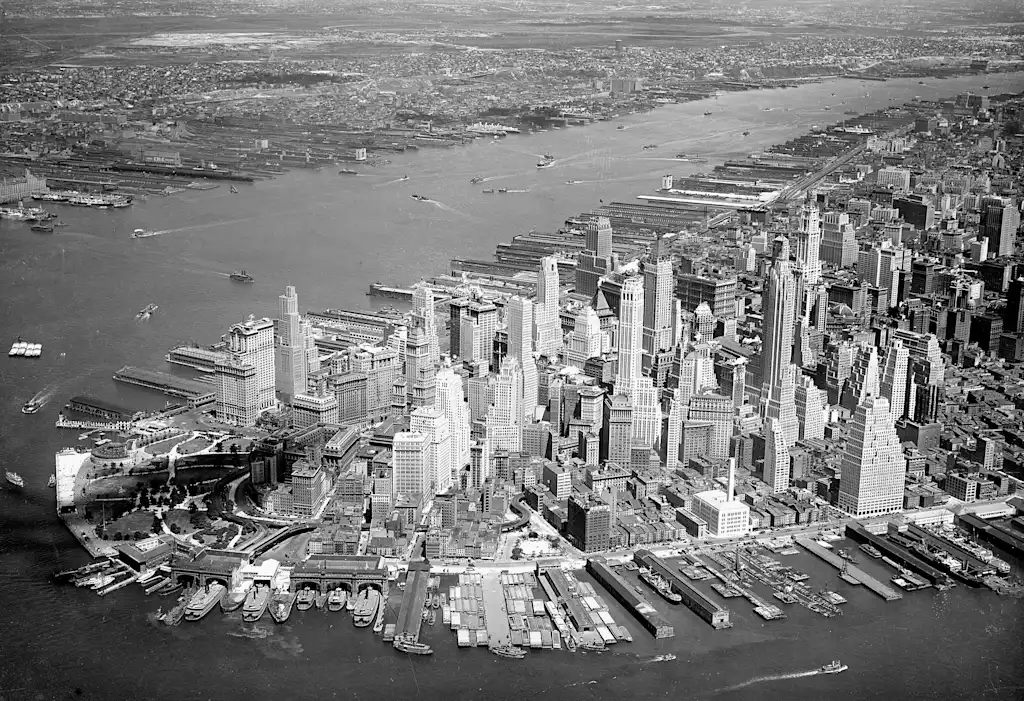
Highways centralized transport. Can it be diversified?
There once was a time when most goods arrived in New York City via train and freight ships. Before the Holland Tunnel opened in 1927, nearly all domestic freight destined for New York terminated in New Jersey, then crossed the river on cargo ferries or “carfloats” outfitted with rail tracks.
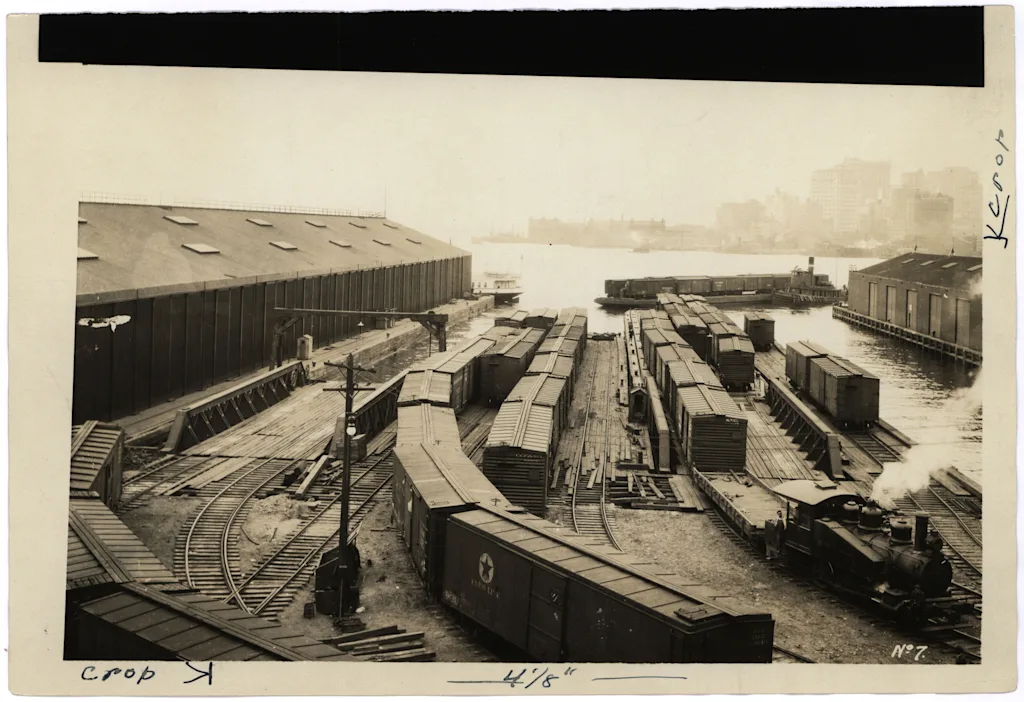
By the 1950s, propelled by the Interstate Highway System, trains gave way to trucks on improved roads, while freight shifted to shipping containers that required larger open spaces in New Jersey. The city shifted to trucks too, and its distribution infrastructure changed with it.
Now, KPF wants to diversify the way goods move throughout the city, beyond trucking. The architects envision a distribution network system that utilizes New York’s existing freight rail lines, its extensive coastline, and its abundant navigable waterways.
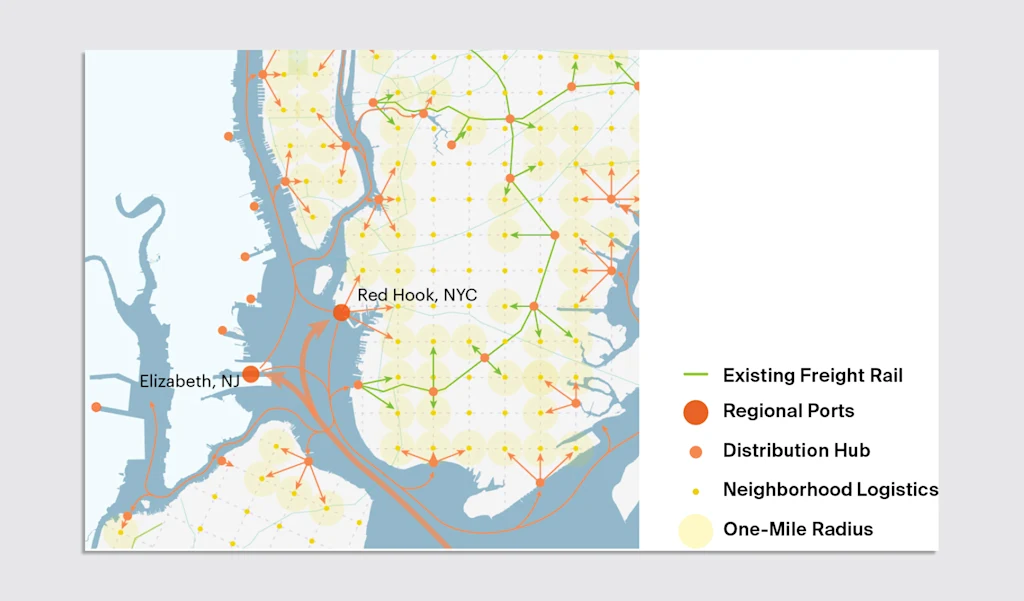
Goods would first arrive in the city by a combination of trains and ships sailing into regional ports like Red Hook, in Brooklyn, or Elizabeth, in New Jersey.
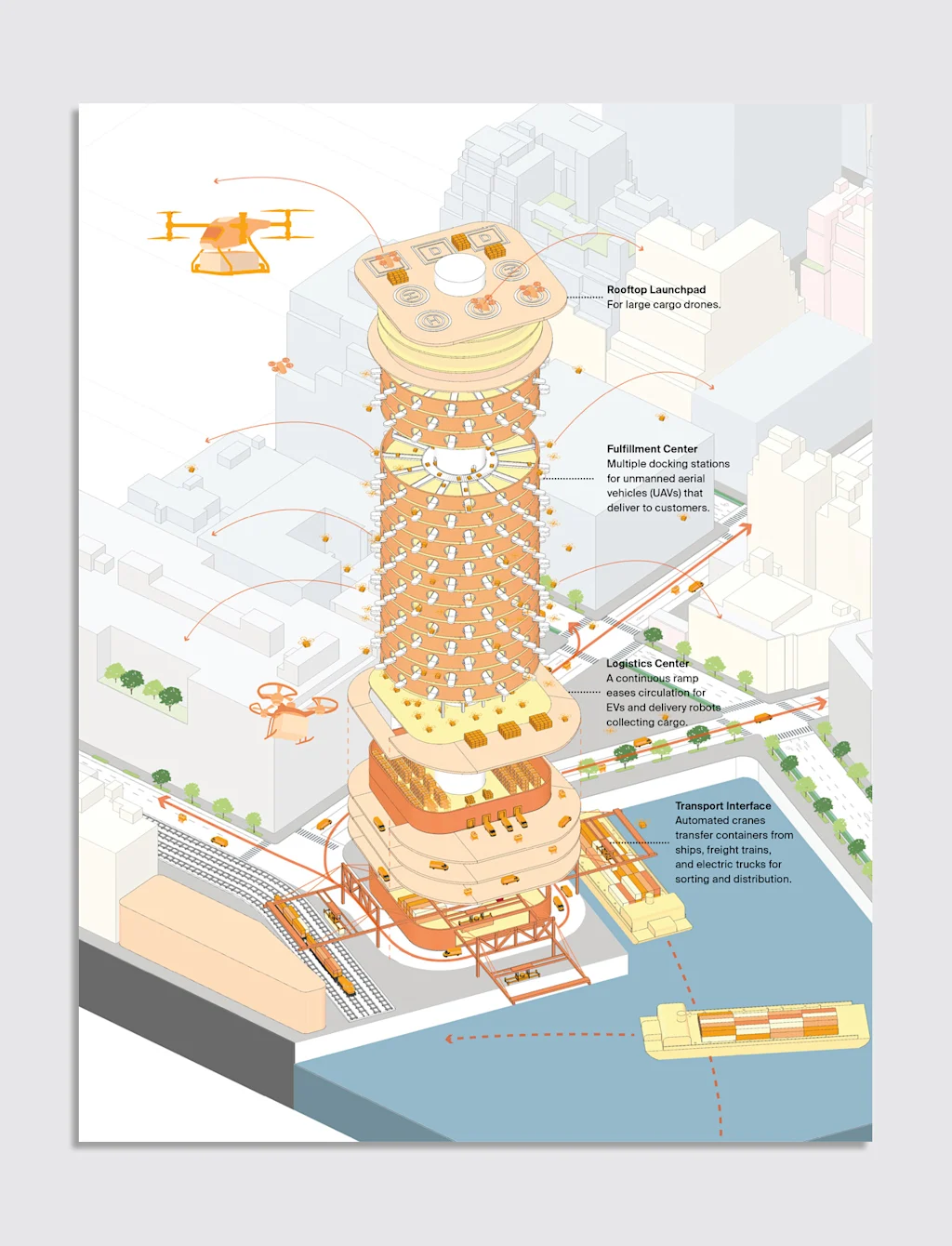
Then, they would make their way into strategically located distribution hubs, from where automated cranes and robots would collect the cargo and distribute it to logistic centers scattered around the city. From there, goods would be delivered using a variety of micromobility options like electric bikes, un-manned aerial vehicles (UAVs), or drones.
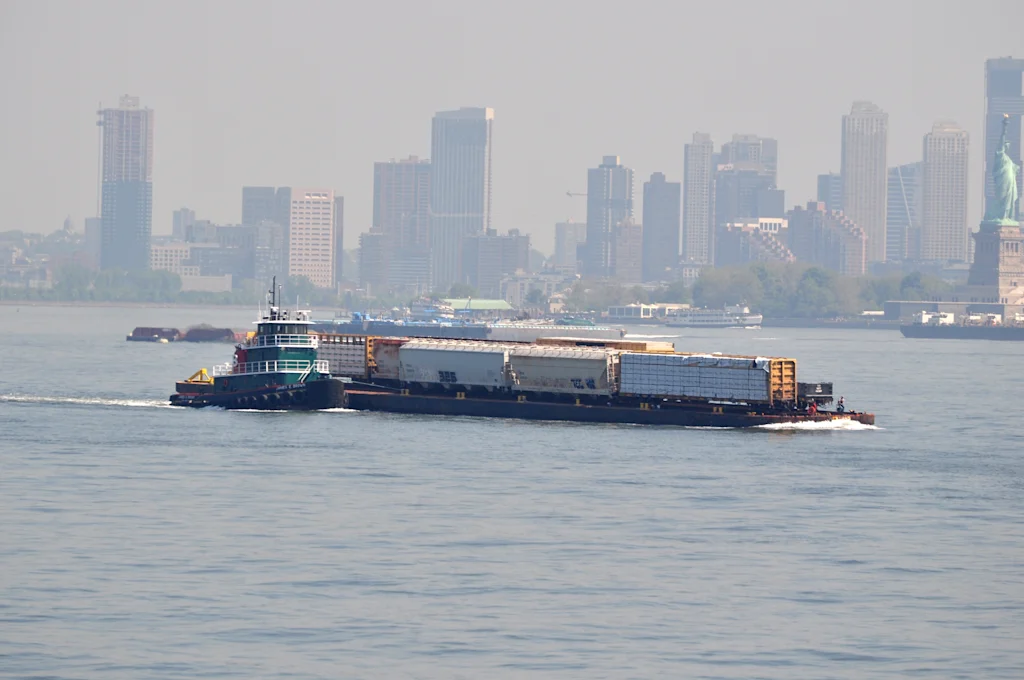
Some freight deliveries are already being re-routed to waterways
If the architects’ proposal evokes a scene out of a sci-fi movie, that’s because it requires the kind of infrastructure that we can seemingly only imagine from the future. But for Fisher, every idea related in the book is based on real-life examples.
For decades, the New York Department of Sanitation has used the city’s waterways to transport trash and recycling from six strategically located facilities to landfills outside the city. Most recently, in December 2025, the New York Department of Transportation (NYC DOT) launched its Blue Highways program, which aims to remove a significant portion of freight deliveries off crowded streets and onto the city’s 520 miles of navigable waterways.
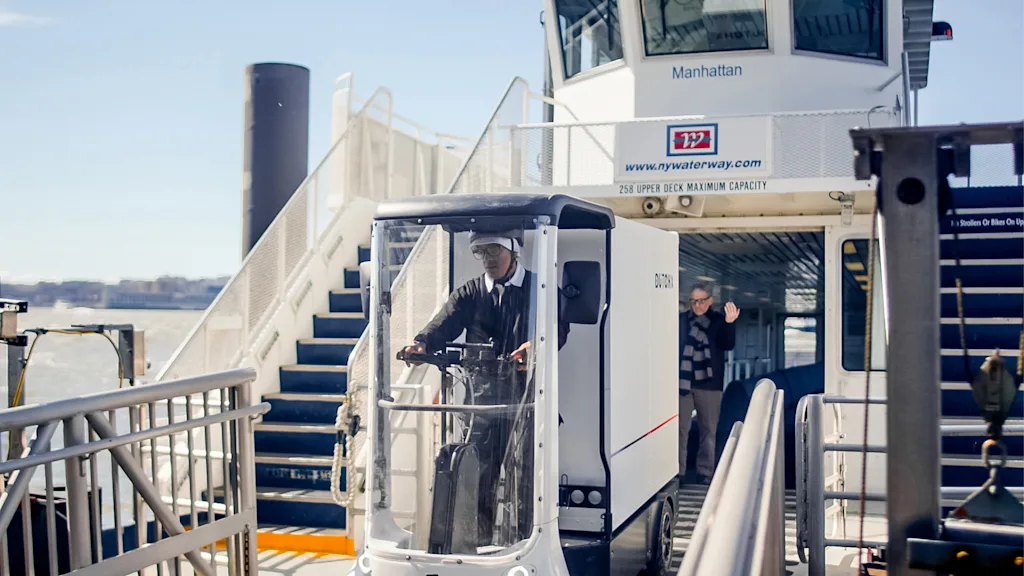
Essentially, it redesigns the city’s package distribution system. Through the program, which is now in a pilot phase, the city will transport 300 to 400 small household parcels per day from a ferry onto five electric pedal-assist cargo bikes, which will complete the final delivery phase. It’s currently being tested within a designated delivery area within Manhattan. If the pilot is successful, the city plans to expand the program.
“Waterways are the new highways in New York City,” said NYC DOT Commissioner Ydanis Rodriguez in a press release at the time. “New York’s waterways built this city—now they’re helping us create a cleaner, safer, and smarter way to deliver the goods New Yorkers rely on.”
In its efforts to reduce truck traffic and curb congestion, NYC DOT has also launched a pilot ‘Microhubs’ program with dedicated spaces for truck operators to transfer deliveries onto more sustainable modes of transportation, like e-cargo bikes, handcarts, and electric sprinter vans, for last mile deliveries.
Old distribution hubs may provide new ideas for the present
For now, these pilots are small in scale and scope, and none of them extend past the boundaries of Manhattan. In order to scale the operations into the outer boroughs, the city would likely need to build distribution hubs and logistic centers like the ones in KPF’s proposal.
In its speculation, KPF proposes a cylindrical building akin to the Marina City towers in Chicago. The building, which would be ideally located near a port or a train station, features a continuous ramp for EVs and delivery robots, docking stations for UAVs, and a rooftop launchpad for large cargo drones.
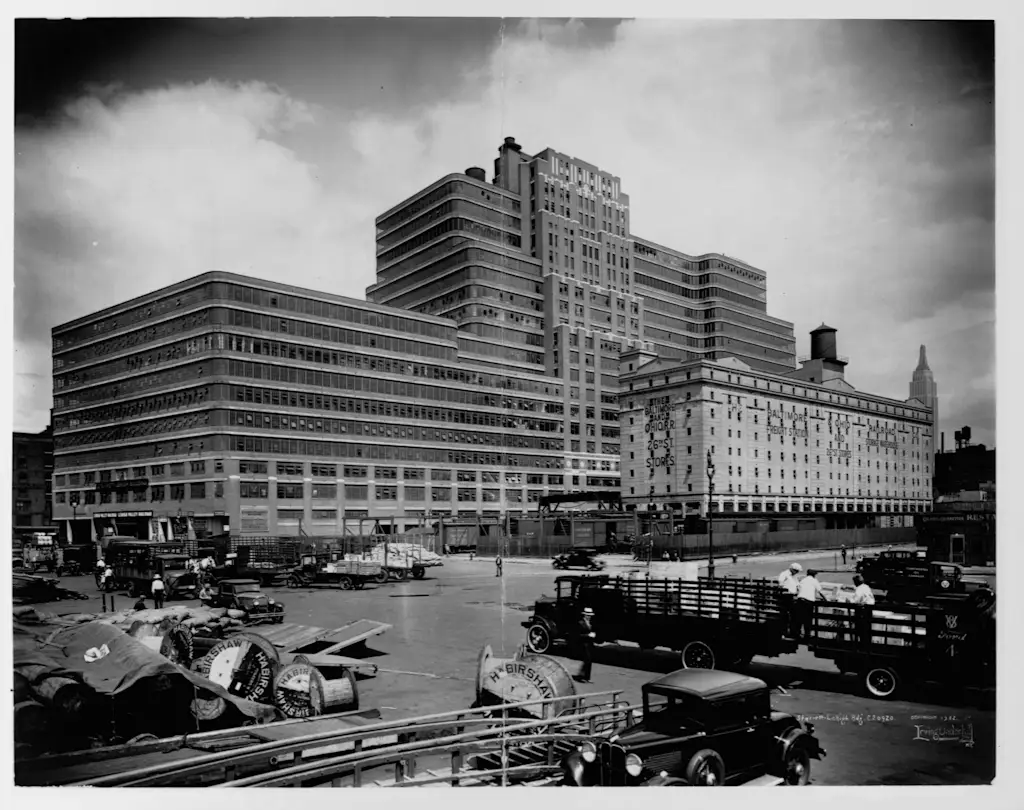
The idea for such integrated buildings isn’t all that new. In the 1930s, New York City’s Starrett–Lehigh Building once served as a “drive-in building”: railcars came directly into the ground floor, their freight was transferred to trucks, which were then lifted in special elevators onto designated floors with loading bays. This allowed goods to be loaded, stored, repackaged, and redistributed without using curbside space.
Today, the Starrett-Lehigh building has been transformed into a modern office building. But new buildings are emerging to help cities improve freight logistics.
In April 2025, a multi-story industrial development opened in Long Island City, Queens. Spanning 1 million square feet across six stories, Borden Industrial sports concrete ramps that trucks can use to load and unload on upper levels. The building appears focused on truck logistics, but as Fisher points out, it’s also located near active rail yards, and it borders Newtown Creek, a major industrial waterway for barges and freight.
One could imagine that, if enough buildings like Borden Industrial opened in strategic locations across New York City, KPF’s vision would quickly enter the realm of reality. And as cities around the world rush to meet their zero-emission goals, many are already experimenting with alternative delivery solutions.
For a decade now, France’s larger supermarket chain, Franprix, has transported goods by barge to its 300 Parisian stores by barge. And this year, new electric cargo barges, stocked with e-cargo bikes, are set to deliver regular mail to Paris suburbs. Meanwhile, Peachtree Corners, a small city northeast of Atlanta, Georgia, has become a testbed for a curious experiment in the shape of one-mile underground tube network that delivers sandwiches and small packages between suburban microhubs. Drone deliveries are also growing increasingly popular, with companies like Amazon and Walmart leading the charge in the U.S.
These experiments show that the pieces are already in place in many cities around the world, and New York wouldn’t be pioneering something radical—it would be joining a growing movement. But in the end, it will all come down to political will and private investment.
“Someone has to be the real defender of [these models], pushing them forward,” says Fisher. “Until there’s a overall regulatory system that allows for it, it can’t really happen.”