
The United States on Monday announced a $2 billion pledge for U.N. humanitarian aid as President Donald Trump’s administration continues to slash U.S. foreign assistance and warns United Nations agencies to “adapt, shrink or die” in a time of new financial realities.
The money is a small fraction of what the U.S. has contributed in the past but reflects what the administration believes is a generous amount that will maintain the United States’ status as the world’s largest humanitarian donor.
The pledge creates an umbrella fund from which money will be doled out to individual agencies and priorities, a key part of U.S. demands for drastic changes across the world body that have alarmed many humanitarian workers and led to severe reductions in programs and services.
The $2 billion is only a sliver of traditional U.S. humanitarian funding for U.N.-backed programs, which has run as high as $17 billion annually in recent years, according to U.N. data. U.S. officials say only $8-$10 billion of that has been in voluntary contributions. The United States also pays billions in annual dues related to its U.N. membership.
Critics say the Western aid cutbacks have been shortsighted, driven millions toward hunger, displacement or disease, and harmed U.S. soft power around the world.
A year of crisis in aid
The move caps a crisis year for many U.N. organizations like its refugee, migration and food aid agencies. The Trump administration has already cut billions in U.S. foreign aid, prompting them to slash spending, aid projects and thousands of jobs. Other traditional Western donors have reduced outlays, too.
The announced U.S. pledge for aid programs of the United Nations — the world’s top provider of humanitarian assistance and biggest recipient of U.S. humanitarian aid money — takes shape in a preliminary deal with the U.N. Office for the Coordination of Humanitarian Affairs, or OCHA, run by Tom Fletcher, a former British diplomat and government official.
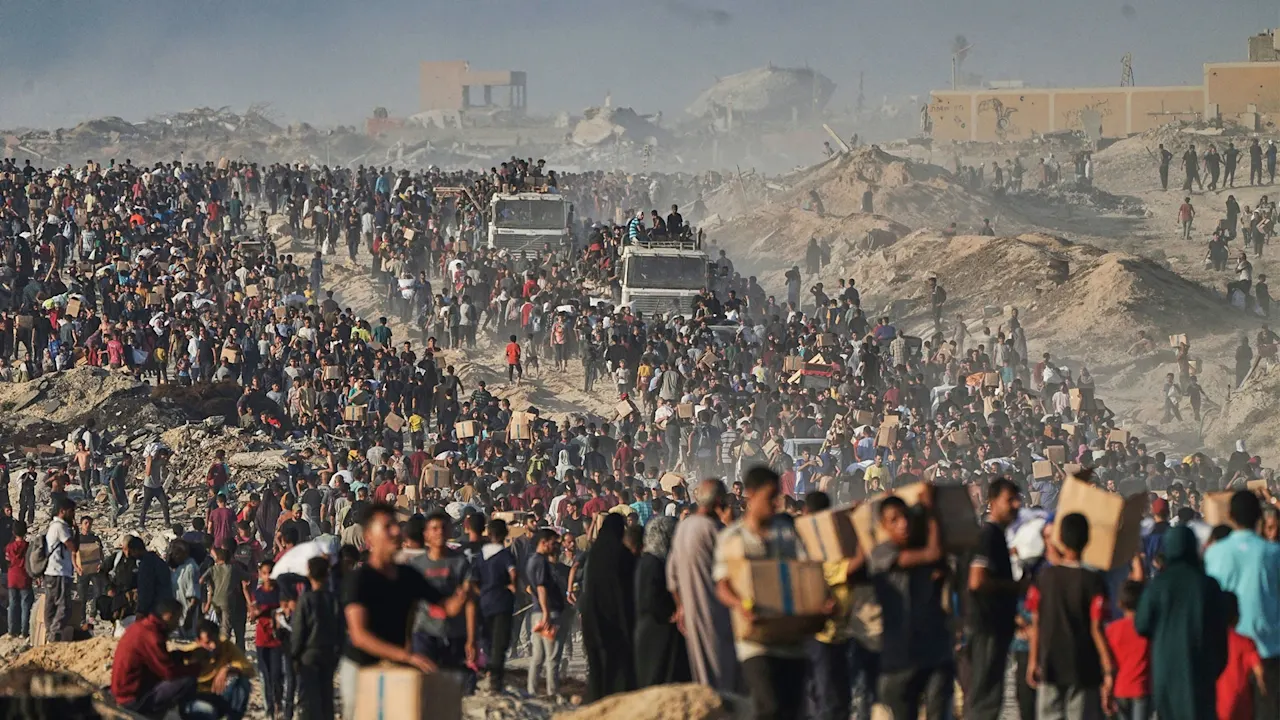
Even as the U.S. pulls back its aid, needs have ballooned across the world: Famine has been recorded this year in parts of conflict-ridden Sudan and Gaza, and floods, drought and natural disasters that many scientists attribute to climate change have taken many lives or driven thousands from their homes.
The cuts will have major implications for U.N. affiliates like the International Organization for Migration, the World Food Program and refugee agency UNHCR. They have already received billions less from the U.S. this year than under annual allocations from the previous Biden administration — or even during Trump’s first term.
Now, the idea is that Fletcher’s office — which last year set in motion a “humanitarian reset” to improve efficiency, accountability and effectiveness of money spent — will become a funnel for U.S. and other aid money that can be then redirected to those agencies, rather than scattered U.S. contributions to a variety of individual appeals for aid.
US seeks aid consolidation
The United States wants to see “more consolidated leadership authority” in U.N. aid delivery systems, said a senior State Department official, speaking on condition of anonymity to provide details before the announcement at the U.S. diplomatic mission in Geneva.
Under the plan, Fletcher and his coordination office “are going to control the spigot” on how money is distributed to agencies, the official said.
“This humanitarian reset at the United Nations should deliver more aid with fewer tax dollars — providing more focused, results-driven assistance aligned with U.S foreign policy,” said U.S. Ambassador to the United Nations Michael Waltz.
U.S. officials say the $2 billion is just a first outlay to help fund OCHA’s annual appeal for money, announced earlier this month. Fletcher, noting the upended aid landscape, already slashed the request this year. Other traditional U.N. donors like Britain, France, Germany and Japan have reduced aid allocations and sought reforms this year.
“The agreement requires the U.N. to consolidate humanitarian functions to reduce bureaucratic overhead, unnecessary duplication, and ideological creep,” the State Department said in a statement. “Individual U.N. agencies will need to adapt, shrink, or die.”
“Nowhere is reform more important than the humanitarian agencies, which perform some of the U.N.’s most critical work,” the department added. “Today’s agreement is a critical step in those reform efforts, balancing President Trump’s commitment to remaining the world’s most generous nation, with the imperative to bring reform to the way we fund, oversee, and integrate with U.N. humanitarian efforts.”
At its core, the reform project will help establish pools of funding that can be directed either to specific crises or countries in need. A total of 17 countries will be targeted initially, including Bangladesh, Congo, Haiti, Syria and Ukraine.
One of the world’s most desperate countries, Afghanistan, is not included, nor are the Palestinian territories, which officials say will be covered by money stemming from Trump’s as-yet-incomplete Gaza peace plan.
The project, months in the making, stems from Trump’s longtime view that the world body has great promise, but has failed to live up to it, and has — in his eyes — drifted too far from its original mandate to save lives while undermining American interests, promoting radical ideologies and encouraging wasteful, unaccountable spending.
Fletcher praised the deal, saying in a statement, “At a moment of immense global strain, the United States is demonstrating that it is a humanitarian superpower, offering hope to people who have lost everything.”
—Jamey Keaten and Matthew Lee, Associated Press