
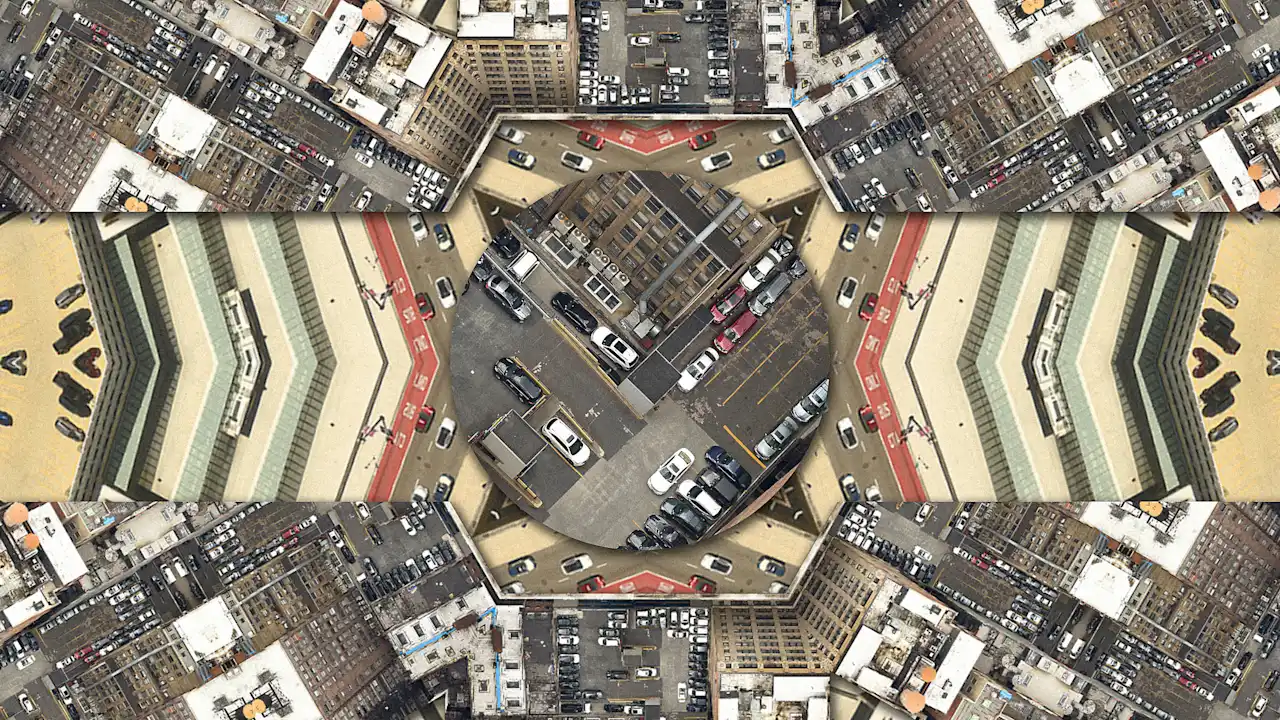
To a certain point, cars are fantastic inventions making it easy to get to far-flung places, opening doors for new places to live or work or play. But there’s a tipping point when the built environment and our lives are arranged around motor vehicles where the benefits start to come undone. Building to prioritize space-hogging cars brings a long list of negative externalities.
In Greek mythology, the god Dionysus granted King Midas his wish for the power to turn everything he touched to gold. Midas revels in the effortless wealth—objects, furniture, and even the ground beneath him turn to gold. The Midas touch was great right up until he wanted to eat or drink or just hug his daughter.
There’s a King Midas aspect to motor vehicles, this technological gift that promised and delivered abundance until it became a curse.
{“blockType”:”creator-network-promo”,”data”:{“mediaUrl”:””,”headline”:”Urbanism Speakeasy”,”description”:”Join Andy Boenau as he explores ideas that the infrastructure status quo would rather keep quiet. To learn more, visit urbanismspeakeasy.com.”,”substackDomain”:”https://www.urbanismspeakeasy.com/”,”colorTheme”:”green”,”redirectUrl”:””}}
Personal cars expanded opportunities like never before. Post-World War II America saw vehicle ownership explode from 25 million in 1945 to over 100 million by 1970. Having access to a family car made far-flung places viable for living, working, and playing, fueling a middle-class expansion across previously rural areas. An entire car-oriented ecosystem emerged.
The promise of freedom and wealth held until cities and suburbs began optimizing for vehicle throughput instead of local access and mobility.
When Everything Turns to Asphalt
Like Midas discovering he couldn’t eat golden food, we’re discovering that car-dependent places can’t sustain the human activities they were meant to enable. The same infrastructure that promised connection now isolates. What began as freedom morphed into obligation.
American cities now dedicate somewhere between one-third and one-half of their land area to streets, parking lots, and garages. In downtown Los Angeles, parking occupies more space than all the buildings combined. We’ve paved over so many of the destinations cars were supposed to help us reach.
The economic costs of car dependency are brutal at the household level. Transportation often ranks as the second-largest expense after housing, consuming up to 30% of household income. The “drive until you qualify” phenomenon pushed families toward affordable suburban housing, only to burden them with commutes that devoured time and money. Car loan defaults have jumped 50% in the last 15 years, and in 2024, car repossessions hit the highest number since 2009.
Meanwhile, the infrastructure itself demands constant funding. Roads, bridges, and parking structures deteriorate faster than municipalities can maintain them. The American Society of Civil Engineers estimates a multi-trillion-dollar backlog in deferred transportation maintenance. Every lane-mile of road requires ongoing investment that property taxes in sprawling development patterns often can’t support.
The Isolation Paradox
Car dependence promised mobility but delivered immobility for anyone without a vehicle or unable to drive. Children lost independence because nothing is within walking or biking distance, and the elderly face isolation when they can no longer drive safely. People with disabilities, those who can’t afford vehicles, and those who simply prefer not to drive find themselves trapped in places without practical mobility alternatives.
The distances themselves became barriers. When corner stores give way to big-box retailers miles away, when schools require driving rather than walking, when social spaces exist only as isolated destinations rather than chance encounters, community itself attenuates. Neighbors pass each other at 45 miles per hour on six-lane arterials rather than at 3 miles per hour on sidewalks. The “third places” that anchored community life (cafés, parks, plazas, etc.) disappeared into the car-oriented strip malls and shopping centers.
The Health Toll
The King Midas curse extends to our bodies. Vehicle-oriented development correlates strongly with obesity, cardiovascular disease, and respiratory illness. When walking becomes impractical and driving becomes mandatory, physical activity disappears from daily routines. Air pollution from vehicles contributes to asthma, especially in children living near major roadways.
Traffic crashes kill 40,000 Americans annually, and injure hundreds of thousands more. Larger vehicles, faster vehicles, and inattentive driving create an increasingly deadly environment.
Breaking the Curse
King Midas eventually begged Dionysus to reverse his wish, washing away the golden touch. Like Midas, our situation is fixable.
People are rediscovering that neighborhoods can be planned and designed at a human scale that welcomes motor vehicles without squashing the good life. Zoning reforms that allow mixed-use development are the single most important starting point. When someone can walk to a store, bike to work, or take transit to social activities, the car returns to being a useful tool rather than an iron requirement. But that only happens if a local government legalizes a variety of land uses in neighborhoods.
Cars are fantastic inventions. The Midas predicament emerges when we optimize everything around them, when we mandate their use, and when we eliminate alternatives. A city where people can choose to drive, walk, bike, or take transit according to their needs is fundamentally different from one where driving is the only option.
The Midas story ends with the king learning wisdom through suffering. We’ve suffered quite a bit from the built environment. But even in real life, things can get better in the end.
{“blockType”:”creator-network-promo”,”data”:{“mediaUrl”:””,”headline”:”Urbanism Speakeasy”,”description”:”Join Andy Boenau as he explores ideas that the infrastructure status quo would rather keep quiet. To learn more, visit urbanismspeakeasy.com.”,”substackDomain”:”https://www.urbanismspeakeasy.com/”,”colorTheme”:”green”,”redirectUrl”:””}}
Source link