
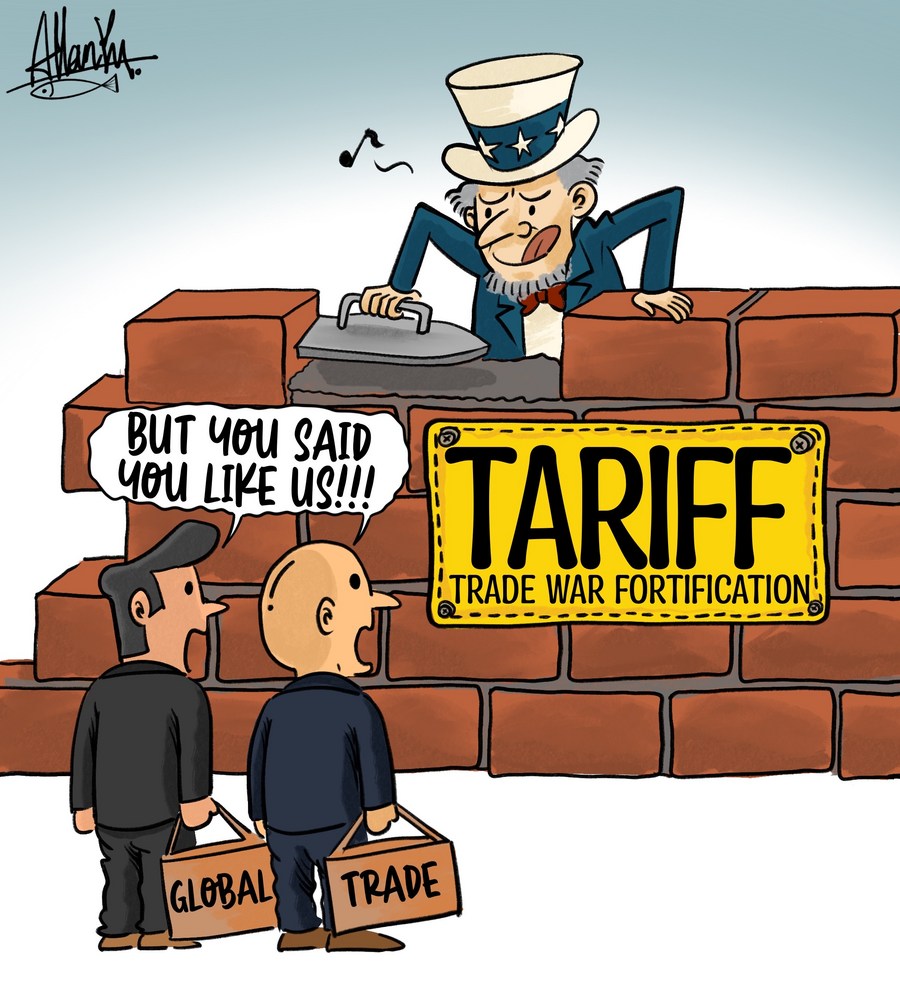
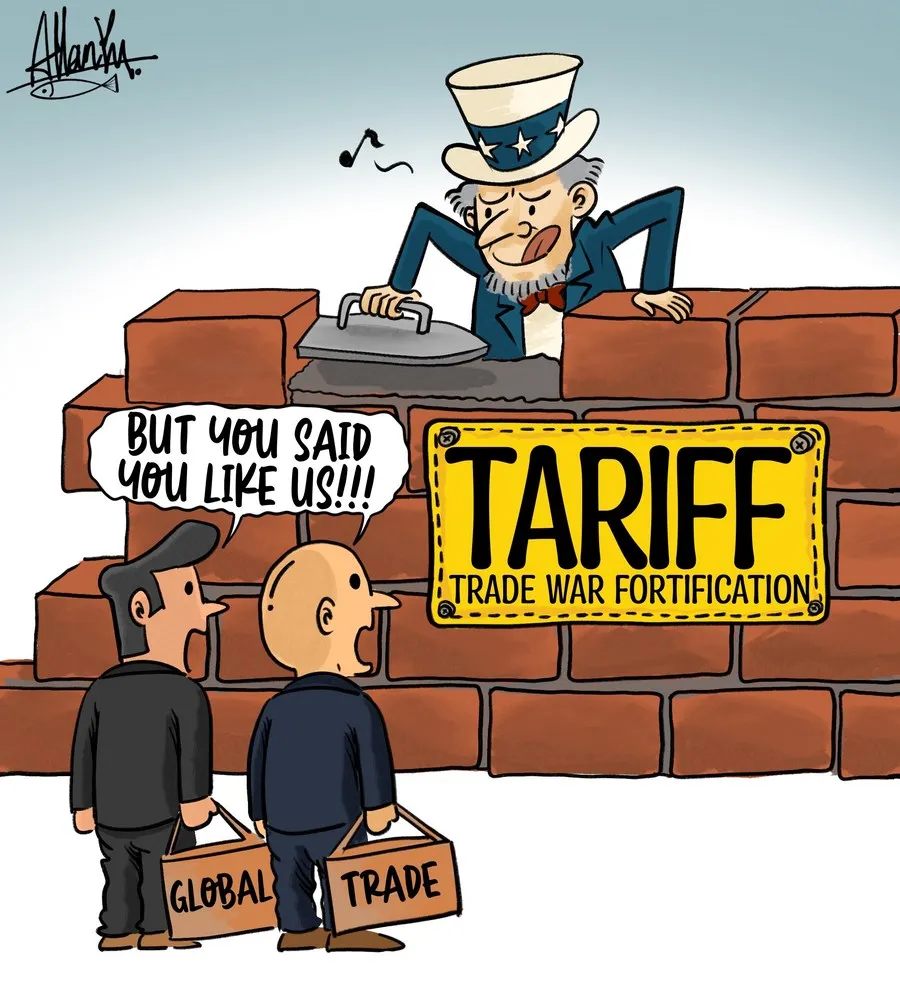
The President cannot unilaterally impose tariffs on antique objects (over 100 years old) if Congress has expressly exempted them. But there are narrow exceptions where a president might temporarily override tariff exemptions, depending on the statutory authority Congress has delegated (e.g., national security statutes like Section 232, emergency powers, sanctions, or trade remedies related to unfair practices).
The Constitution (Art. I, Sec. 8) gives Congress the power:
-
“to lay and collect Taxes, Duties, Imposts, and Excises.”
-
“to regulate Commerce with foreign Nations.”
So tariffs are a legislative power, and antiques have historically been a category that Congress has intentionally exempted. Those of us buying antiquities at a European auction are being hit by tariffs in an entirely unconstitutional manner.
This means the default rule is:
If Congress exempted antiques, the President cannot override it on his own.
Personally, I intend to file for a Declaratory Judgment against Trump because his actions are wholly unconstitutional. The Trump administration used an executive order under the International Emergency Economic Powers Act (IEEPA) to impose sweeping import tariffs on a wide range of goods — including antiques, decorative arts, and certain historical/cultural objects.
Cultural Property News
Under this new regime, items classified under the tariff heading for “antiques” (e.g. Chapter 9706 of the Harmonized Tariff Schedule) are reportedly no longer automatically duty-free as “informational materials.” As a result, many in the art, antiques, and cultural-heritage trade have reported that antiquities — previously exempt — are now being charged tariffs when imported into the U.S. If the same ancient coin is sold in NYC, there is no tariff. If it is sold in London, then Trump demanded tariffs. Tariffs are a Marxist Communist tool and is intended to support domestic jobs from being undercut by foreign. Yet antiquities do not involve modern labor competition.
Why that matters — and why it’s controversial
Historically, U.S. trade law has often treated fine art, paintings, sculpture, and certain expressive/cultural works as “informational materials,” giving them some protection from import duties, especially under tools like IEEPA that were designed for sanctions, not general tariffs.
By using IEEPA (an emergency/sanctions statute) to impose broad import tariffs on essentially all imported goods — including antiques and cultural objects — the Trump administration effectively attempted to sweep aside the traditional distinction/exemption and totally disregard Congress entirely.
Trump is Using Drugs to Justify Using IEEPA
The official “fact sheet” accompanying the February 2025 executive-orders states that the “extraordinary threat posed by illegal aliens and drugs, including deadly fentanyl” constitutes a national emergency under IEEPA. Under that emergency, the administration imposed — or attempted to impose — tariffs: e.g. 25% tariffs on imports from Mexico and Canada; 10% (or more) on China.
Global Trade & Sanctions Law
That marked a dramatic departure: prior to 2025, NO U.S. president had used IEEPA to impose economy-wide tariffs on major trading partners for drug / immigration reasons. That said — whether this unilateral tariff-imposition is lawful remains deeply contested.
As of mid-2025, a major ruling from the United States Court of International Trade found that the executive-order tariffs exceeded the president’s authority under IEEPA, because IEEPA was not intended to grant broad tariff powers. The court held that traditionally only Congress has the constitutional power to regulate tariffs, and that invoking IEEPA to impose sweeping tariffs — including on antiques, art, and cultural goods — may violate that separation of powers.
Therefore: some of the “art and antiquities tariffs” under Trump may be overturned, depending on further court rulings (or how customs enforcement proceeds), meaning the longer-term status of these tariffs — and exemptions — remains uncertain. Antique dealers, collectors, and museums importing “decorative arts, antiques, and cultural objects” are now — at least until the courts fully resolve the issue — facing tariffs where they historically did not.
Whether a given object is exempt depends heavily on classification (paintings/sculpture vs mixed-material antiques), as well as origin, provenance, and how customs officials interpret the rules under the new tariff regime. Because of legal uncertainty and swift regulatory shifts, many in the art world report disruption, delays, and extra costs. So: Yes, Trump did try to include antiquities in tariff coverage, even though traditionally many cultural-heritage imports had exemptions. But that move is now being challenged legally — and some courts have already deemed parts of it unlawful.
The Supreme Court heard oral arguments on November 5th, 2025, and it is to decide the legality of the tariffs imposed under the International Emergency Economic Powers
Act (“IEEPA”). Respondents insisted the Court of International Trade (“CIT”) had exclusive jurisdiction over such challenges, but the federal district court disagreed.
No Article II tariff power exists that Trump can invoke. The Constitution gives the tariff power to Congress, and only Congress can authorize the President to “lay and collect Taxes, Duties, Imposts, and Excises.” U.S. Const., art. I, § 8.
Trump points to IEEPA. See, e.g., Executive Orders 14298, 14266, 14259, 14257, 14256, 14245, 14232, 14231, 14195, 14194, 14193. He has done so to impose specific tariffs on some of the
Nation’s largest trading partners. E.g., Executive Orders 14193 (Canada), 14194 (Mexico), 14195 (China). He has done so to impose reciprocal rates on other countries to improve America’s balance-of-payments. Executive Order 14257. And he has done so to impose a more-or-less universal floor tariff of ten percent on all foreign goods sold in the United States. Id. Some of those tariffs have been altered or held in abeyance (for now), but not all. What certainly hasn’t changed is the President’s claim that IEEPA gives him a free hand to tariff.
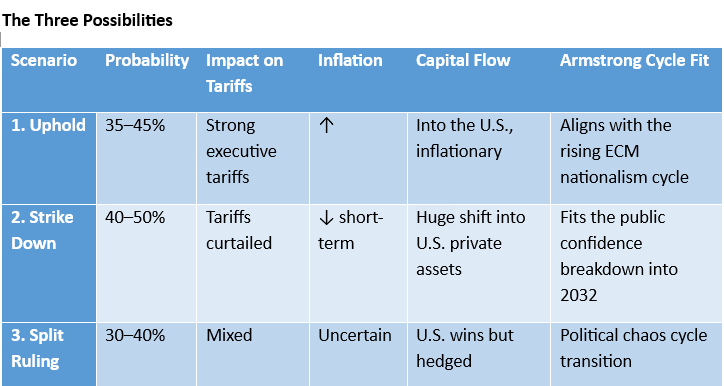
We will see how the court will rule. There are three possibile outcomes. If we were to rule by strict construction, I would strike it down as an abuse of power. Because Trump is citing “extraordinary threat posed by illegal aliens and drugs, including deadly fentanyl” as the national security issue to justify using the IEEPA, I do not see how that justies tariffs on any product from Europe, not to mention antiquities.
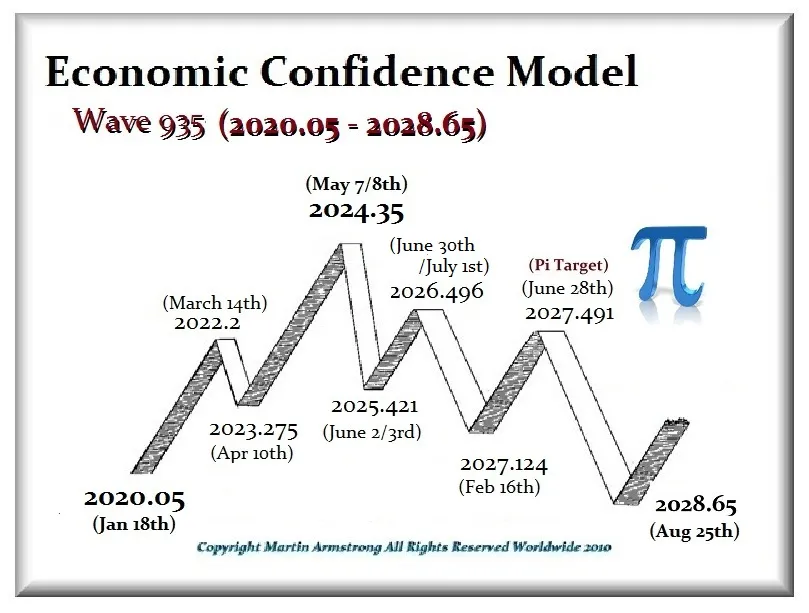
Trump’s tariffs coming on the downside of the ECM is in line with the recession our model has forecast from 2024 into 2028. These tariffs on top of the stupid sanctions on Russia which will result in higher food costs in addition to energy, does not paint a pretty picture for the world economy into 2028 which will be aggravated by the rising Sovereign Debt Crisis.