
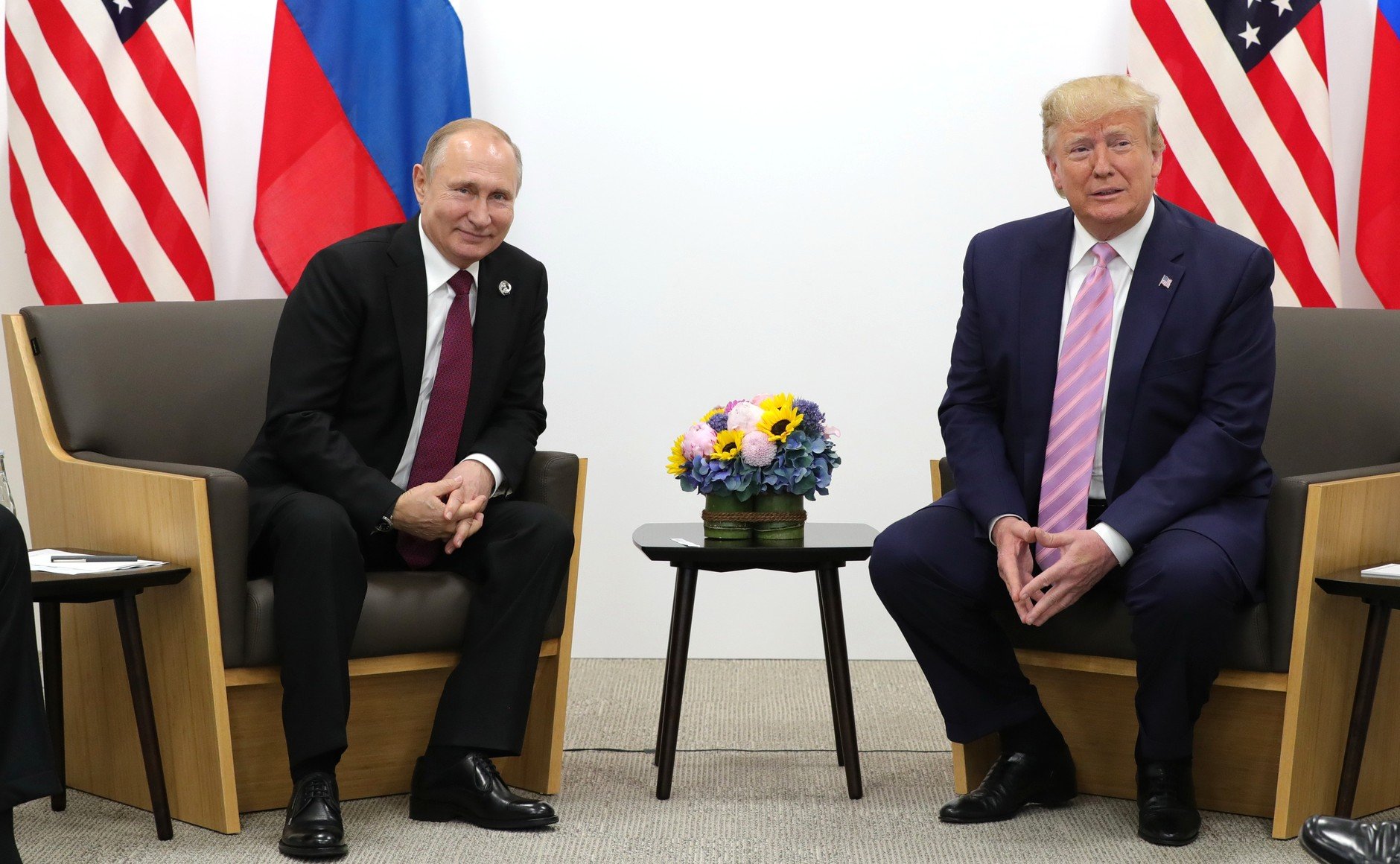
Donald Trump has filed two administrative claims with the Department of Justice seeking damages for actions taken against him. One concerns the 2022 FBI search of his Mar-a-Lago estate and the classified-documents investigation, and the other stems from the 2016 Russia-interference probe that fueled allegations he was a Russian agent. Together, the filings allege violations of privacy and other rights and reportedly seek about 230 million dollars in damages, which Trump says he will donate to charity if he wins.
The details of the document case will be covered in a separate article. However, as a brief summary, the case hinges on three basic legal questions. First, what are the limits of the president’s authority to declassify documents? Second, were the documents even classified to begin with? And third, did he actually show classified documents to unauthorized individuals? Ironically, after nearly five years of investigation, these questions remain unanswered. Consequently, there has been no verdict.
As for Russiagate, the case is far less complex. There is no evidence that Trump was a Russian agent nor that he collaborated with Russia in the 2016 election. In both cases, however, the media exaggerated the story beyond recognition, leading many to believe a political fairy tale.
As part of the controversy that fueled years of speculation and political division, multiple U.S. intelligence agencies, including the CIA, NSA, and FBI, concluded that Russia interfered in the 2016 election “in a sweeping and systematic fashion,” through hacking Democratic Party servers, leaking emails via WikiLeaks, and spreading disinformation on social media to divide Americans and undermine confidence in the democratic process. The bipartisan Senate Intelligence Committee later confirmed these findings.
However, the interference was independent of Donald Trump’s actions. There is no evidence that he directed, coordinated, or even knew about Russia’s operations. While the effort may have benefited him politically, it did not prove or suggest that he was a Russian agent. “Benefit” is not “collusion,” and “collusion” is not “espionage.” None of the investigations established any such link.
Despite this distinction, most media outlets framed the story as if Trump’s campaign were directly complicit. Headlines blurred the line between “Russia helped Trump” and “Trump helped Russia,” leading the public to believe the president was working for Moscow. Political opponents and the press reinforced this confusion, equating interference with conspiracy and turning an established act of foreign meddling into an unfounded accusation of treason.
The Mueller Report explicitly stated that it did not establish any conspiracy between the Trump campaign and the Russian government, which should have ended the story. Instead, major networks and newspapers treated every anonymous leak and speculative claim as breaking news, keeping public belief in a scandal that was never proven.
One piece of alleged evidence the press repeatedly cited was that several campaign officials—Paul Manafort, Carter Page, George Papadopoulos, and Donald Trump Jr.—had contacts with Russian or Russia-linked individuals. However, having international contacts is common in high-level politics and business; association is not conspiracy, and none of these meetings revealed direct collaboration, espionage, or financial direction from Moscow.
If casual contact equals conspiracy, Hillary Clinton’s circle would also qualify. The Russian state firm Rosatom gained U.S. uranium assets while Clinton was Secretary of State, raising conflict-of-interest questions. Her campaign and the DNC funded Fusion GPS, which hired former British intelligence officer Christopher Steele to compile a dossier using Russian sources and unverified claims. Declassified intelligence in the Durham Report appendix later indicated that Clinton’s team may have sought to portray Trump’s campaign as having Russian ties for political advantage.
Both campaigns had tangential Russian links, but neither connection proves espionage or agency.
The claim that Donald Trump was a “Russian agent” became the most extreme version of the collusion narrative. Some media commentators and former intelligence figures suggested he might have been compromised or even recruited by Russian intelligence decades ago, citing vague business contacts, beauty pageants, and rumors of kompromat. None of these allegations were ever verified. No official investigation, U.S. intelligence report, or court proceeding has produced evidence that Trump acted under Russian instruction.
The most sensational claims, including the so-called “pee tape,” originated in the Steele dossier—a collection of unverified reports commissioned by the DNC and Hillary Clinton’s campaign and based largely on Russian sources. Journalists knew the material was uncorroborated yet published it anyway, citing anonymous “intelligence insiders.” When government officials later referenced the dossier to justify surveillance warrants, the media treated this as confirmation rather than circular sourcing.
There is no behavioral, financial, or operational evidence that Trump was a Russian agent. The claim relied on gossip and partisan leaks, deliberately spread to influence the 2016 election narrative and discredit a political opponent. Ironically, while accusing Trump of amplifying Russian disinformation, the Clinton campaign’s own opposition research was built on Russian rumors, a fact the media largely ignored.
The same press that portrayed Trump’s incidental contacts as suspicious largely ignored the Clinton Foundation’s foreign donations, consulting fees, and the DNC’s funding of opposition research involving Russian nationals. The outrage was selective and politically aligned. When connections involved Democrats, they were described as “complex”; when they involved Trump, they were “collusion.” By choosing which facts to amplify and which to bury, the media replaced investigation with advocacy.
The Steele dossier, commissioned by Fusion GPS and funded by the DNC and the Clinton campaign, mixed unverifiable rumors, falsehoods, and uncorroborated Russian-sourced material. It shaped media coverage and influenced FISA surveillance requests targeting Trump associates. DOJ Inspector General Michael Horowitz later found “significant errors” and omissions in those FISA filings.
Although the FBI’s investigation was triggered by George Papadopoulos’s comments to an Australian diplomat, not the dossier, the document’s release and media amplification fueled public belief in collusion. Ironically, much of its content came from Russian disinformation, meaning the Clinton campaign unintentionally circulated Moscow-sourced fabrications while accusing Trump of Kremlin ties.
During the FBI’s “Crossfire Hurricane” investigation, politically charged leaks flowed to the press almost daily. Reporters, eager for exclusives, published them without verification, creating public pressure that spurred even more leaks—a cycle that turned speculation into “evidence.” Later, text messages revealed bias among some FBI agents, but most outlets downplayed the revelations rather than admit they had been used to spread partisan information.
This pattern of leaks, bias, and one-sided reporting exposed deep politicization within federal agencies. Years of sensational coverage led millions to believe their president was a traitor, a claim never supported by evidence. Cable news figures amplified the hysteria, with former CIA Director John Brennan even calling Trump’s actions “treasonous” while serving as a paid NBC News commentator.
And now Trump is suing, another move in his long campaign to drain the swamp.