

Close Menu
    Facebook X (Twitter) Instagram
    TRENDING :
    • What Is Talent Acquisition Recruitment and Why Does It Matter?
    • 7 US Payroll Providers You Should Consider
    • Best Online Franchise Businesses to Invest In
    • How AI keeps both job seekers and employers from filling roles
    • What is ‘American architecture’ in 2026? A new book attempts to find the answer
    • How ‘Shift Work Sleep Disorder’ is hurting workers—and costing employers
    • CEOs and other leaders share their summer book picks
    • Richard Branson says everyone should read this cult-classic novel—it changed how he made decisions
    Populist Bulletin
    • Home
    • US Politics
    • World Politics
    • Economy
    • Business
    • Headline News
    Populist Bulletin
    Home»Economy»Post-Pandemic Inflation In Canada | Armstrong Economics
    Economy 3 Mins Read

    Post-Pandemic Inflation In Canada | Armstrong Economics

    Economy 3 Mins Read
    Share Facebook Twitter Pinterest LinkedIn Tumblr Telegram Email Copy Link
    Follow Us
    Google News Flipboard
    Share
    Facebook Twitter LinkedIn Pinterest Email


    Inflation in Canada rose to 2.4% this September, as reported by Statistics Canada. Excluding gas, the rate sits at 2.6%. Volatile prices among all essentials, from groceries to shelter, are ramping up the cost-of-living crisis for all Canadians.

    Grocery prices have been on the rise since the pandemic and cannot be attributed to tariffs. The Consumer Price Index (CPI) shows grocery inflation is approximately 4% year-over-year, compared to an overall inflation rate of 2.4 percent. The 2025 Canada’s Food Price Report estimated that a family of four would spend C$16,833 on food throughout 2025, an increase of C$802, but prices have surpassed expectations.

    Grocery prices surpassed overall CPI during COVID when inflation averaged 2.8%. That was merely the beginning of rising food prices, which rose to 3.5% YoY by 2021. Global energy price shocks due to the Russian-Ukrainian war, coupled with agricultural volatility, caused prices to reach all-time highs in 2022 when food inflation reached 9.8%. With no relief in sight, grocery prices peaked in early 2023 above 10%, marking a four-decade high. Prices stabilized to an extent this year but continue to outpace the overall rate of inflation.
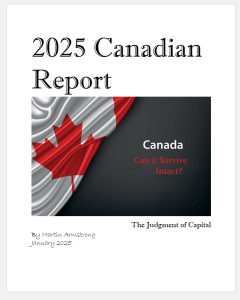
    Canada Report 2025 F

    Shelter is the other main component of the cost-of-living crisis in Canada. Over the last five years, the shelter component of CPI advanced from around 150 to about 188 index points, or a cumulative increase of roughly 25% since the pandemic. The Bank of Canada reduced rates to near zero early in the pandemic, which caused a surge in home purchases. National shelter CPI climbed 2% annually, but home prices soared 20% from mid-2020 to the end of 2021 as the cost of borrowing and inventory was low. Rent freezes among provinces caused the shelter component of inflation to remain muted through 2021.

    The central bank pivoted from QE in 2022 and led to an unprecedented rise in mortgage costs. Shelter inflation soared above 6%, a level not seen since the early ‘80s. Real estate prices waned later in the year but CPI shelter costs rose due to rising mortgages. Shelter inflation peaked to 7% YoY in mid-2023, driving the majority of the broader CPI, while rentals averaged around 9%. Mortgage interest costs spiked by over 28% YoY, according to StatCan data.

    Shelter relief was brief in 2024 for owners, but rentals soared above 9% into August. The average nationwide rental price hit C$2,200 by the end of the year, or 30% higher than pre-pandemic levels. The central bank maintained the 5% policy rate and interest costs plateaued. Now in 2025, shelter inflation still remains well above overall inflation. CPI shelter hit 188 in August, 2.6% up YoY, while rent decreased from 9% to 5%. Policy cuts at the BoC led to an average mortgage rate at around 4.6%. Still, shelter costs continue to rise faster than every CPI component aside from food in recent years.

    Rentals are one-third higher than pre-pandemic levels and vary widely based on province. Grocery prices have not meaningfully waned since the pandemic, but these costs have become the new norm. Governments cannot prince away inflation through rate policy. Fiscal deficits and currency debasement must be addressed. If government spending continues, debt levels rise, and the central bank becomes effectively stuck. Central banks have limited control over inflation since fiscal and monetary policy have become polar magnets.


    Source link

    Share. Facebook Twitter Pinterest LinkedIn Tumblr Email

    Related Posts

    Thank You Veterans – Memorial Day Remembrance

    May 25, 2026

    Interview: The Financial World Order Is Breaking Apart

    May 25, 2026

    It’s Time To Talk About Massie

    May 23, 2026
    Top News
    Business 4 Mins Read

    James Cameron’s ‘Avatar: Fire and Ash’ crosses the $1B mark at the box office

    Business 4 Mins Read

    Hollywood kicked off 2026 with “Avatar: Fire and Ash” atop the box office for the…

    How to build your deep reading and critical thinking skills to better resist misinformation

    January 20, 2026

    Market Talk – December 3, 2025

    December 3, 2025

    Trump is turning coins into miniature symbols of his priorities

    March 16, 2026
    Top Trending
    Business 7 Mins Read

    What Is Talent Acquisition Recruitment and Why Does It Matter?

    Business 7 Mins Read

    Talent acquisition recruitment is a strategic method that focuses on building a…

    Business 10 Mins Read

    7 US Payroll Providers You Should Consider

    Business 10 Mins Read

    When evaluating payroll solutions for your business, it’s essential to take into…

    Business 15 Mins Read

    Best Online Franchise Businesses to Invest In

    Business 15 Mins Read

    If you’re looking to invest in an online franchise, you should first…

    Categories
    • Business
    • Economy
    • Headline News
    • Top News
    • US Politics
    • World Politics
    About us

    The Populist Bulletin was founded with a fervent commitment to inform, inspire, empower and spark meaningful conversations about the economy, business, politics, government accountability, globalization, and the preservation of American cultural heritage.

    We are devoted to delivering straightforward, unfiltered, compelling, relatable stories that resonate with the majority of the American public, while boldly challenging false mainstream narratives that seem to only serve entrenched elitists, and foreign interests.

    Top Picks

    What Is Talent Acquisition Recruitment and Why Does It Matter?

    May 26, 2026

    7 US Payroll Providers You Should Consider

    May 25, 2026

    Best Online Franchise Businesses to Invest In

    May 25, 2026
    Categories
    • Business
    • Economy
    • Headline News
    • Top News
    • US Politics
    • World Politics
    Copyright © 2025 Populist Bulletin. All Rights Reserved.

    Type above and press Enter to search. Press Esc to cancel.