
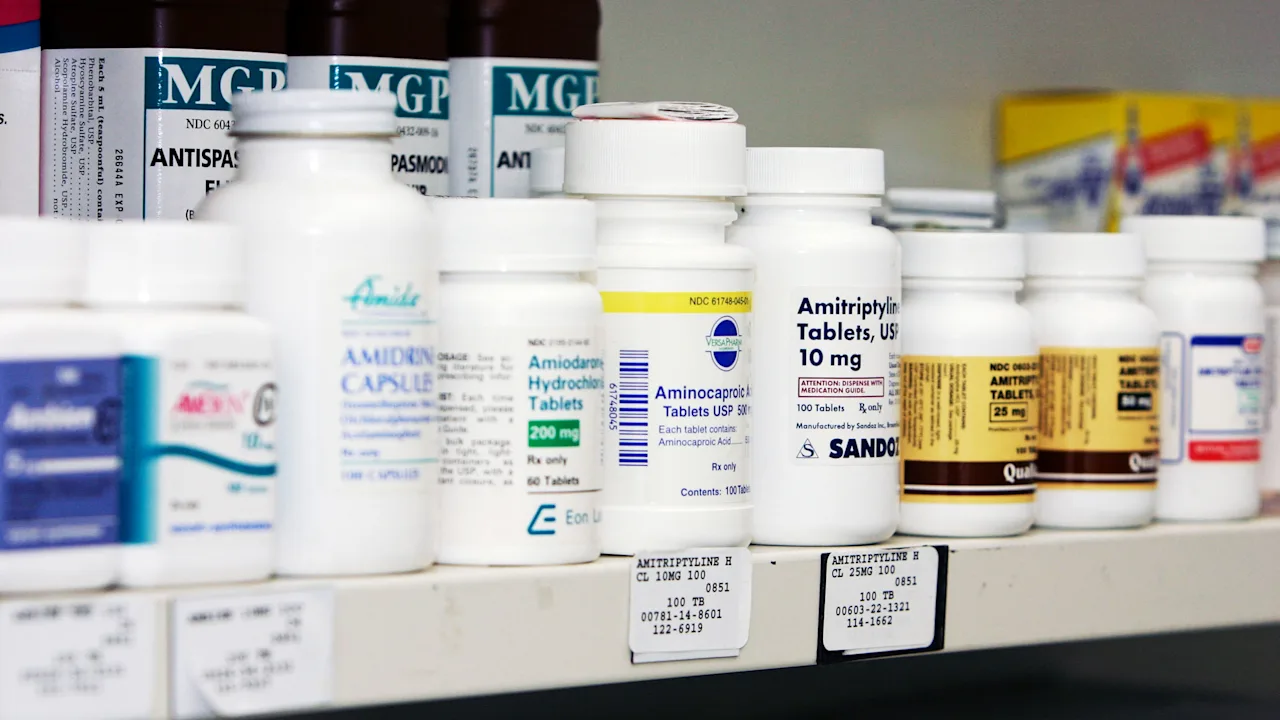
Experts are warning that tariffs on pharmaceuticals are likely to increase shortages of essential medications.
The government’s ongoing investigation into the national security implications of importing pharmaceuticals and pharmaceutical ingredients is widely understood as a precursor to sector-specific tariffs, which a White House advisor has said are likely. On the other hand, the administration recently issued a new executive order laying the groundwork for tariff exemptions for some pharmaceutical products imported from countries that reach trade agreements with the United States.
As a result, manufacturers, pharmacists, doctors and patients are in limbo. Digital health companies that make access to prescription medication simpler are also at risk.
But I already know firsthand what a drug shortage looks like. I am the CEO of Oar Health, a company that helps people struggling with alcohol misuse get access to prescription medication to drink less or quit. And naltrexone, the recommended frontline medication for treating alcohol use disorder, has been in shortage for more than a year.
Here’s what I’ve learned:
Patients suffer when essential medications are unavailable
Throughout the naltrexone shortage, I have heard from patients who have found medication critical to their recoveries. But instead of celebrating and building upon their progress, they were worried about continuing their treatment.
Retail and mail order pharmacies alike told patients that they could not refill their prescriptions nor provide a reliable estimate of when they would. Patients documented their experience and concern in social media posts.
As someone who took naltrexone for more than five years, I can relate to their unease. When a medication is proving helpful in one’s recovery, the last thing a patient should be forced to do is remove that tool from their toolkit.
Beyond alcohol use disorder, direct-to-consumer telehealth companies like Ro, Hims, Nurx, and Cove have increased patient access to safe, effective medications across a broad range of health conditions. But access depends on availability. Tariffs on generic medications could harm patients who rely on everything from anti-depressants to birth control to migraine relievers to erectile dysfunction and hair loss treatments.
The generic drug supply chain is fragile
Americans often assume that generic medications will always be cheaply available from multiple manufacturers and at every pharmacy. This assumption is incorrect.
In the case of naltrexone, a shortage of the Active Pharmaceutical Ingredient meant that manufacturers had to slash production. Coupled with an increase in demand for the medications used to treat alcohol problems, shortages spread and prices went up.
But input shortages are not the only vulnerability in the supply chain. Manufacturing complexity, quality concerns, and geographic concentration have contributed to an increase in the number and duration of generic drug shortages according to the research organization U.S. Pharmacopeia. 253 drugs are in shortage in 2025 according to the American Society of Health System Pharmacists after reaching an all-time peak of 323 in 2024.
Because generic drug manufacturing, distribution and pharmacy dispensing all have very low profit margins, a cost increase — including from tariffs — at any point in the supply chain is likely to be disruptive. Facing even marginally higher costs, a manufacturer may decide that producing a generic drug is no longer economical. And, as our experience shows, the industry lacks the redundancy to make up the difference.
Industry can adapt, but not overnight
I am proud to say that we have kept medication in hand for every Oar Health member throughout the shortage. But it has not been easy.
Many of our members worked with us during the most acute phases of the shortage, shifting from shipments of 90 tablets to 30 tablets at a time out of concern for others who needed access to the medication. We also drastically reduced marketing budgets and briefly stopped accepting new patients, meaning that people who could have benefited from treatment did not.
Over time, we have seen API availability improve and manufacturers increase or restart production. But regulatory bottlenecks, manufacturing setup costs, and uncertainty about demand mean that bouncing back after a supply shock is a process measured in months and years, not days or weeks.
More than 18 months after the FDA officially declared a naltrexone shortage and almost two years after patients and pharmacists first began reporting problems, naltrexone remains in shortage.
This is unfortunately common. The average shortage lasts 18 months and can span as much as 15 years. Similarly, industry participants agree that reshoring manufacturing, a potential goal of tariffs, would be timely and costly.
The bottom line
I started Oar Health so that more of the 28 million Americans with alcohol use disorder could get access to safe, effective, FDA-approved medication proven to help them drink less or quit. Our more than 10,000 members and the millions of Americans who rely on essential generic medications are counting on policymakers to remember them.